To avoid slipping on painted lines, maintain a steady course and avoid sudden braking or acceleration. Regularly inspect your tires for wear, ensuring they’re properly inflated and suited for wet conditions. Check your vehicle’s alignment and suspension to maximize contact with the road. Be aware of painted areas, especially in wet weather, and adjust your speed accordingly. Understanding these factors is essential for enhancing your safety on the road, and there’s more to explore on this topic.
Key Takeaways
- Treat painted lines like oil slicks; avoid hard braking and sudden acceleration when crossing them to prevent slipping.
- Maintain proper tire pressure and replace worn-out tires to ensure optimal grip on slippery surfaces.
- Keep your vehicle’s suspension well-maintained and checked for alignment to enhance tire contact with the road.
- Adjust your speed when approaching painted lines, especially in wet conditions, to minimize traction loss.
- Engage in community discussions about safety practices to raise awareness of the risks associated with painted lines.
Understanding the Slipperiness of Painted Lines
Why do painted lines on roads become slippery, especially when it rains? The paint’s lower friction coefficient compared to asphalt or concrete makes these lines particularly slippery when wet.
Freshly painted lines, often using reflective materials, can create hazardous conditions, increasing the risk of skidding during rain. This slickness may lead to unexpected loss of traction, affecting your stopping distance and vehicle control, especially while braking or turning.
Treat painted areas like oil slicks; they can greatly reduce grip and stability, especially for motorcycles and bicycles. Awareness of this danger helps you adapt your driving techniques to prevent accidents.
Importance of Tire Maintenance for Safety
While traversing roads, you’re often reminded that proper tire maintenance is essential for guaranteeing safety, especially when encountering painted lines.
Regularly inspecting your tires for cracks and wear helps maintain ideal grip, critical on slippery surfaces. Keeping an eye on tire pressure is crucial; under-inflated or over-inflated tires can diminish road contact, increasing traction risks.
Regular tire inspections and proper pressure management are vital for optimal grip and safety on slippery roads.
Don’t ignore worn-out tires—replace them to guarantee stability and handling. Conduct alignment checks for even road contact, and evaluate your suspension system for improved control.
Prioritizing tire maintenance directly impacts your safety, especially when maneuvering those treacherous painted lines.
Adjusting Driving Techniques on Painted Surfaces
When steering painted surfaces, adjusting your driving techniques is essential to maintaining control and safety.
To minimize the risk of losing traction on painted lines, maintain a straight path while crossing them. Avoid hard braking or sudden acceleration, as these actions can lead to slipping.
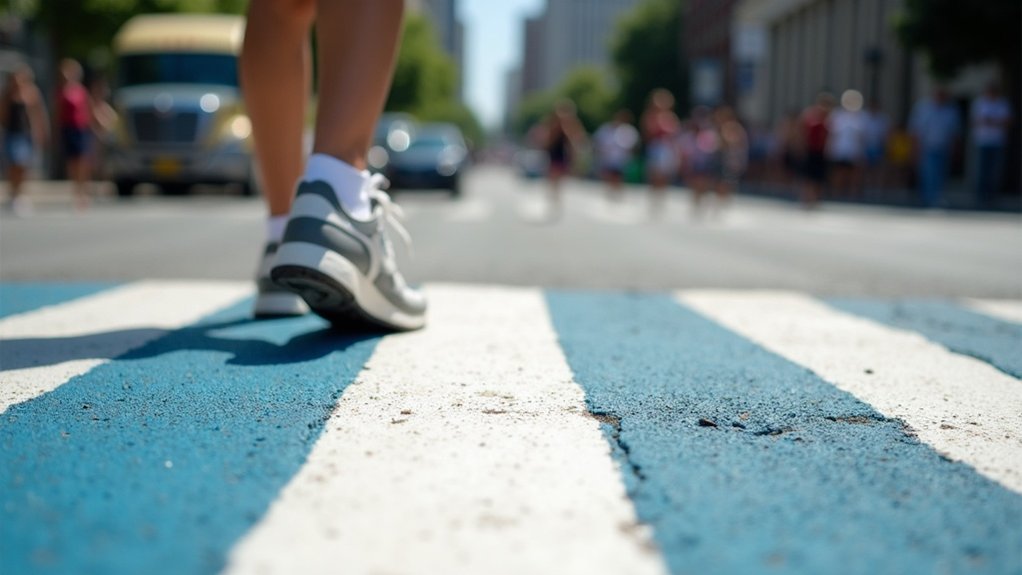
Be mindful of your foot placement; don’t step on painted lines, especially in wet conditions. Anticipate their presence and adjust your speed, treating painted lines as potential hazards.
Finally, verify your tires are well-maintained and properly inflated to enhance grip and handling when maneuvering through these tricky areas. Stay vigilant to stay safe.
The Role of Vehicle Suspension and Alignment
Maintaining control on painted surfaces isn’t just about your driving techniques; the vehicle’s suspension and alignment play a significant role too.
A well-functioning vehicle suspension guarantees that your tires maintain ideal contact with the road, which is vital for traction when crossing painted lines. If your wheels are misaligned, you risk uneven tire wear and instability, increasing the likelihood of slipping.
A properly functioning suspension ensures optimal tire contact with the road, crucial for maintaining traction on painted lines.
Additionally, a compromised suspension can cause your vehicle to bounce or sway, making navigation over painted lines challenging, especially at higher speeds.
Regular alignment checks are important to enhance grip and prevent accidents on slippery surfaces.
Choosing the Right Tires for Better Grip
To improve your grip on painted lines, it’s essential to choose tires with appropriate tread patterns designed for wet conditions.
These patterns help channel water away, enhancing traction where it’s needed most.
Additionally, maintaining proper tire pressure guarantees an ideal contact patch, further reducing the risk of slipping.
Tire Tread Patterns
Selecting the right tire tread pattern is essential for maximizing grip and safety on the road, especially when maneuvering painted lines.
Tire tread patterns with deeper grooves enhance water displacement, minimizing hydroplaning risks. Performance-oriented designs, like asymmetrical or directional patterns, improve traction on slick surfaces.
Additionally, the rubber compound affects grip; softer compounds offer superior traction but wear out quicker. Regularly inspect your tire tread depth, as worn tires decrease stability and increase slipping hazards.
Opt for tires specifically designed for wet conditions, ensuring better road contact and safety when encountering painted surfaces. Your choice matters for secure driving.
Proper Tire Pressure
Proper tire pressure is essential for guaranteeing ideal grip on painted lines, as even a slight deviation can greatly affect your vehicle’s handling.
Under-inflated tires reduce the contact patch with the road, decreasing traction and increasing your risk of slipping. Regularly check your tire pressure—preferably once a month—to maintain optimal performance. Confirm your tires meet the specific PSI required for your vehicle.
Additionally, consider using tires designed for specific conditions, like all-season or performance tires, to enhance grip. Proper maintenance, including alignment and tread depth checks, further stabilizes your vehicle and helps prevent traction loss on painted surfaces.
Anticipating Road Conditions and Hazards
To navigate painted lines safely, you need to recognize their risks, especially in wet conditions.
Adjust your riding techniques by maintaining a straight path and avoiding sudden movements when approaching these areas.
Planning ahead not only enhances your control but also greatly reduces the chances of slipping.
Recognizing Painted Line Risks
While traversing roadways, it’s vital to recognize the unique risks posed by painted lines, especially when conditions are wet.
These lines have a lower friction coefficient than pavement, making them extremely slippery. Freshly painted lines are particularly hazardous, as they can retain moisture, creating slick conditions for both vehicles and pedestrians.
Treat painted areas, especially those with reflective materials, like potential oil slicks. To navigate these risks, maintain a steady speed and avoid hard braking or sharp turns.
Awareness of the weather and road surface conditions is essential for anticipating hazards associated with painted lines, ensuring safer travels.
Adjusting Riding Techniques
Adjusting your riding techniques is essential when maneuvering painted lines, especially in adverse weather.
Always maintain a straight path when approaching road lines to reduce the risk of losing balance. Treat painted areas like oil slicks, particularly during wet conditions or soon after painting.
Avoid hard braking near these lines; sudden stops can cause skidding and loss of control. Be mindful of your foot placement when stopping to prevent slipping if you step on painted areas.
Finally, adjust your techniques based on anticipated road conditions ahead, and whenever possible, plan your route to avoid painted lines altogether.
Planning Ahead for Safety
Planning ahead is essential for maneuvering painted lines safely, especially when road conditions can change rapidly. Anticipate slippery conditions by checking weather forecasts and treat painted lines as potential hazards. In parking lots, maintain a safe distance from painted areas during wet weather to avoid traction loss. Familiarize yourself with the layout, noting where painted lines are located. Adjust your speed when approaching these areas to minimize risk. Stay alert for changes in conditions, as freshly painted lines can remain slick even on dry days.
| Condition | Action Required |
|---|---|
| Wet Weather | Avoid painted lines |
| Freshly Painted | Slow down and navigate cautiously |
| Dry Conditions | Remain vigilant |
Community Awareness and Shared Safety Practices
Community awareness plays an essential role in enhancing safety regarding slippery painted lines. By sharing experiences and safety tips, you can help reduce the likelihood of accidents.
Engage in discussions about avoiding painted areas during wet conditions to protect yourself and others. Regular community meetings can raise awareness about these risks and foster a proactive safety culture among road users.
Utilize social media and local forums to spread knowledge about safe parking and navigation practices. Forming partnerships with local safety organizations also equips you with resources and training, emphasizing the importance of shared responsibility in ensuring public safety.