To avoid over the bars (OTB) incidents, focus on your body positioning and keep your center of mass balanced between your front and rear wheels. Use the dip and push technique before drops to maintain stability. Stay aware of terrain changes and anticipate obstacles early by looking ahead on the trail. Practice wheel control to absorb shocks and respond quickly. By refining these techniques, you’ll ride more confidently and safely. Discover more ways to enhance your skills.
Key Takeaways
- Maintain a centered body position to balance weight between front and rear wheels during descents.
- Utilize the dip and push technique before drops to prevent pitch rotation.
- Keep elbows and knees slightly bent for better shock absorption and quick reactions.
- Anticipate terrain changes and obstacles by looking ahead on the trail.
- Regularly practice wheel control to enhance stability and navigate challenges effectively.
Understanding Over the Bars Incidents
When you ride a bike, understanding Over the Bars (OTB) incidents is essential for your safety. OTB happens when your body weight shifts too far forward, causing a loss of balance and potentially throwing you over the handlebars.
Common causes include sudden deceleration, improper body positioning during jumps, and unexpected obstacles like rocks or roots. Excessive use of the front brake, especially on steep declines, can further increase the risk of OTB by shifting your bike’s center of rotation.
Staying aware of trail conditions and adjusting your body position can help you avoid these dangerous situations.
Key Techniques to Prevent OTB
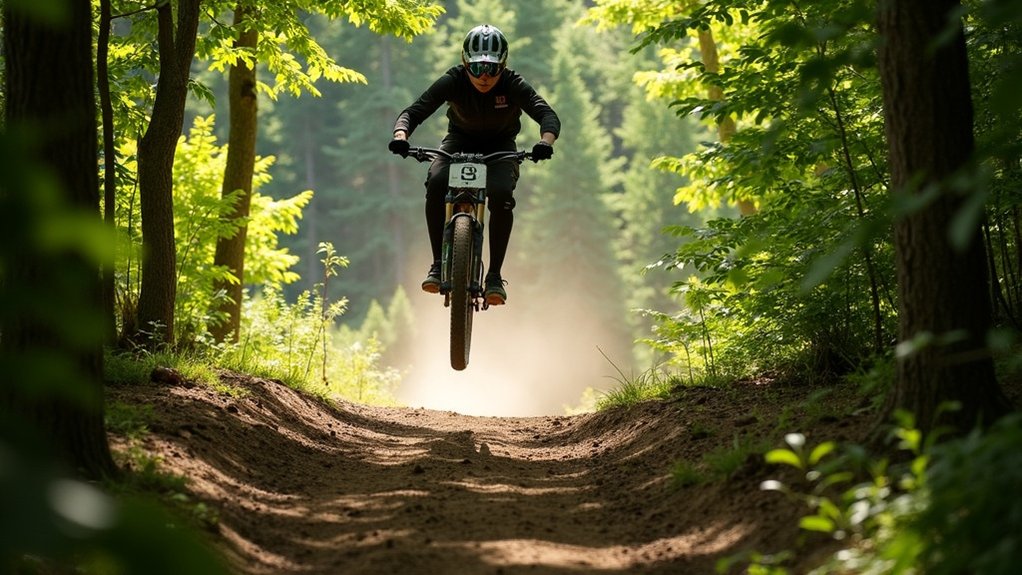
To prevent OTB incidents, focus on proper body positioning by keeping your center of mass balanced between the wheels.
Always anticipate obstacles ahead, which allows you to adjust your stance and maintain control.
Proper Body Positioning
Proper body positioning is essential for preventing over the bars (OTB) incidents, as it directly affects your balance and control on the bike.
Keep your center of mass centered between the front and rear wheels during descents and jumps. Use the dip and push technique: dip your chest forward before a drop and push down on the handlebars to counter pitch rotation.
Maintain a neutral position with slightly bent elbows and knees close to the frame to absorb shocks effectively.
Practice separating wheel control by using your arms and legs independently to handle uneven terrain and obstacles better.
Anticipate Obstacles Ahead
Anticipating obstacles ahead is essential for maintaining control and avoiding over the bars incidents.
Keep your gaze forward to spot potential hazards early, allowing you to adjust your riding position and speed.
Shift your weight forward when approaching drops or jumps using the dip and push technique, which stabilizes your bike and prevents sudden forward pitch.
Cultivate spatial awareness to handle unexpected terrain changes, like roots or rocks.
Regularly check your tire pressure for ideal grip, enhancing stability.
Consistent practice on smaller jumps and varied terrains builds confidence and sharpens your skills, preparing you for any OTB situations.
The Importance of Body Positioning
When you maintain a centered body position between your front and rear wheels, you greatly enhance your stability on the bike. This essential aspect of riding helps prevent forward weight shifts that can lead to over-the-bars incidents.
- Practice the dip and push technique for effective weight distribution.
- Aim for a neutral riding position with evenly distributed weight.
- Keep your elbows slightly bent to react quickly to trail changes.
- Work on independent wheel control to absorb shocks and adjust dynamically.
Anticipating Terrain and Obstacles
To navigate trails effectively, maintaining awareness of the terrain ahead is essential. By anticipating terrain and spotting obstacles like roots and rocks well in advance, you can adjust your speed and body positioning accordingly.
Visualizing your riding line helps improve your spatial awareness, allowing for better decision-making on descents or jumps. Practicing the dip and push technique before approaching sudden drops helps you maintain control and balance.
Regularly evaluating trail conditions, such as moisture levels, guarantees you strategize the best approach to navigate obstacles safely. This proactive mindset greatly reduces the likelihood of sudden losses of balance and OTB incidents.
Practicing Safe Riding Skills
Practicing safe riding skills is essential for every mountain biker who wants to enhance their control and reduce the risk of going over the bars (OTB).
Focus on the following techniques:
- Maintain a balanced riding position by centering your mass between the wheels.
- Use the Dip and Push Technique before drops for better stability.
- Anticipate obstacles by looking ahead on the trail.
- Regularly practice wheel control to absorb shocks and land smoothly.
Learning From Crash Experiences
Learning from crash experiences is an essential part of improving your riding skills and preventing future incidents. Analyze your crashes to pinpoint issues like improper weight distribution or leaning too far forward.
Reflect on how speed management affects your take-offs; inadequate speed can lead to disastrous landings. Observe others’ mistakes, as highlighted in Neil Donoghue’s Crash Course, to avoid repeating them.
Always check your tire pressure for ideal stability, and visualize your intended line instead of obstacles, as Eli’s experience teaches.