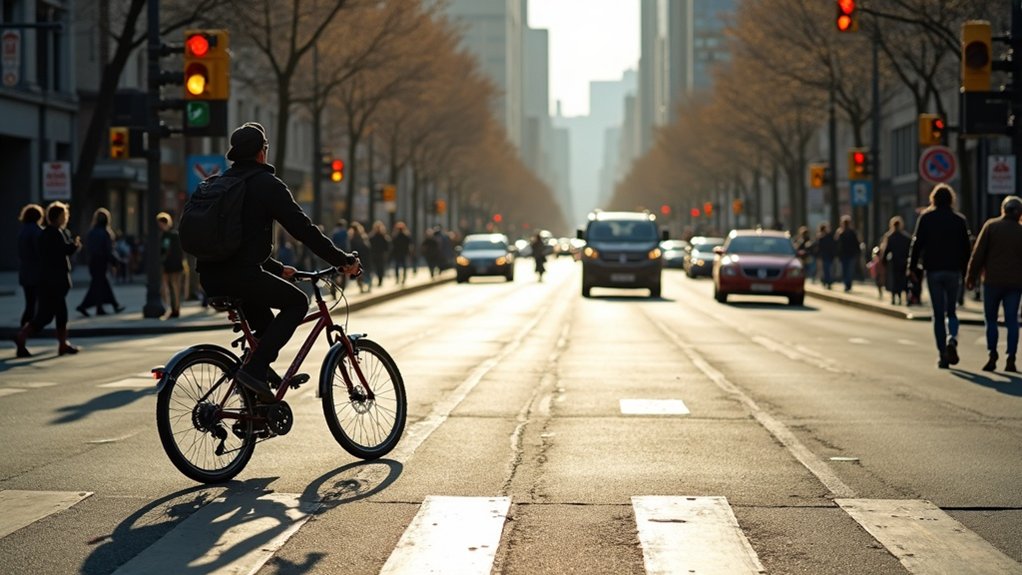
To approach uncontrolled intersections safely, slow down and scan for vehicles and pedestrians. Yield to any traffic already in the intersection, and be prepared to stop if unsure about right-of-way. Pay special attention when making left turns and signal your intentions clearly. Always maintain a safe distance from other vehicles to enhance your reaction time. By honing these skills and insights, you can better navigate intersections and foster safer road conditions for everyone.
Key Takeaways
- Slow down as you approach the intersection to ensure clear visibility and safe stopping distance.
- Scan left, right, and ahead for vehicles and pedestrians before entering the intersection.
- Yield to any traffic already in the intersection and to pedestrians in crosswalks.
- Signal your intentions clearly when making turns to communicate with other road users.
- Stay alert and be prepared to stop completely if you are uncertain about right-of-way.
Understanding Uncontrolled Intersections
When you approach an uncontrolled intersection, it’s essential to stay alert, as these junctions lack traffic signals or signs to direct traffic.
At such intersections, understanding right-of-way rules is vital. Vehicles that arrive first have the right of way, while those on narrower roads must yield to traffic on wider ones.
Understanding right-of-way at uncontrolled intersections is crucial; first arrivals have priority, and narrower roads yield to wider ones.
Exercise caution, especially when making left turns, as you’ll need to yield to oncoming traffic that may not be prepared to stop.
Since uncontrolled intersections can be common in rural areas and quiet neighborhoods, always be vigilant for unexpected movements from vehicles and pedestrians.
Safety should always come first.
Right-of-Way Rules at Uncontrolled Intersections
At uncontrolled intersections, understanding right-of-way rules is essential for safe navigation.
If you’re the first vehicle to arrive, you have priority, but if two vehicles reach the intersection simultaneously, the one on the right takes precedence.
Always remember to yield to pedestrians in crosswalks, as their safety is paramount.
First Vehicle Priority
Maneuvering uncontrolled intersections requires a clear understanding of right-of-way rules to guarantee safety for all road users. At these intersections, the vehicle that arrives first has the right of way, allowing it to proceed without yielding to traffic.
If two vehicles reach the intersection simultaneously, the driver on the right takes priority. Remember, left-turning vehicles must yield to oncoming traffic, as failure to do so often leads to accidents.
Additionally, vehicles on narrower roads should yield to those on wider roads, ensuring a smoother flow and preventing potential collisions. Adhering to these rules is essential for safe navigation.
Simultaneous Arrival Protocol
As you approach an uncontrolled intersection, understanding the simultaneous arrival protocol is essential for ensuring safety.
If two vehicles arrive at the same time, the right-of-way rules dictate that the driver on your right has priority. This is vital for preventing confusion and accidents.
If you’re making a left turn, remember to yield to oncoming traffic, as you don’t have the right-of-way in this scenario.
Additionally, if you’re on a narrower road, you must yield to traffic on wider roads.
Always stay alert and aware of these rules to navigate uncontrolled intersections safely.
Yielding to Pedestrians
Maneuvering through uncontrolled intersections requires not only awareness of vehicle right-of-way but also a keen focus on pedestrians.
In these areas, you must always yield to pedestrians in or approaching crosswalks. When you see someone waiting to cross, slow down and stop to let them pass safely.
Remember, in Texas, the law mandates that drivers must yield to pedestrians at all times, whether at marked or unmarked crosswalks.
Stay vigilant, especially during low visibility conditions like dusk or dawn, as accidents occur when drivers overlook pedestrians.
Prioritizing pedestrian safety protects everyone on the road.
Approaching an Uncontrolled Intersection Safely
As you approach an uncontrolled intersection, it’s essential to slow down to guarantee you can stop safely and see oncoming traffic clearly.
Take a moment to scan left, right, and ahead for any vehicles or pedestrians with the right of way.
Remember to yield to any traffic already in the intersection, as they’ve priority over your vehicle.
Slow Down Approaching Intersection
Reducing your speed when approaching an uncontrolled intersection is essential for safe navigation. By slowing down, you gain better reaction time to assess the situation ahead.
Always yield to any traffic already in the intersection to prevent accidents and guarantee smooth flow. Approach with caution, looking left, right, and then left again before entering. This practice confirms the way is clear and helps you spot pedestrians, cyclists, or other vehicles that may be difficult to see due to obstacles like trees or parked cars.
Be prepared to stop completely if there’s any uncertainty about the right-of-way. Your safety depends on it.
Scan for Surrounding Traffic
To navigate an uncontrolled intersection safely, scanning for surrounding traffic is essential.
As you approach, reduce speed to thoroughly look left, right, and ahead. Confirm no vehicles or pedestrians are entering the intersection from any direction.
Pay attention to other drivers, particularly those who may be confused about right-of-way rules or yielding. Visibility obstructions, like trees or parked cars, can hinder your view, so be cautious.
Always prepare to stop or yield if you spot potential hazards. This careful observation helps you make informed decisions, reducing the risk of accidents and confirming everyone’s safety at the intersection.
Yield to Cross-Traffic
While approaching an uncontrolled intersection, it’s essential to yield to cross-traffic to guarantee everyone’s safety.
Remember to:
- Slow down and assess the situation, preparing to stop if necessary.
- Yield to vehicles already in the intersection, as right-of-way rules dictate.
- Watch for pedestrians in or near crosswalks, ensuring they cross safely.
If two vehicles arrive simultaneously, the vehicle on the right has the right of way.
Always scan thoroughly before proceeding, ensuring no oncoming traffic or pedestrians are present.
Yielding the Right-of-Way: What It Means
Yielding the right-of-way is an essential aspect of safe driving, especially at uncontrolled intersections. It means slowing down or stopping to allow another vehicle or pedestrian to pass. Here are some key right-of-way rules to keep in mind:
| Situation | Action Required |
|---|---|
| Traffic already in the intersection | Yield to traffic |
| Two vehicles arrive simultaneously | The vehicle on the right goes first |
| Left-turning vehicles | Yield to oncoming traffic |
| Pedestrians in crosswalk | Always yield to pedestrians |
| Intersection without signs | Yield based on position |
Being aware of these rules promotes safety and reduces accidents.
Special Considerations for Left Turns
Uncontrolled intersections require extra caution, especially when making left turns.
Always come to a complete stop to assess oncoming traffic before proceeding. Remember to:
Always stop completely to evaluate oncoming traffic before moving forward. Safety comes first!
- Yield to oncoming vehicles, as they’ve the right of way unless also turning left.
- Watch for pedestrians and cyclists, particularly in low visibility conditions.
- Signal your intention to turn left to communicate with other road users.
Maintain a slow and cautious speed while executing your left turn, prepared to stop for approaching traffic or pedestrians.
Prioritizing safety at these intersections can prevent accidents and guarantee everyone’s well-being.
Common Mistakes to Avoid at Uncontrolled Intersections
Maneuvering uncontrolled intersections safely requires awareness of common mistakes that can lead to accidents. Here are some key pitfalls to avoid:
| Common Mistakes | Consequences | Tips for Avoidance |
|---|---|---|
| Assuming right-of-way | Increased risk of collisions | Always yield to traffic |
| Aggressive driving | Heightened accident likelihood | Stay calm and cautious |
| Blocking intersections | Dangerous situations for others | Wait for safe gaps |
| Ignoring blind spots | Missed hazards | Thoroughly scan the area |
| Ignoring road conditions | Unsafe driving conditions | Adjust speed and caution |
Promoting a Safe Driving Culture at Intersections
Creating a safe driving culture at intersections starts with understanding the responsibilities we all share as road users.
To promote safety, remember to:
- Yield to all traffic, especially pedestrians and cyclists.
- Follow rules at uncontrolled intersections, slowing down and scanning before turns.
- Employ defensive driving techniques, making eye contact with others and being ready to stop.