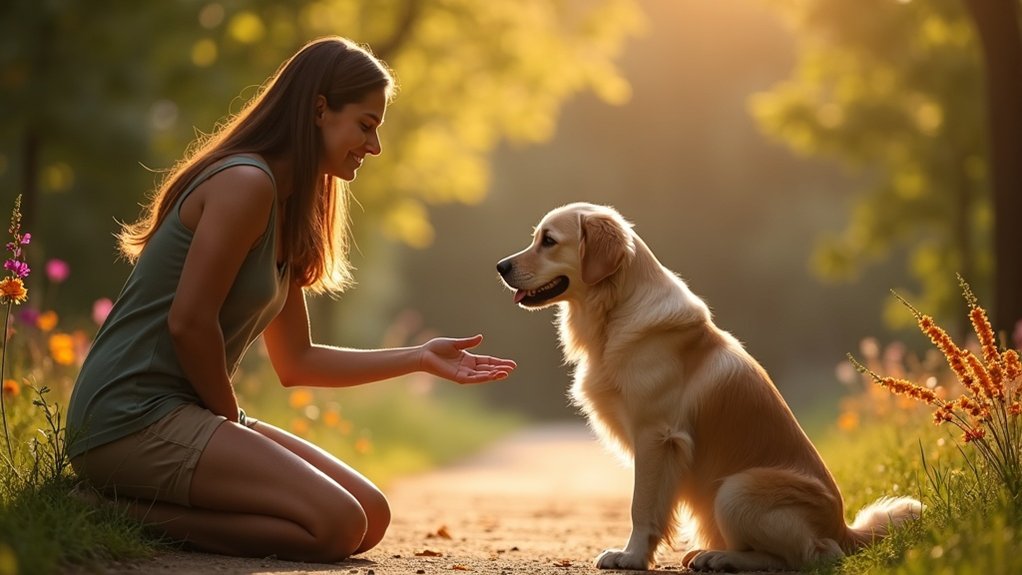
When you approach dogs calmly on paths, always seek permission from the owner first. Move slowly and respect the dog’s personal space; allow them to come to you. Look for calm body language, like a wagging tail and relaxed posture, to gauge their comfort level. Avoid heavy eye contact, which can feel threatening. Remember, being gentle and patient encourages a positive interaction—you’ll discover more tips for safe dog encounters if you keep going.
Key Takeaways
- Always ask the dog’s owner for permission before approaching their dog on the path.
- Move slowly and calmly to avoid startling the dog and respect its space.
- Allow the dog to approach you first, showing you are non-threatening.
- Use an upward palm for gentle chin scratches instead of reaching over the dog’s head.
- Observe the dog’s body language for signs of comfort or discomfort during the encounter.
Importance of Proper Dog Approach
When you consider approaching a dog, it’s essential to remember that not all dogs react the same way to strangers. Many dogs dislike having their personal space invaded, which can lead to bites.
To guarantee a safe interaction, always seek permission from the dog’s owner before approaching. When you do approach, do so calmly and gently, respecting the dog’s space to avoid startling them.
Understanding dog behavior helps you create positive experiences. Teaching children about safe interactions with dogs fosters respect and reduces the risk of aggressive reactions.
Always prioritize safety and empathy in your encounters with dogs.
Reading Dog Body Language
To approach dogs safely, you need to understand their body language.
Signs of discomfort like avoiding eye contact or a tense expression can indicate that a dog isn’t ready to engage.
Signs of Discomfort
Understanding a dog’s body language is essential for recognizing signs of discomfort, and there are several key indicators to watch for.
Pay attention to these signals to gauge your dog’s behavior:
- Avoiding eye contact, indicating stress or fear
- Ears pinned back and lip licking, suggesting anxiety
- A stiff posture with raised hackles, reflecting tension
- Jumping or barking, which may show discomfort in social situations
Positive Body Language
Recognizing positive body language in dogs can greatly enhance your interactions with them. Understanding signals like play bows or relaxed postures helps guarantee positive interactions. Pay attention to your dog’s body language and the other dog’s cues during on-leash greetings to avoid stress signals.
| Positive Signals | Interpretation |
|---|---|
| Play bow | Invitation to play |
| Relaxed posture | Comfort and ease |
| Wagging tail | Happiness and excitement |
| Soft eyes | Calm and friendly |
| Lying down | Seeking comfort or play |
These cues promote self-control and safety when approaching dogs on paths.
Contextual Behavior Indicators
When you approach a dog, paying attention to its body language is essential for ensuring a safe and positive interaction. Observing a dog’s face and body can reveal much about its feelings.
Look for these indicators:
- Ears pinned back or lip licking
- Avoiding eye contact
- Tense body posture
- Jumping or lunging behaviors
These signs often indicate discomfort or anxiety, reminding you to proceed with caution.
Do’s When Approaching a Dog
When you approach a dog, always start by asking the owner’s permission to guarantee a safe interaction.
Move slowly and calmly to avoid startling the dog, and remember to respect their personal space.
Allow the dog to come to you first, giving them the chance to sniff and feel comfortable before any contact.
Seek Owner Permission
Before you approach a dog, it’s crucial to seek permission from the owner or walker. This simple act guarantees safe interactions and shows respect for both the dog and its owner.
Remember, not every dog is comfortable with strangers.
- Always ask first; it builds trust.
- Respect the owner’s wishes if they decline.
- Understand that every dog has its personal space.
- Teach children the importance of asking for permission.
Approach Calmly and Gently
Approaching a dog calmly and gently is vital for fostering a positive interaction.
Always wait for permission from the dog’s owner before you approach.
When you do greet every dog, maintain a comfortable distance and allow the dog to come to you. This gives them a chance to sniff you first, which helps them feel safe.
If you wish to pet the dog, use an upward palm for chin scratches instead of reaching over their head.
It’s important to teach children these principles, emphasizing the significance of gentle approaches and asking for permission to guarantee everyone’s comfort and safety.
Respect Dog’s Personal Space
Respecting a dog’s personal space is key to ensuring a positive encounter. When you approach, remember that dogs feel safe when given space.
Here are some do’s to keep in mind:
- Always seek permission from the dog’s owner before approaching.
- Maintain a comfortable distance initially to respect the dog’s personal space.
- Approach calmly and gently, avoiding sudden movements that might startle the dog.
- Allow them to greet you first by sniffing, giving them control over the interaction.
Don’ts When Approaching a Dog
While it might seem natural to reach out to a dog you see, it’s essential to remember that not all dogs welcome the attention of strangers. Here are some key don’ts when approaching a dog:
| Don’ts | Explanation |
|---|---|
| Assume Consent | Always seek the owner’s permission first. |
| Reach Overhead | Avoid this; use an upward palm instead. |
| Invade Space | Respect their space to prevent stress. |
| Make Heavy Eye Contact | This can be seen as a threat. |
Proceeding With Caution
When you encounter a dog, it’s important to remember that every dog has its unique temperament and comfort level.
To guarantee a positive interaction, always proceed with caution.
- Observe the dog’s body language from a distance away.
- Stay calm to avoid increasing their anxiety.
- Seek permission from the owner before you greet.
- Be aware that dogs can have off days, so patience is key.
Engaging With Other Dog Owners
Approaching other dog owners can be just as important as how you approach their dogs. Assess their demeanor for signs of nervousness. Politely ask them to call their dog back if needed, creating a calmer environment. Remember, not all dogs are friendly. Here’s a quick guide:
| Action | Purpose | Outcome |
|---|---|---|
| Greet their dog | Builds rapport | Reduces tension |
| Stop pulling | Guarantees safety | Positive interaction |
| Stay calm | Influences your dog’s behavior | Promotes friendly encounters |
Training for Good Dog Manners
Training your dog for good manners is essential for fostering positive interactions with other dogs and people. It’s a great opportunity to build trust and control during walks.
Training your dog in good manners is vital for positive interactions and building trust during walks.
Focus on:
- Using verbal corrections like “eh eh” and gentle leash adjustments.
- Limiting greetings to calm dogs to prevent bad experiences.
- Maintaining a structured approach to keep your dog focused on you.
- Practicing laps around other dogs to guarantee friendly interactions.
These techniques help you manage encounters effectively, making walks enjoyable for both you and your dog.