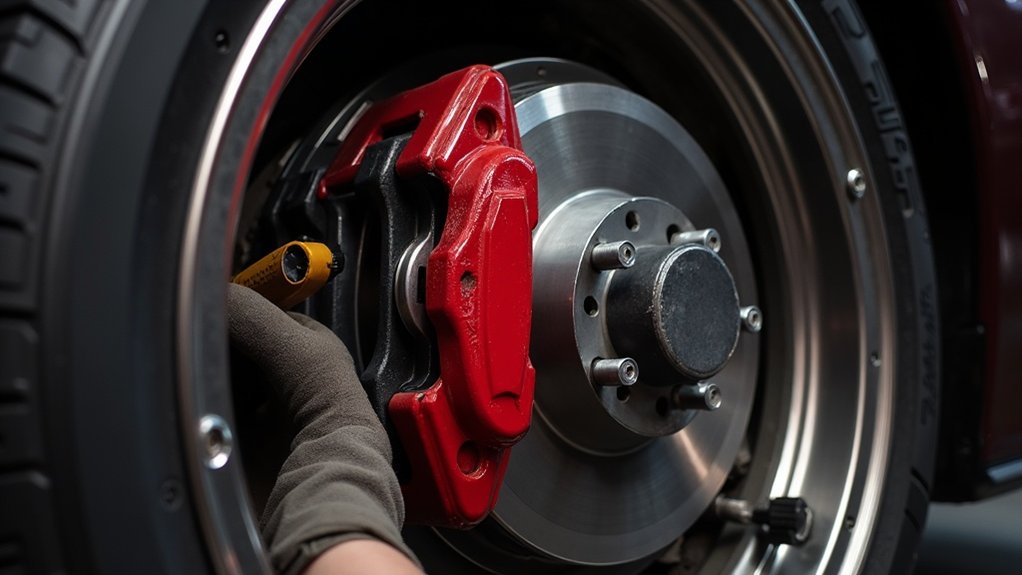
To align a brake caliper, first gather your tools: an Allen wrench, clean cloth, and a bike stand. Loosen the caliper bolts slightly to allow movement. Squeeze the brake lever while spinning the wheel to let the caliper self-align. Maintain pressure on the lever as you tighten the bolts securely. Finally, check for any rubbing noise by spinning the wheel. Proper alignment guarantees safety and performance—you’ll discover more tips to keep your bike in peak condition.
Key Takeaways
- Loosen the caliper bolts slightly with an Allen wrench to allow for movement without detaching the caliper.
- Squeeze the brake lever while spinning the wheel to facilitate self-alignment of the caliper.
- Maintain pressure on the brake lever as you tighten the caliper bolts securely to ensure proper alignment.
- Spin the wheel to check for any rubbing noise or resistance from the brake pads against the rotor.
- Regularly inspect and adjust the caliper to prevent brake drag and ensure optimal braking performance.
Tools Needed for Caliper Alignment
To effectively align a brake caliper, you’ll need a few essential tools. The primary tool is an allen wrench, which allows you to loosen and tighten the caliper bolts. Make sure you have the right size to guarantee effective adjustment.
A clean cloth is useful for wiping the caliper and rotor, preventing debris from affecting alignment. Elevating your bike with a stand makes it easier to spin the wheel, helping the caliper move around the disc brake.
Additionally, a torque wrench is beneficial for tightening bolts to the manufacturer’s specified torque, ensuring peak brake performance.
Loosening the Caliper Bolts
Before you can effectively realign your brake caliper, you’ll need to loosen the caliper bolts. Use an Allen wrench to turn the bolts just a couple of turns—there’s no need to remove them completely. This allows the caliper to shift slightly, facilitating proper alignment during adjustment. Remember, you only want to loosen them a little bit to allow movement without detaching the caliper from the bike frame.
| Action | Description |
|---|---|
| Loosen Caliper Bolts | Turn bolts a couple of turns with Allen wrench. |
| Check Movement | Verify caliper can shift freely. |
| Prepare for Alignment | Set stage for realignment and adjustment. |
Preparing for Realignment
Before you start realigning the brake caliper, make sure you’ve gathered all the required tools and taken necessary safety precautions.
Inspect the caliper for any signs of wear or damage, as this can affect alignment.
With everything in place, you’re ready to proceed to the next steps for an accurate realignment.
Required Tools Gathered
Gathering the right tools is essential for successfully aligning a brake caliper. You’ll need an Allen wrench, which is vital for loosening and tightening the caliper bolts.
Make sure your workspace is clean to enhance visibility and prevent losing small parts. Before you start, check the condition of your brake pads and rotor, as any wear or damage can hinder the alignment process.
It’s also beneficial to use a bike stand or elevate the bike for easier access. Finally, confirm the specific size of the Allen wrench required for your bike’s caliper bolts to guarantee a proper fit.
Safety Precautions Taken
Ensuring safety precautions are taken is essential when preparing to realign your brake caliper.
First, place your bike on a stable surface or bike stand to prevent any accidental falls.
Wear safety glasses to shield your eyes from debris during the adjustment process.
Before loosening caliper bolts, confirm that the wheel is securely installed to avoid misalignment issues.
Additionally, use gloves to maintain a clean working environment and prevent contamination of brake components.
Finally, familiarize yourself with your bike’s specific brake system, as different models may have unique features or requirements for safe adjustment.
Caliper Inspection Completed
Once you’ve completed the initial inspection of your brake caliper, it’s vital to address any potential issues that could impact performance during realignment.
Start by checking for signs of damage or wear on the caliper itself. Confirm the rotor is clean, as debris can interfere with alignment. Inspect the caliper bolts for any corrosion or overtightening, which can complicate adjustments.
Spin the wheel to confirm there are no obstructions and that the rotor moves freely within the caliper’s range.
Finally, verify that the brake pads are evenly worn and properly seated to guarantee effective alignment.
The Realignment Process
To realign the brake caliper, start by loosening the caliper bolts with an allen wrench, but don’t remove them completely.
Next, squeeze the brake lever while spinning the wheel; this allows the caliper to adjust itself in relation to the rotor.
Finally, hold the brake lever down and securely tighten the caliper bolts to maintain the proper alignment.
Loosen Caliper Bolts
Loosen the caliper bolts using an allen wrench by turning them a couple of times instead of removing them entirely. This slight adjustment allows the caliper to move and realign, which is essential for correcting any brake drag or noise.
After loosening, spin the wheel while squeezing the brake lever; this action helps the caliper reposition itself accurately in relation to the rotor. Repeat this process a few times to guarantee proper self-alignment during brake engagement.
Once you’ve achieved alignment, hold the brake lever down and securely tighten the caliper bolts to maintain the new position and eliminate any rubbing noise.
Squeeze Brake Lever
After you’ve loosened the caliper bolts, the next step involves squeezing the brake lever. This action allows the caliper to self-align with the rotor as the brake pads contact it.
To guarantee accuracy, repeat this process several times while spinning the wheel; this facilitates caliper movement and helps achieve the best alignment.
Once you feel the caliper settle correctly, hold the brake lever down to maintain this position before proceeding to tighten the bolts.
Proper alignment eliminates brake drag and noise, resulting in smoother brake operation and enhanced safety during your rides.
Tighten Caliper Bolts
Hold the brake lever firmly in place to maintain the caliper’s alignment before you start tightening the caliper bolts. Use the correct-sized allen wrench to snugly tighten the bolts, making sure not to over-torque them. This step is crucial as it prevents misalignment that could lead to brake drag or noise. Periodically checking the tightness of the caliper bolts is recommended for peak brake performance. Once tightened, spin the wheel to confirm there’s no rubbing noise and that the brake system operates smoothly.
| Step | Action | Notes |
|---|---|---|
| 1. Hold Lever | Squeeze and maintain pressure | Prevents misalignment |
| 2. Select Wrench | Choose appropriate size | Guarantee a secure fit |
| 3. Tighten Bolts | Snugly tighten without over-torquing | Avoid brake issues |
| 4. Spin Wheel | Check for rubbing noise | Confirm successful alignment |
| 5. Regular Check | Periodically inspect bolts | Maintain peak performance |
Importance of Proper Caliper Positioning
Proper caliper positioning is essential for excellent braking performance and safety. Misalignment can lead to brake drag, increasing wear on both brake pads and rotors. This not only diminishes stopping power but also poses significant safety risks while riding.
Regularly checking and adjusting the caliper guarantees maximum contact with the rotor, enhancing braking efficiency. A well-aligned caliper contributes to quieter operation, eliminating distracting noises from rotor contact.
Tightening the Caliper Bolts
To guarantee your brake caliper remains in the correct position, you’ll need to tighten the caliper bolts carefully.
Start by holding the brake lever down, which maintains alignment and guarantees proper contact with the rotor. Using an allen wrench, snugly tighten the caliper bolts, but avoid over-tightening to prevent damage to the components.
After securing the bolts, listen for any rubbing noise; this indicates whether further adjustments are necessary.
Regularly tightening caliper bolts is essential for bike maintenance, contributing greatly to the overall performance and safety of your braking system.
Prioritize this step to guarantee reliable braking.
Final Checks for Brake Performance
After aligning the brake caliper, it’s crucial to conduct a series of final checks to guarantee peak performance.
Start by squeezing the brake lever to check for any residual rubbing against the rotor. While maintaining pressure on the lever, securely tighten the caliper bolts to prevent misalignment.
Next, spin the wheel to confirm the brake pads aren’t dragging and that the rotor spins freely.
Finally, during a test ride, listen for unusual noises like rubbing or grinding. Regularly inspecting brake performance helps catch alignment issues early, ensuring safety while riding.
Regular Maintenance Tips for Your Bike
Maintaining your bike regularly is essential for ensuring peak performance and safety on every ride.
Check and adjust your brake calipers frequently to prevent dragging and noise, which can compromise braking efficiency. Use an allen wrench to loosen caliper bolts, allowing movement for realignment with the rotor.
Squeeze the brake lever while spinning the wheel to help the caliper self-align; repeat this several times for ideal results. After alignment, hold the brake lever down and securely tighten the caliper bolts.
Incorporating these checks into your routine maintenance enhances your riding experience and prolongs the lifespan of your brake components.