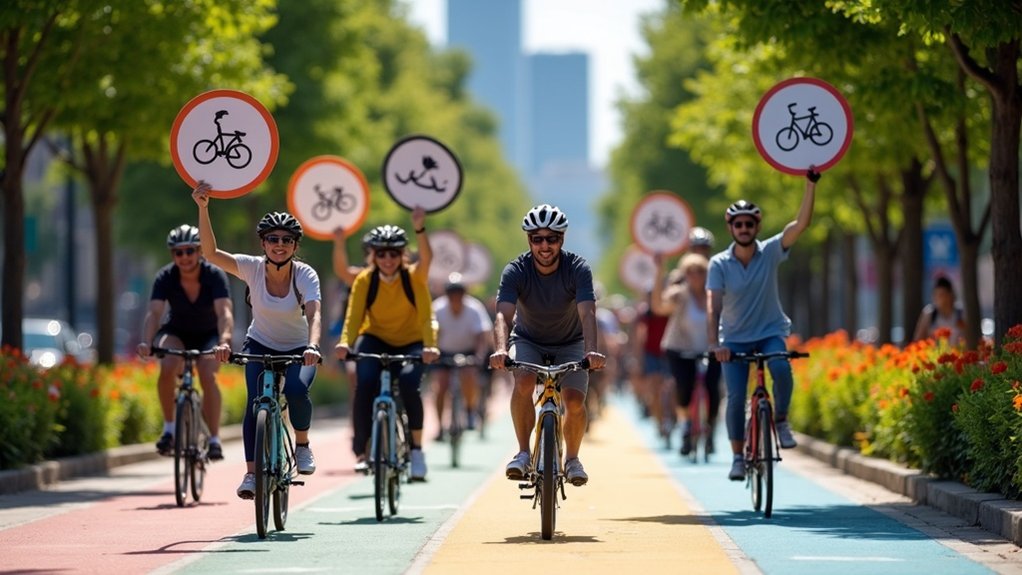
To advocate for better bike lanes, start by engaging your community and organizing local rides to build support. Collaborate with businesses and gather feedback to shape projects that meet local needs. Secure funding by exploring grants and presenting a clear project scope to local governments. Use social media to share success stories and address common misconceptions about biking. By rallying community involvement, you can create a stronger push for safer cycling infrastructure that truly benefits everyone involved. Discover more effective strategies to amplify your efforts.
Key Takeaways
- Organize community rides to build support and demonstrate the demand for safer bike lanes.
- Collaborate with local businesses to promote biking initiatives and events that raise awareness.
- Create petitions and surveys to gather community input, showcasing demand for improved bike infrastructure.
- Engage with local government by presenting data on the benefits of bike lanes for safety and economy.
- Leverage social media to share success stories and rally community support for biking advocacy efforts.
Understanding the Importance of Advocacy for Better Bike Lanes
When you consider the impact of biking on urban environments, it’s clear that advocating for better bike lanes isn’t just beneficial—it’s essential.
Effective advocacy fosters safe bike infrastructure, encouraging more individuals to cycle, which can markedly reduce traffic-related injuries. By engaging with local government, you can drive policy changes that prioritize cycling, creating a Bicycle Friendly Community.
Increased cycling promotes public health and reduces pollution, while also enhancing local economies through greater foot traffic for businesses.
Ultimately, your advocacy can facilitate the development of dedicated bike lanes, establishing a sustainable, healthier transportation option for everyone in the community.
Building Community Involvement and Engagement
Advocacy for better bike lanes thrives on strong community involvement and engagement.
By actively participating, you can shape a biking culture that reflects local needs.
Active community involvement allows you to influence a biking culture that truly meets local needs.
Consider these strategies:
- Organize community rides to rally support and showcase commitment to safer biking environments.
- Collaborate with local businesses to enhance resources and promote biking events, boosting the economy.
- Collect feedback from locals to guide project planning, ensuring infrastructure meets their preferences.
Securing Funding and Resources for Infrastructure Projects
To secure funding for bike lane projects, you need to identify potential grants and develop a strong application strategy.
Forming partnerships with local businesses can also enhance your financial resources and community support.
Funding Sources Identification
Identifying funding sources is essential for enhancing bike lane infrastructure and ensuring sustainable cycling options in our communities. You’ll want to explore various avenues to secure financial support:
- Investigate local bike plans that highlight funding programs and priority projects.
- Analyze city budgets to grasp the commitment towards bike infrastructure improvements.
- Leverage Capital Improvement Plans and Transportation Improvement Programs for future initiatives.
Engaging with city staff can provide valuable insights into budget priorities and timing.
Grant Application Strategies
While securing funding for bike lane projects can be a complex process, a strategic approach to grant applications can greatly enhance your chances of success. Identify grants like the Transportation Alternatives Program (TAP) that support active transportation. Collaborate with local governments and community organizations to showcase community support. Clearly outline your project’s scope and budget, emphasizing safety and accessibility improvements. Data on existing bike lane usage can justify your funding request.
| Key Elements | Considerations |
|---|---|
| Community Support | Petitions and letters of endorsement |
| Project Details | Scope, budget, and expected outcomes |
| Funding Sources | Local, state, and federal program options |
Community Partnership Development
Effective community partnership development is essential when seeking funding and resources for bike lane infrastructure projects. By collaborating with local businesses and advocacy groups, you can enhance your funding opportunities and create a united front for better bike lanes.
Consider these strategies:
- Build relationships with community organizations for shared resources.
- Organize fundraising events to raise awareness and financial support.
- Engage local government officials to advocate for specific budget allocations.
These efforts foster community investment in bike lane projects, ensuring safer and more accessible cycling infrastructure for everyone.
Together, we can make a significant impact on our biking environment.
Developing Effective Advocacy Strategies
To successfully advocate for better bike lanes, it’s essential to leverage a combination of strategic collaboration and community engagement.
Start by collaborating with local government, presenting data on how protected bike lanes enhance safety and reduce congestion. Use social media to share success stories from other cities and rally support.
Create petitions to showcase community interest, gathering signatures to present to city officials. Host community events, like bike rides and workshops, to foster a supportive culture around biking.
Finally, network with local bike advocacy groups to unify efforts, sharing resources that amplify your impact in pushing for policy changes.
Addressing Common Misconceptions and Concerns
You might worry that biking isn’t safe or practical, but the evidence tells a different story.
Protected bike lanes not only enhance safety but can also encourage more people to bike, especially for short trips that make up half of our car journeys.
Plus, as foot traffic increases from better cycling infrastructure, local businesses stand to gain, dispelling the myth that bike lanes hurt community access.
Safety Perceptions Explained
While many individuals express concerns about biking safety, it’s important to understand that these perceptions often stem from misconceptions rather than reality.
- Protected bike lanes can greatly increase cycling rates.
- Research shows that properly designed bike infrastructure doesn’t hinder emergency services.
- Enhanced bike facilities reduce vehicle congestion and pollution.
Short Trips Viable
Many people underestimate the viability of biking for short trips, often viewing it as impractical or inconvenient.
However, about 50% of car trips are 3 miles or less, making biking a feasible option if adequate bike lane infrastructure is established.
Studies indicate that connected bike lanes considerably boost cycling rates, suggesting that safety concerns, not interest, hinder potential cyclists.
Additionally, e-bikes enhance accessibility for hilly areas and heavier loads.
Community Engagement Benefits
Engaging residents in biking initiatives not only addresses common misconceptions but also fosters a collaborative environment where concerns about bike lanes can be openly discussed.
By prioritizing community engagement, you can:
- Dispel the myth that bike lanes are underutilized, highlighting safety as the key concern.
- Create a platform for local bicycling enthusiasts to share feedback on bike infrastructure.
- Educate residents on practical biking solutions, like e-bikes, to ease worries about comfort and terrain.
This proactive approach not only promotes public safety but also strengthens advocacy efforts, uniting the community in support of better bike lanes.
Organizing Events and Activities to Promote Biking Culture
To effectively promote a biking culture, organizing community events and activities is essential. Engaging in community rides enhances safety in numbers, particularly for children. Fundraising events build awareness and strengthen community ties, while bike and helmet decorating activities make safety gear more appealing. Collaborating with local coalitions for education classes boosts confidence among new cyclists. Additionally, creating temporary traffic-calming street murals fosters artistic expression and promotes a bike-friendly environment.
| Event Type | Purpose |
|---|---|
| Community Rides | Enhance safety and lifelong biking habits |
| Fundraising Events | Raise awareness and build community bonds |
| Education Classes | Teach safe riding practices |
| Street Murals | Encourage artistic expression and safety |