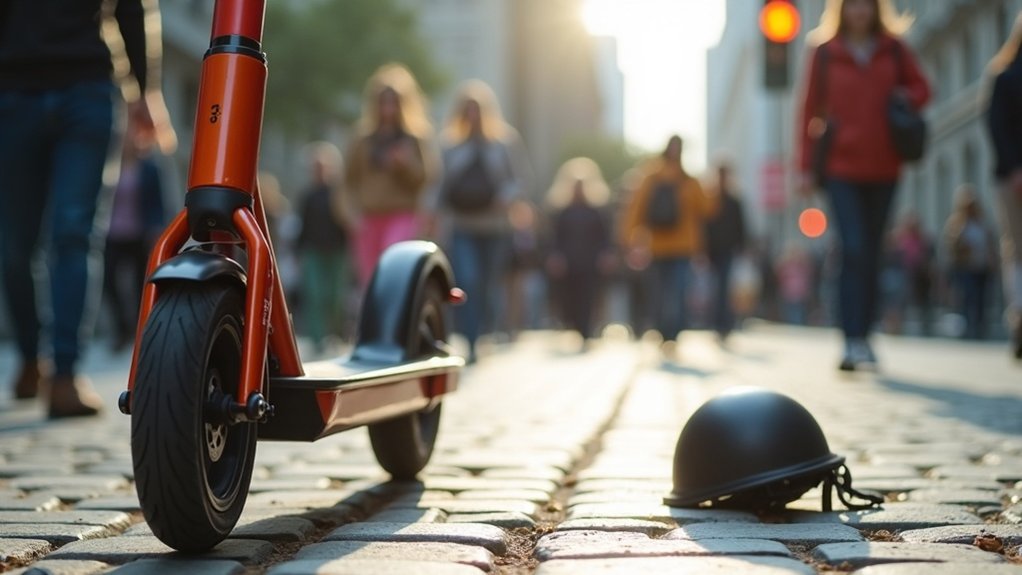
Electric scooters pose safety concerns, with a 45% increase in related injuries leading to nearly 57,000 ER visits in 2022. Most accidents happen in urban areas, and head trauma accounts for around 40% of injuries. Speed, alcohol, and poor maintenance contribute to these risks, while less than 5% of riders wear helmets. To guarantee your safety, it’s essential to understand local laws and adopt safe riding practices. There’s more to explore about making your e-scooter experience safer.
Key Takeaways
- E-scooter injuries increased by 45% in 2022, leading to nearly 57,000 emergency room visits, particularly in urban areas.
- Head trauma constitutes about 40% of e-scooter injuries, often caused by high speeds of 15-20 mph.
- Helmet usage is vital, as it can reduce serious head injuries by up to 44, yet less than 5% of riders wear them.
- Risk factors include alcohol involvement in 40% of accidents and poor maintenance by rental companies, increasing safety concerns.
- Safe riding practices, such as helmet use and awareness of local laws, are essential for minimizing injury risks while using e-scooters.
The Rising Popularity of E-Scooters and Safety Concerns
As e-scooters gain traction in urban settings, safety concerns are becoming increasingly hard to ignore.
The surge in rentals has led to a staggering 45% increase in injuries, with emergency room visits jumping to nearly 57,000 in 2022. Urban areas, home to 83% of e-scooter accidents, highlight the risks as users zip along at speeds of 15-20 mph.
Particularly vulnerable are riders under 16, with the American Academy of Pediatrics advising against e-scooter use for this age group due to the heightened risk of severe injuries.
Wearing a helmet is essential for minimizing injury risk, yet many riders neglect this safety measure.
Common Injuries Associated With E-Scooter Use
When using e-scooters, you face a range of potential injuries, with cuts, fractures, and head trauma being the most common.
Data shows that nearly 40% of these injuries involve head trauma, particularly alarming given the high risk in urban settings.
Understanding both the types of injuries and the risk factors involved can help you make informed decisions about safety while riding.
Common Injury Types
Electric scooters have gained popularity, but this rise comes with significant safety concerns, particularly regarding common injuries.
Riders face numerous risks, especially considering that e-scooters can reach speeds of 15-20 mph. Common injuries include:
- Head injuries, often from accidents involving motor vehicles
- Fractures due to loss of rider control
- Cuts and abrasions from falls
- Sprains and strains from sudden movements
- Trauma, particularly among children under 16
With approximately 40% of injuries involving head trauma, it’s essential to wear helmets to mitigate these safety issues and reduce the severity of potential accidents involving e-scooter riders.
Risk Factors for Injuries
Injuries from electric scooters aren’t just a result of accidents—they’re influenced by various risk factors that can heighten the likelihood of harm.
Riding at speeds of 15-20 mph greatly increases the risk of serious injury, especially head injuries, which account for 40% of e-scooter-related incidents.
Urban areas, where 83% of accidents occur, present additional dangers due to shared roads and inadequate infrastructure.
In addition, the American Academy of Pediatrics warns that children under 16 face heightened risks, emphasizing the importance of wearing helmets.
Understanding these risk factors is essential for safer e-scooter use and reducing injury rates.
Factors Contributing to E-Scooter Accidents
While traversing the bustling streets of urban areas, riders often encounter a myriad of factors that greatly contribute to e-scooter accidents. Understanding these can help you stay safe.
- High accident rates on sidewalks (nearly 60%)
- Speed capabilities of 15-20 mph leading to severe injuries
- Influence of alcohol in 40% of accidents
- Poor maintenance by rental companies affecting safety
- Dense urban environments accounting for 83% of e-scooter accidents
These factors highlight the importance of awareness and caution while steering through the city.
Always consider protective gear and remain vigilant to minimize your risk of injuries per ride.
Importance of Helmet Use and Protective Gear
When you ride an electric scooter, wearing a helmet isn’t just a choice; it’s an essential safety measure.
Research indicates that helmets can cut the risk of serious head injuries by up to 44%, which is crucial given that 40% of e-scooter injuries involve head trauma.
Additionally, incorporating other protective gear like closed-toe shoes and pads can greatly enhance your safety during rides.
Helmet Effectiveness in Prevention
Although many riders may underestimate the dangers associated with e-scooter use, wearing a helmet is vital for reducing the risk of serious head injuries. Studies show helmets greatly reduce head injury risk by up to 44%.
Unfortunately, less than 5% of e-scooter riders wear helmets, a trend that raises safety concerns. The American Academy of Pediatrics advises against children under 16 operating e-scooters without protective gear.
Social media’s portrayal of riding without helmets can further discourage safe practices.
- Helmets greatly reduce injury risk.
- Compliance with local laws varies.
- Protective gear is vital for all ages.
- Social influences impact safety behavior.
- Awareness campaigns are necessary.
Essential Safety Gear Guidelines
To secure your safety while riding an electric scooter, it’s crucial to prioritize the use of helmets and other protective gear. Studies reveal that 40% of e-scooter injuries involve head trauma, yet fewer than 5% of riders wear helmets. Equip yourself with closed-toe shoes and protective gear like elbow and knee pads to minimize injury risks. Additionally, reflective gear enhances visibility, especially in poorly lit areas. Follow these guidelines to guarantee your safety while guiding e-scooters on sidewalks.
| Gear Type | Importance |
|---|---|
| Helmet | Reduces head injury risk |
| Closed-toe shoes | Protects feet from accidents |
| Protective gear | Shields joints during falls |
| Reflective gear | Increases visibility at night |
Local Laws and Regulations for E-Scooter Riders
Steering through the world of electric scooters requires a keen awareness of local laws and regulations that govern their use.
Riders must navigate various rules, as compliance is essential for safety and legality:
- Minimum age requirements often set at 16 years.
- Helmet laws vary, with stricter regulations in some local jurisdictions.
- Traffic violations can lead to fines, treating those 16 and older as adults.
- Nearly 60% of e-scooter accidents occur on sidewalks, where riding is frequently prohibited.
- Specific regulations dictate the use of bike lanes, impacting overall safety and accident rates.
Understanding these laws is imperative for responsible riding.
Recommendations for Safe Riding Practices
Understanding local laws and regulations is only part of guaranteeing a safe ride on your electric scooter; adopting specific riding practices can greatly enhance your safety. Always wear a helmet to reduce head injury risk by up to 44%, as fewer than 5% of riders do. Maintain a slow riding speed to improve reaction time and lessen injury severity. Conduct a pre-ride inspection to check for damage, and stay vigilant for hazards like potholes and opening car doors.
| Practice | Importance |
|---|---|
| Wear a helmet | Reduces head injury risk considerably |
| Slow riding speed | Increases reaction time |
| Pre-ride inspection | Guarantees scooter is in good condition |
| Awareness of hazards | Prevents accidents |
The Role of Maintenance in E-Scooter Safety
While many riders focus on safe practices and local regulations, the role of maintenance in e-scooter safety is equally critical.
Rider safety hinges not only on safe practices but also on the crucial maintenance of e-scooters.
Neglecting maintenance issues can lead to significant operational issues, putting rider safety at risk.
- Conduct regular inspections for wear and tear
- Perform safety checks on brakes, handlebars, and tires
- Monitor battery health to prevent fire hazards
- Address any signs of damage promptly
- Make certain rental companies prioritize maintenance