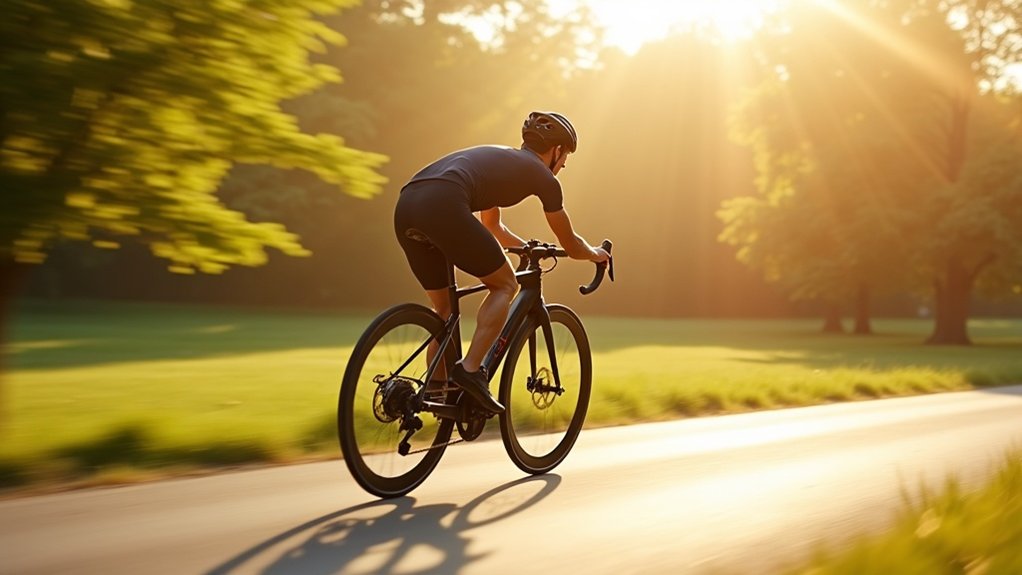
Electric bicycles can typically reach speeds between 20 to 28 mph, depending on their class. Class 1 and Class 2 e-bikes are limited to 20 mph with pedal assistance, while Class 3 models can assist you up to 28 mph when pedaling. Factors like motor wattage, rider weight, terrain, and riding conditions impact overall speed. If you want to learn more about choosing the right e-bike or other related aspects, keep exploring the details.
Key Takeaways
- Electric bicycles typically reach top speeds between 20 to 28 mph, depending on the class and model.
- Class 1 and Class 2 eBikes are limited to a maximum speed of 20 mph.
- Class 3 eBikes can assist riders up to 28 mph when pedaling.
- Motor power impacts speed, with higher wattage motors providing better performance on inclines and against wind.
- Local laws may regulate e-bike speeds, affecting classification and helmet requirements.
Understanding Electric Bicycle Speed
How fast can electric bicycles really go? The average top speed of an electric bike ranges from 20 to 28 mph, depending on its classification.
Class 1 and Class 2 eBikes cap at 20 mph, while Class 3 can assist up to 28 mph when you pedal. Motor power plays a significant role, with outputs varying from 250W to over 6000W in high-performance models.
However, factors that affect speed include the rider’s weight, terrain, and riding conditions. Always keep in mind the legal speed limits in your area, as exceeding them may reclassify your electric bike as a moped or motorcycle.
Types of Electric Bikes and Their Speeds
When exploring electric bikes, you’ll encounter three main classes, each with unique speed capabilities.
Class 1 and Class 2 e-bikes cap at 20 mph, offering a mix of pedal assistance and throttle options, while Class 3 bikes push the limit to 28 mph for those seeking more performance.
Understanding these differences helps you choose the right bike for your riding style and local regulations.
Class 1 E-Bikes
Ever wondered what makes Class 1 e-bikes a popular choice among cyclists?
These bikes offer pedal assistance, allowing you to reach a maximum speed of 20 mph while actively pedaling. With a motor power that typically doesn’t exceed 750 watts, they align with legal definitions for low-speed bicycles.
This feature makes them ideal for commuting and recreational riding, perfect for paths where motorized vehicles are restricted.
Plus, Class 1 e-bikes come with lower regulatory restrictions compared to higher-class models, providing a seamless blend of traditional biking and modern support.
Enjoy the ride while benefiting from the ease of use!
Class 2 E-Bikes
Class 2 e-bikes take the riding experience a step further by offering both pedal assistance and throttle operation, making them incredibly user-friendly.
These electric bikes allow you to reach speeds up to 20 mph without pedaling, which is perfect for casual riders and those seeking a boost on inclines. Once you hit that speed, the motor assistance stops, ensuring compliance with local regulations.
Their versatility makes Class 2 e-bikes appealing to both beginners and experienced cyclists. Unlike Class 1 e-bikes, you can coast with throttle control, enhancing convenience and enjoyment during your rides.
Class 3 E-Bikes
If you’re looking to experience the thrill of speed on two wheels, Class 3 e-bikes, often referred to as speed pedelecs, are designed to meet your needs.
Capable of reaching higher speeds up to 28 mph, these bikes provide pedal assistance only, requiring you to actively pedal to engage the motor.
Most Class 3 e-bikes feature motors rated at 750 watts or more, enhancing performance and acceleration.
However, keep in mind that many states require helmet use due to safety concerns, and specific regulations may restrict where you can ride.
Always check local laws before hopping on your speed pedelec.
Factors Influencing Electric Bicycle Speed
When it comes to electric bicycle speed, several key factors come into play.
Your motor’s power rating, the terrain you’re riding on, and your weight can all considerably influence how fast you can go.
Understanding these elements will help you optimize your riding experience and achieve better speeds.
Motor Power Ratings
Understanding motor power ratings is essential for grasping how speed and acceleration work in electric bicycles. The power output, measured in watts, directly influences your E-bike’s speed and ability to accelerate.
Higher wattage, like 750W, enables quicker acceleration compared to lower wattage motors, such as 250W. E-bikes typically range from 250W to 6000W, with more power being vital for reaching top speeds, especially on inclines.
Additionally, the combined weight of the bike and rider affects how much power is needed to achieve higher speeds, while regulatory limits can cap maximum speeds based on motor power ratings.
Terrain and Conditions
While you might be keen to test the limits of your electric bicycle, the terrain and conditions you encounter play an essential role in determining how fast you’ll actually go.
Flat, paved surfaces let you reach higher speeds more easily, while hills and rough riding surfaces slow you down. Uphill riding drains energy, but descending can boost your speed.
Weather conditions like rain or snow affect traction, and strong winds introduce wind resistance that hampers your ride.
On smoother roads, you’ll enjoy less rolling resistance, allowing for a more effortless and speedy experience.
Choose your route wisely to maximize your e-bike performance!
Rider Weight and Ability
Rider weight and ability are essential factors that can greatly influence the speed of your electric bicycle. Lighter riders often maintain higher speeds due to lower energy requirements. Your pedaling technique also matters; an aerodynamic posture reduces wind resistance, enhancing performance. Meanwhile, experienced riders utilize power assistance more effectively, optimizing their effort for better speed.
| Rider Weight | Speed Potential | Experience Level |
|---|---|---|
| Light | High | Advanced |
| Medium | Moderate | Intermediate |
| Heavy | Low | Novice |
Understanding these dynamics can help you maximize your e-bike experience.
Motor Power and Wattage
Motor power plays an essential role in determining the performance of electric bicycles, particularly regarding acceleration and top speed.
The wattage of an e-bike motor, typically ranging from 250W to 750W, greatly influences how quickly you can reach higher speeds. A 750W motor, for instance, accelerates faster than a 250W motor, making it better for performance-oriented riding.
Additionally, higher wattage motors excel in tackling steep inclines and overcoming wind resistance. Generally, you can expect speeds of 20 mph for Class 1 and 2 e-bikes, while Class 3 e-bikes with pedal assistance can reach up to 28 mph, showcasing the impact of motor power.
Terrain and Riding Conditions
The terrain and riding conditions you encounter play a significant role in how fast your electric bicycle can go. On flat, paved surfaces, you can easily reach top speeds, while rough or inclined terrains hinder acceleration and overall performance.
Uphill riding demands more effort, reducing your speed due to gravity and resistance. Conversely, descending hills often allows you to exceed speed limits, especially if you don’t pedal.
Additionally, factors like headwinds or wet surfaces can negatively impact your bike’s acceleration. Ultimately, smoother roads facilitate quicker speeds, while uneven surfaces can slow down your e-bike, affecting your overall riding experience.
Rider Factors: Weight and Ability
When it comes to the speed of electric bicycles, your weight and physical ability play essential roles. Lighter riders often experience better speed performance since they can maintain higher speeds with less effort.
Your physical ability, including pedaling strength and endurance, determines how effectively you utilize motor assistance. If you’re physically fit or experienced, you’ll likely achieve better acceleration.
Additionally, proper riding posture enhances your ability to reach and sustain higher speeds. Remember, heavier loads—whether from your weight or cargo—can reduce the e-bike’s efficiency, leading to slower speeds and increased energy consumption.
Legal Aspects of Electric Bicycle Speeds
Understanding the legal aspects of electric bicycle speeds is essential for any rider who wants to stay compliant and enjoy their ride without hassle.
Understanding the legalities of e-bike speeds is crucial for compliant and hassle-free rides.
Here are key points to reflect on:
- Speed Limits: Class 1 and Class 2 e-bikes are limited to 20 mph; Class 3 can assist up to 28 mph.
- Legal eBike Compliance: Exceeding these limits may reclassify your bike as a moped or motorcycle, imposing stricter regulations.
- Helmet Usage: Many states require helmets for Class 3 riders due to their higher speeds.
Being informed about these rules helps you navigate where your electric bike can go safely and legally.
Choosing the Best Electric Bike for Your Speed Needs
How do you know which electric bike suits your speed needs best? Start by considering the class of your e-bike.
Class 1 and 2 models assist up to 20 mph, while Class 3 can go up to 28 mph. If you crave higher top speeds, look for e-bikes with motors over 600W, as they’re faster and better for climbing.
Battery charge matters too; opt for models with a range of 60 miles or more for long rides.
Finally, lighter e-bikes typically facilitate faster average speeds, enhancing your overall experience.
Always check local regulations to ride safely.