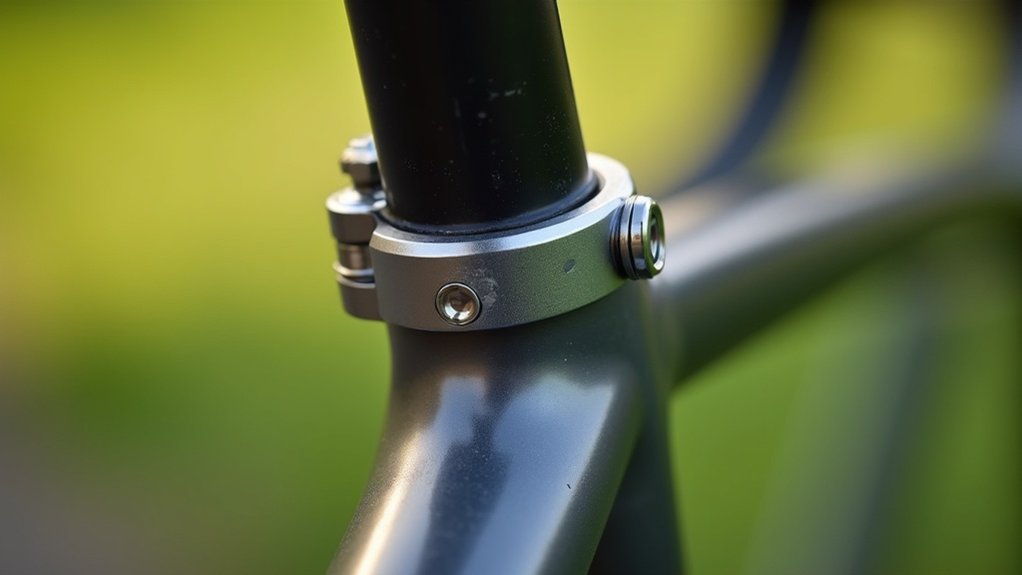
To prevent seatpost slippage, make certain your seatpost matches your frame’s diameter precisely. Clean both the seatpost and seat tube using a degreaser, and apply a thin layer of Carbon Assembly Paste for improved friction. Inspect the clamp regularly for wear and tighten it according to manufacturer’s torque specifications. For persistent issues, consider upgrading to a more robust clamp. Learn about additional maintenance tips and troubleshooting techniques for ongoing issues to keep your riding experience safe and smooth.
Key Takeaways
- Ensure the seatpost diameter matches the frame diameter precisely to enhance stability and prevent slippage.
- Regularly clean the seatpost and seat tube with a degreaser, removing dirt and grit that can reduce friction.
- Apply a thin layer of Carbon Assembly Paste to the seatpost before installation to increase grip and prevent movement.
- Inspect the seatpost clamp for wear and ensure it is tightened according to the manufacturer’s torque specifications.
- Consider upgrading to a higher-quality clamp with anti-slip features if slippage issues persist despite proper maintenance.
Understanding Seatpost Slippage
Understanding seatpost slippage is crucial for maintaining a safe and comfortable ride, especially since it can lead to performance issues and potential accidents.
Seat post slipping often occurs when the seatpost gradually descends or tilts within the seat tube due to insufficient friction or improper installation. To prevent this, make certain that your seatpost and frame diameters match and tighten the seatpost clamp adequately.
Seat post slippage can compromise your ride; ensure proper installation and matching diameters to maintain stability.
Regular maintenance, including cleaning the seatpost and applying carbon paste, enhances grip, particularly for carbon seatposts.
Using high-quality components is essential as inferior parts may fail to secure your saddle effectively, leading to frequent adjustments.
Common Causes of Seatpost Slippage
Seatpost slippage can often be traced back to a few common causes that riders should be aware of.
Insufficient friction between the seatpost and seat tube often results from dirt or grit; consequently, it’s essential to clean the inside regularly.
If your seatpost isn’t the correct size or if the clamp shows wear, you’ll likely experience seatpost slipping.
Additionally, both over-tightening and under-tightening the clamp can lead to issues.
Regular maintenance, including applying carbon assembly paste, can drastically improve grip and reduce slippage.
Environmental factors, like rough terrain, can also exacerbate the problem, making proper setup vital.
Proper Fit and Sizing for Seatposts
Getting the right seatpost size is essential for preventing slippage, so make sure it matches your frame’s diameter precisely.
Use a micrometer or caliper to measure the seatpost at various points, ensuring it’s perfectly round.
Also, check how deep the seatpost is inserted to maintain stability and follow proper torque specifications when tightening the clamp.
Importance of Correct Sizing
When selecting a seatpost, ensuring the correct size is essential to prevent slippage and maintain ideal performance.
Using a seatpost that’s too small can lead to significant issues, as it won’t fit securely within the seat tube. Aim for a seatpost diameter that matches the tube precisely and extends at least 3 inches into the frame for best support.
Regularly measure the seatpost and frame to check for consistency, as wear can cause slippage.
Additionally, consider material compatibility and invest in a quality seatpost with a reliable clamping mechanism to further minimize the risk of slipping during rides.
Measuring Techniques for Fit
To achieve an ideal fit for your seatpost, precise measurements are key. Start by measuring the internal diameter of your frame’s seat tube with a caliper to guarantee compatibility with standard seatpost sizes, like 27.2mm, 30.9mm, or 31.6mm.
Check for roundness by taking measurements along the carbon seat post’s length; irregularities can hinder stability. Insert the seatpost at least 10cm inside of the frame for adequate support.
If you notice slight out-of-roundness, use a shim to improve the grip. Regularly re-measure your seatpost and seat post clamp to catch any wear, assuring peak performance and fit.
Cleaning and Maintenance Practices
Although seatpost slippage can be a frustrating issue, regular cleaning and maintenance can greatly reduce the risk.
Start by cleaning the seatpost and the inside of the seat tube with a degreaser, removing dirt and grit that contribute to slippage.
After cleaning, apply a thin layer of Carbon Assembly Paste to enhance friction and prevent movement.
Don’t forget to inspect and tighten the clamp to the manufacturer’s torque specifications; this guarantees a secure attachment.
Finally, remove any excess paste to avoid attracting dirt.
Regular maintenance checks every few months keep your setup efficient and prevent future issues.
Recommended Assembly Compounds
When selecting assembly compounds, you’ll want to focus on carbon assembly paste with micropearls for ideal grip.
Confirm you apply a thin layer to avoid over-tightening while maintaining compatibility with various materials like carbon, aluminum, and steel.
Understanding the right application techniques will enhance performance and longevity, preventing slippage effectively.
Types of Assembly Paste
Choosing the right assembly paste is essential for ensuring a secure and reliable connection between your seatpost and frame.
Carbon Assembly Paste, formulated with micropearls, greatly enhances friction, effectively preventing slipping issues in carbon, aluminum, and steel seatposts.
Dynamic Carbon Assembly Paste is a favored option among pro cycling teams due to its corrosion resistance and ability to prevent component seizing.
When applying, use a thin coat to maximize grip without risking damage from over-tightening.
Alternatively, Finish Line Fiber Grip works well for aluminum posts, providing cyclists with an additional solution to maintain a secure setup and extend component lifespan.
Application Techniques
To achieve a secure and reliable connection between your seatpost and frame, it’s crucial to apply assembly compounds correctly.
Use Carbon Assembly Paste with micropearls, applying a thin layer to both the seatpost and inside the seat tube. This enhances friction without risking damage from over-tightening the seatpost clamp.
Regularly clean the surfaces to remove dirt or grit that could compromise grip. Always tighten the clamp according to the manufacturer’s torque specifications; a torque wrench guarantees you avoid both over-tightening and slippage.
Compatibility Considerations
Selecting the right assembly compounds is essential for ensuring compatibility between your seatpost and frame materials.
Use Carbon Assembly Paste, which contains micropearls, to enhance grip and reduce slippage. Apply a thin layer of this paste to both carbon and aluminum seatposts, preventing corrosion and ensuring compatibility.
Remember to follow the manufacturer’s torque specifications for your clamp bolt, as improper application can damage components. Avoid standard grease; it can lead to slippage on carbon parts.
Regularly inspect and clean the seatpost and frame interface, reapplying assembly paste during maintenance for ideal performance and longevity.
Troubleshooting Slipping Seatposts
When you notice your seatpost slipping, it’s crucial to troubleshoot the issue promptly to maintain your riding comfort and safety. Follow these steps:
- Check Compatibility: Verify your seatpost size matches the frame diameter. An improper fit can cause slippage.
- Inspect the Seatpost Clamp: Regularly examine the clamp for wear and tighten it using a torque wrench to the manufacturer’s specifications.
- Clean and Apply: Thoroughly clean the seatpost and inside the seat tube, then apply Carbon Assembly Paste to enhance friction and reduce slipping.
If problems persist, consider upgrading to a more robust clamp for better stability.
Upgrading Seatpost Clamps and Components
Upgrading your seatpost clamp and components can greatly enhance your bike’s overall performance and prevent slippage.
Opt for a high-quality aftermarket clamp, as it provides superior clamping force compared to standard options. Consider bolt-down designs for stability, minimizing the risk of loosening during rides.
A high-quality aftermarket clamp ensures superior clamping force, enhancing stability and reducing the risk of loosening during rides.
Choose materials like aluminum or titanium for better strength-to-weight ratios, especially important for carbon frames. Some clamps feature anti-slip elements, such as textured surfaces, which improve grip on the seat post.
Regularly inspect your upgraded clamp for wear or damage, as even the best components can degrade, potentially leading to slippage issues down the line.
Seeking Professional Help for Persistent Issues
Despite your best efforts to maintain your bike, persistent seatpost slippage can signal deeper issues that require professional intervention. A visit to your local bike shop can provide the expertise needed to tackle these problems effectively.
Here’s what you can expect:
- Compatibility Check: Mechanics will assess your seatpost and frame for fit or diameter discrepancies.
- Proper Application: They’ll guide you on the correct use of assembly paste and torque specifications to avoid slippage.
- Preventive Care: Regular check-ups can monitor wear, ensuring timely fixes before slippage becomes a major issue.
Don’t hesitate to seek help!