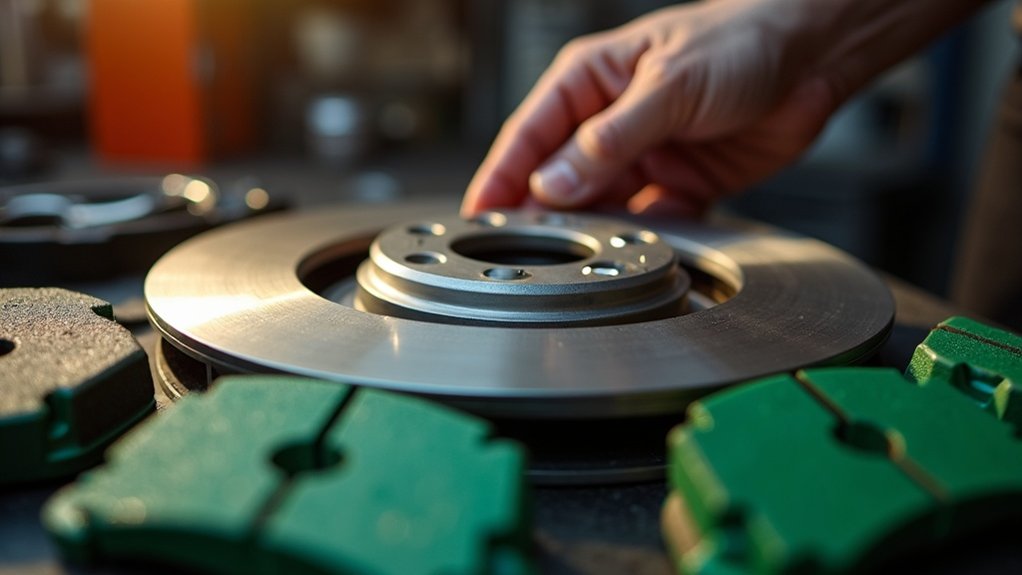
To prevent brake squeal, you should regularly inspect and maintain components like pads and rotors. Make certain proper lubrication at contact points, but avoid applying grease to friction surfaces. Choose high-quality brake pads, preferably ceramic or low-metal types, that include noise-dampening features. Don’t forget to check and replace worn hardware like clips and pins. Address environmental factors by keeping brakes dry and debris-free. For more tips on minimizing squeal, continue to explore effective maintenance practices.
Key Takeaways
- Regularly inspect and replace worn brake pads and hardware to maintain proper tension and alignment.
- Use high-quality brake pads and lubricate contact points to minimize friction and noise.
- Incorporate anti-squeal shims between brake pads and calipers to dampen vibrations.
- Clean brake components frequently to eliminate dust and debris that can cause squeaking.
- Schedule professional maintenance services for timely inspections and replacements to ensure optimal brake performance.
Regular Inspection of Brake Components
To keep your brakes functioning quietly and effectively, you should regularly inspect brake components.
Start with brake pads; check for wear and replace them when their thickness falls below 1/8 to 1/4 inch to prevent squealing.
Regularly inspect brake pads and replace them when their thickness drops below 1/8 to 1/4 inch to avoid squealing.
Examine brake hardware, such as pad clips and slide pins, for signs of wear or damage, as these can cause vibrations and noise.
Additionally, monitor the condition of rotors during brake pad replacement; warped rotors can contribute to squeal.
Make certain that lubrication at contact points is clean and sufficient, and check for moisture or rust buildup, especially in damp conditions, to avoid initial squeaking.
Proper Lubrication Techniques
To guarantee your brakes function effectively and quietly, you need to lubricate contact points properly without overdoing it.
Apply high-temperature brake grease only where necessary, and make certain not to lubricate the friction surfaces of the pads and rotors.
Regular maintenance checks will help you identify when to reapply lubricant and maintain peak performance.
Lubricate Contact Points Properly
Properly lubricating contact points is essential for preventing brake squeal and ensuring peak performance.
Use a high-temperature brake lubricant on the backing plates and edges of the brake pads, ensuring it doesn’t touch the friction material.
Lubricate the caliper slide pins and other contact points to promote smooth movement, reducing vibrations that cause squeaky brakes.
Regularly clean these surfaces to eliminate dust and debris that hinder lubrication.
Additionally, consider using anti-squeal shims between the brake pad and caliper, which help dampen vibrations.
Incorporate this lubrication routine during brake pad replacements or inspections for maximum performance and noise reduction.
Avoid Excessive Lubrication
Excessive lubrication can lead to more problems than it solves when maintaining your brake system. Apply lubrication only to the backing plates and edges of brake pads, steering clear of the friction surface to prevent reduced braking performance and noise.
Use high-temperature brake grease designed for brake components, guaranteeing effective lubrication under extreme conditions. Prior to lubrication, verify slide pins and caliper contact points are clean and rust-free to promote smooth operation and minimize squeaking.
Regularly inspect your brake system, focusing on areas like pad clips and caliper mounts, and avoid over-lubricating, as excess grease can attract dirt and debris.
Regular Maintenance Checks
Regular maintenance checks are essential for guaranteeing your brake system operates smoothly and quietly.
To prevent that annoying squealing sound, you should regularly lubricate the edges of your brake pads and backing plates.
Also, confirm slide pins and caliper contact points are clear of rust and debris, applying lubricant to promote smooth movement.
Check for worn brake pads and replace any damaged brake hardware, like pad clips, that may compromise pad security.
Remember to clean brake components to eliminate dirt that can cause squeaking.
Avoid applying lubricant on the pad surfaces, as this can negatively affect braking performance.
Brake Pad Replacement Guidelines
When you’re ready to replace your brake pads, selecting high-quality options is essential to reducing the risk of squealing caused by inferior materials.
Make sure to install mechanical wear indicators correctly, as they alert you when it’s time to replace your brake pads, preventing excessive wear.
Installing mechanical wear indicators properly is crucial for timely brake pad replacement and preventing unnecessary wear.
Apply proper lubrication to the backing plates and edges of the brake pads to minimize friction and noise.
Additionally, replace any old or worn brake hardware, like pad clips and slide pins, to secure installation and optimize brake performance.
Finally, follow the manufacturer’s recommended break-in procedure for new pads to enhance performance and reduce squeaking.
Importance of Brake Hardware Maintenance
Maintaining brake hardware is crucial for guaranteeing ideal braking performance and minimizing noise. Regular inspection and replacement of components like pad clips and slide pins help uphold proper tension and alignment, reducing the risk of squeaking noises. Properly lubricated contact points and slide pins are essential for smooth operation, preventing vibrations that can lead to uneven pad wear. Old or damaged brake hardware should be replaced alongside brake pads to maintain peak efficiency. Routine maintenance not only prevents brake squeal but also enhances the longevity of your system and guarantees safety while driving.
| Brake Hardware Component | Importance |
|---|---|
| Pad Clips | Maintain tension and alignment |
| Slide Pins | Guarantee smooth operation |
| Contact Points | Prevent squeaking noises |
| Overall Maintenance | Enhance braking performance |
Understanding the Break-In Procedure
Understanding the break-in procedure is essential for effective brake performance and noise reduction.
You should focus on gradually applying the brakes through moderate stops, as this creates the ideal contact surface between the pads and rotors.
Additionally, consistently monitoring your brake performance during this period helps identify potential issues that could lead to squeaking.
Importance of Proper Bedding
Proper bedding is essential for ensuring your brake pads function effectively and minimize noise.
This break-in procedure allows the pads to achieve a smooth surface, enhancing friction with the rotors.
To properly bed your brake pads, follow these steps:
- Gradually apply brakes from 30 to 50 mph to 10 mph, ensuring even material transfer.
- Allow cooling periods between stops to prevent overheating and glazing.
- Follow manufacturer-specific bedding instructions to avoid uneven wear and squealing.
Gradual Braking Technique
When you install new brake pads, it’s crucial to follow a gradual braking technique to guarantee peak performance and minimize noise.
The bedding procedure involves making 5 to 10 moderate stops from 30 to 50 mph, allowing your braking system to cool between stops. This process guarantees that the brake pads transfer a material layer onto the rotors, enhancing friction and reducing brake squeal.
Avoid hard braking during the first few hundred miles to prevent uneven deposits and glazing on the rotors. Properly breaking in your brake pads is critical for effective operation and long-lasting performance.
Monitoring Performance After Installation
After completing the gradual braking technique, it’s important to keep an eye on your brake performance during the break-in period. Proper monitoring can help guarantee your new brake pads are functioning at their best.
Here are three key points to take into account:
- Listen for unusual noises, like squeaking, which may indicate installation issues.
- Check for vibrations during braking, signaling potential problems with bedding.
- Inspect brake components after the break-in for even wear and debris.
If you notice any persistent squealing, re-evaluate the installation to confirm everything’s properly lubricated and secured, as this directly impacts brake performance.
Choosing Quality Brake Pads
Choosing quality brake pads is essential for maintaining ideal vehicle performance and reducing unwanted noise, especially brake squeal.
Invest in brake pad materials like ceramic or low-metal formulations, as they provide superior performance and noise-dampening properties. Look for pads that have undergone rigorous testing to avoid high metal content, a common cause of squeaking.
Make sure your brake pads feature built-in noise-reducing elements, such as shims or slots, to minimize vibrations.
Finally, always select pads that match your vehicle’s specifications and driving style, and regularly check for wear to maintain optimal thickness and safe braking performance.
Addressing Environmental Factors
Environmental factors can considerably impact brake performance and contribute to unwanted squealing. To address these issues effectively, consider the following:
- Moisture Control: Regularly dry your brakes after wet conditions to prevent rust formation.
- Seasonal Maintenance: Schedule vehicle servicing before heavy weather changes to guarantee ideal brake function.
- Load Management: Reducing your vehicle’s load can alleviate stress on braking components, minimizing squeal.
Using high-quality brake pads designed for specific weather conditions also plays an essential role in mitigating the effects of environmental factors, securing smoother operation and reduced noise.
Prioritize these strategies to enhance your braking experience.
Professional Maintenance Services
When you prioritize professional maintenance services for your vehicle’s braking system, you’re taking an essential step in preventing brake squeal.
Regular inspections of brake pads, rotors, and hardware can identify wear that leads to squealing. Mechanics apply lubrication at contact points and slide pins, ensuring smooth operation and reducing noise.
Thorough brake service may also involve replacing worn hardware to maintain alignment. Additionally, professional technicians perform proper break-in procedures for new brake pads, optimizing performance and minimizing initial squeal risk.
Using high-quality components during maintenance further decreases the likelihood of squeaking and extends your brake system’s overall lifespan.