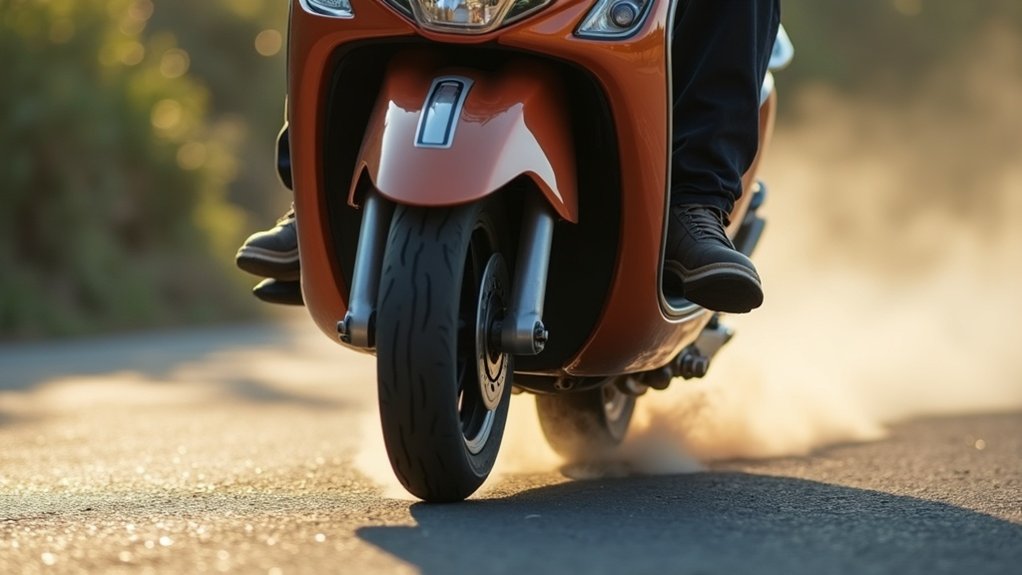
To brake effectively on a scooter, shift your weight back while applying the rear brake first. Lean back slightly to maintain stability and prevent pitching forward. Gradually increase brake pressure to enhance control, using about 30% rear and 70% front brake under dry conditions. Always complete your braking before entering turns to maintain traction. With practice, you’ll get better at adjusting your weight during braking to avoid common mistakes. There’s more to discover to enhance your skills.
Key Takeaways
- Shift your weight towards the back while applying the rear brake first for better balance and control.
- Gradually apply brakes to maintain smoothness and avoid sudden weight transfer.
- Lean back slightly to counteract forward motion and enhance braking efficiency.
- Prioritize using the front brake with a 70% front to 30% rear ratio under dry conditions.
- Always complete braking before entering turns to maintain traction and stability.
Understanding Weight Shift for Braking
How can you effectively use weight shift to enhance your braking on a scooter?
Start by shifting your weight towards the back while applying the rear brake first. This position keeps you balanced and prevents pitching forward during sudden stops. As you brake, lean back slightly to improve stability and control.
When descending hills, counteract your forward momentum by shifting your weight backwards to boost braking efficiency. Proper weight distribution enhances traction on the front wheel, which is essential for maintaining control and avoiding wheel lock-up.
Practicing these weight shifts can greatly improve your overall handling skills in various riding conditions.
The Importance of Smooth Brake Application
When you brake on a scooter, smooth application is key to keeping your balance and control.
Gradually increasing brake pressure helps distribute your weight effectively, preventing sudden shifts that could lead to accidents.
Gradual Brake Engagement
Although you might feel tempted to brake suddenly in urgent situations, gradual brake engagement is essential for maintaining stability and control on your scooter.
Start by applying the front brake first, allowing the front wheel to gain traction before engaging the rear brake. This progressive approach helps distribute your weight evenly, minimizing the risk of pitching forward and enhancing safety.
Remember to lean back while braking to counteract the forward weight transfer during deceleration.
Practicing this technique in various conditions, especially on wet surfaces, will help you adapt and maintain superior control, ensuring a safer riding experience.
Weight Shifting Techniques
Mastering weight shifting techniques is essential for effective braking on your scooter, as smooth brake application directly impacts your stability and control. When you brake, shift your weight backwards to counteract the forward pitch, enhancing grip on the rear wheel.
| Action | Description | Tips |
|---|---|---|
| Front Brake Setup | Apply gently while leaning back | Start with light pressure |
| Weight Shift | Move weight backwards to prevent wheel lock-up | Engage core for balance |
| Rear Brake Application | Smoothly apply after front brake | Keep your body relaxed |
Practicing these techniques can improve your reaction time and adaptability on various surfaces.
Techniques for Effective Rear Brake Use
To master effective rear brake use, you need to understand the mechanics behind it and how to shift your weight properly.
Practicing in different conditions will help you gain better control over your scooter.
Rear Brake Mechanics
When you brake on a scooter, effectively using the rear brake is essential for a smooth and safe ride.
Start by applying the rear brake gradually while shifting your weight back to maintain balance and prevent pitching forward. Make sure the rear brake lever has some slack before applying force for smoother braking.
Aim for a braking ratio of 30% rear to 70% front under dry conditions for peak stability.
Remember, don’t apply the rear brake while leaning into turns; complete all braking beforehand.
Regularly check your rear brake for wear to make certain it’s functioning properly for your safety.
Weight Shift Strategies
Effective rear brake use goes hand in hand with proper weight shift techniques.
To implement effective weight shift strategies, lean back as you brake, enhancing stability and preventing the front wheel from lifting. Apply the rear brake gently while shifting your weight, avoiding sudden inputs that could cause skidding. Gradually increase pressure on the rear brake for smooth deceleration.
Always engage the rear brake before the front brake to maintain balance and prevent pitching forward. Practicing these techniques will help you develop muscle memory for safe stopping, giving you confidence in various riding conditions.
Practice for Control
Mastering control over your scooter’s rear brake is essential for a smooth ride. To practice effectively, focus on these techniques:
- Gradually apply pressure to the rear brake while leaning back to maintain balance.
- Shift to the front brake to prevent pitching forward during stops.
- When descending hills, shift your weight back to enhance braking efficiency.
Always check your rear wheel for wear, as a flat tire can compromise the rear brake’s effectiveness.
Finally, practice in safe areas to build confidence and avoid abrupt stops, ensuring you maintain better control during your rides.
Engaging the Front Brake Safely
To engage the front brake safely, start by applying slight pressure to the lever, ensuring your brakes respond effectively.
Shift your weight backward as you brake to maintain balance and prevent the scooter from pitching forward. In dry conditions, aim for a braking ratio of about 70% front brake and 30% rear brake to maximize stopping power while keeping stability.
Avoid braking while cornering; complete all braking before entering a turn to maintain traction and control.
If you feel the front wheel lock up, release the brake momentarily, then reapply it smoothly to regain control and avoid accidents.
Adjusting Weight Distribution While Stopping
As you prepare to stop, adjusting your weight distribution is essential for maintaining control and stability.
Follow these steps for effective braking:
- Shift your weight towards the rear of the scooter, especially when applying the front brake first, to prevent pitching forward.
- Gradually apply the rear brake while keeping your weight balanced back to maintain control and avoid losing traction.
- Lean back even more during descents or when approaching a stop to counteract forward momentum, ensuring smoother stops.
Practicing these weight shifts helps improve your overall stability and confidence, reducing the risk of accidents while stopping.
Practicing Braking on Different Surfaces
Practicing braking on different surfaces is essential for developing your skills and ensuring safe riding.
Be mindful that your braking power may decrease on unstable ground, like gravel or wet surfaces, so slow down before stopping. Shift your weight back while braking to maintain balance and prevent skidding, especially on slippery terrains.
Always anticipate your stops and apply brakes gradually to avoid sudden jerks that can lead to loss of control. Start testing your technique on dry surfaces to build confidence before tackling more challenging environments.
Additionally, regularly check your wheels, as their condition considerably affects braking efficiency.
Common Mistakes to Avoid When Braking
Braking effectively requires awareness of common mistakes that can compromise your safety and control. Here are three key errors to avoid:
- Pushing the throttle too hard before braking can lead to losing balance and control, so ease off gradually.
- Braking while leaning into turns can reduce traction, increasing your risk of a fall—always brake before turning.
- Removing a hand from the handlebars destabilizes your scooter; keep both hands firmly in place for better control.
Remember to shift your weight appropriately by leaning back slightly, which enhances braking effectiveness and helps maintain balance, especially on inclines.