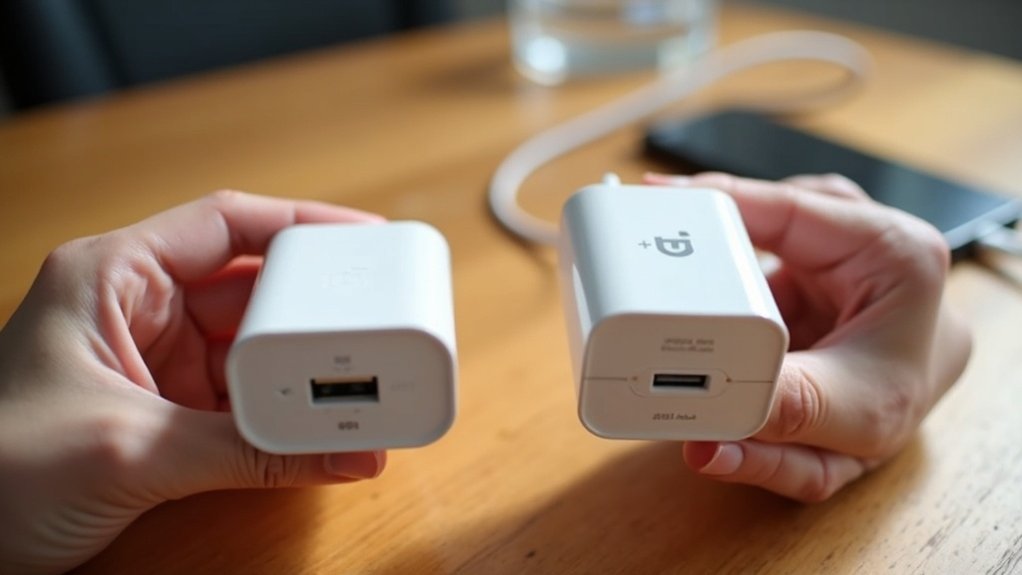
To avoid counterfeit chargers, always purchase from reputable manufacturers or authorized retailers. Check the packaging for high-quality materials and safety certifications like UL or CE. Authentic chargers tend to be heavier, reflecting quality parts. Be cautious of price discrepancies and poor construction, such as uneven seams or misspelled logos. Regularly inspect your chargers for wear, and charge devices in safe locations. Follow these guidelines, and you’ll protect your devices effectively while learning more about mobile charging safety.
Key Takeaways
- Purchase chargers only from reputable manufacturers or authorized retailers to ensure authenticity and quality.
- Inspect packaging for high-quality materials, clear logos, and safety certifications like UL or CE.
- Be cautious of significantly low prices, as they often indicate counterfeit products.
- Familiarize yourself with the manufacturer’s design to spot discrepancies in counterfeit chargers.
- Regularly check for signs of wear or damage on chargers and cables to ensure safety.
Understanding the Risks of Counterfeit Chargers
While you might think a charger is just a charger, using counterfeit versions can expose you to serious risks.
Counterfeit chargers often lack essential safety features, increasing the likelihood of electric shocks, fires, or even explosions. They can also cause device overheating and short circuits, leading to permanent damage to your battery and internal components.
Many of these chargers don’t meet safety and regulatory standards, which means they fail to provide the protection you’d expect. Additionally, counterfeit chargers may harbor malware, compromising your personal data security.
Without warranties, you’re left vulnerable if the product fails or causes harm.
How to Identify Authentic Chargers
When it comes to purchasing a charger, knowing how to identify authentic products is essential for your safety and device longevity. Start by purchasing from reputable manufacturers and inspecting packaging for high-quality materials and clear logos.
| Feature | Authentic Chargers |
|---|---|
| Packaging Quality | Professional and durable |
| Weight | Heavier due to quality parts |
| Safety Certifications | Look for “UL” or “CE” marks |
| Design Familiarity | Matches legitimate specs |
Familiarizing yourself with the manufacturer’s designs helps spot discrepancies, ensuring you avoid counterfeits and protect your devices effectively.
Safe Mobile Charging Practices
To guarantee safe mobile charging, always use the original charger and cable that came with your device or opt for certified replacements.
Charge your devices in safe areas, away from flammable surfaces, and check them regularly for any signs of wear or damage.
Use Original Accessories
Using original accessories is crucial for safe mobile charging practices, as they’re specifically crafted to meet your device’s power needs and safety standards.
Always use the charger and cable that came with your device, sourced from the original manufacturer or authorized retailers. This guarantees you receive products that have passed rigorous quality assurance tests.
Avoid generic or off-brand chargers, as they might lack necessary protections against overcharging and overheating, jeopardizing your device’s safety.
Regularly inspect your accessories for wear and damage, as compromised components can lead to unsafe charging conditions and potentially void your warranty.
Protect your investment.
Charge in Safe Areas
Charging your devices in safe areas is essential for preventing potential hazards. To guarantee a safe charging environment and avoid counterfeit chargers, keep these practices in mind:
- Charge on non-flammable surfaces like hard tables or desks.
- Verify the area is well-ventilated to prevent overheating.
- Avoid soft surfaces like beds or couches that can trap heat.
- Regularly check for nearby flammable materials.
- Be cautious of extreme temperatures that can damage chargers.
Regularly Inspect Equipment
Ensuring a safe charging environment goes beyond choosing the right location; it also involves regularly inspecting your equipment.
Check your chargers and cables for wear—look for frayed wires, bent connectors, or discoloration, as these can pose electrical safety risks. Be alert for unusual smells or sounds like buzzing, which may indicate defective or counterfeit chargers.
Keep your device’s charging ports clean to avoid overheating and fire hazards. Compare your chargers’ weight and build quality to authentic ones, as counterfeit products often feel lighter and poorly made.
Finally, track your accessories to prevent impulsive purchases of potentially unsafe replacements.
Recognizing Counterfeit Charger Signs
When you’re shopping for chargers, watch out for price discrepancies; if a deal seems too good to be true, it probably is.
Pay attention to the materials—if the charger feels flimsy or lightweight, it’s likely a counterfeit.
Finally, always look for safety certification marks; a lack of these can indicate that the charger doesn’t meet safety standards.
Price Discrepancy Indicators
Although it might be tempting to snag a deal on a charger that seems too cheap to resist, low prices often signal counterfeit products.
Here are some price discrepancy indicators to look out for:
- Prices considerably lower than market rates
- Absence of safety certifications like UL, CE, or FCC
- Unusually low sale or promotional prices
- Deals that seem too good to be true
- Major discrepancies compared to official sources
Poor Quality Materials
To spot counterfeit chargers, pay close attention to the materials used in their construction. Authentic chargers are built with durable components, while counterfeit ones often feel lighter and less sturdy. Look out for uneven seams, rough edges, and flimsy cables that can fray easily. If you notice inconsistent branding or misspelled logos, this could signal a counterfeit. Here’s a quick reference table to help you identify poor-quality materials:
| Sign of Poor Quality | Description |
|---|---|
| Weight | Lighter than authentic |
| Seams | Uneven and rough |
| Cables | Flimsy and prone to fraying |
| Branding | Misspelled logos |
Absence of Certifications
One of the clearest signs that a charger may be counterfeit is the absence of essential safety certifications.
Always check for these indicators of compliance:
- UL (Underwriters Laboratories)
- CE (Conformité Européenne)
- FCC (Federal Communications Commission)
- Properly printed certification labels
- Packaging that showcases recognized certifications
Legitimate chargers prominently display these safety certifications, while counterfeit ones often lack them or feature poorly printed labels.
Remember, counterfeiters can produce fake labels that look convincing.
Failing to verify these certifications can result in serious safety risks like electric shocks, device damage, or even fires.
Always prioritize safety!
Importance of Quality in Mobile Charging
When it comes to mobile charging, prioritizing quality can make a significant difference in your device’s performance and safety. High-quality chargers provide the correct voltage, preventing overheating and extending your device’s lifespan.
Authentic chargers minimize risks of electric shock and fire hazards, guaranteeing they meet safety standards. They also offer peak charging speed, so your devices charge quickly without depleting battery life.
Additionally, using certified chargers reduces the risk of data breaches linked to malware in counterfeit products. By choosing a quality charger, you guarantee a safe buy, giving you peace of mind in your everyday mobile device usage.
Health and Safety Concerns
Choosing quality chargers not only enhances device performance but also directly impacts your health and safety.
Selecting high-quality chargers boosts device efficiency and is crucial for your health and safety.
Using counterfeit chargers can lead to significant risks, including:
- Severe electric shocks, even from low-voltage devices
- Fires that cause serious burns and property damage
- Rising injuries linked to generic chargers, as noted in medical studies
- Overcharging that damages devices, resulting in costly replacements
- Endangerment of your overall well-being
If you need a replacement, prioritize certified chargers to protect yourself and your devices.
Remember, the benefits of quality far outweigh the risks associated with counterfeit alternatives.
Stay safe and informed!
Safety Recommendations
To guarantee your safety while charging devices, it’s crucial to follow specific guidelines that can greatly reduce risks associated with counterfeit chargers. Always buy from reputable manufacturers or authorized retailers. For Apple products, use MFi-certified chargers and verify them on Apple’s website. Confirm Android chargers meet USB-C specifications to prevent overheating.
| Safety Tip | Importance |
|---|---|
| Purchase from authorized sellers | Confirms quality and safety |
| Use MFi certified chargers | Prevents damage to devices |
| Avoid unattended charging | Reduces fire hazards |
| Don’t charge in high temperatures | Minimizes electrical fire risks |
Stay vigilant and protect your devices!