Electric bicycles work by integrating traditional cycling with electric components. A motor, either a hub or mid-drive type, provides power to assist your pedaling, making uphill rides easier. The battery, usually lithium-ion, stores energy and affects your range. You can choose from various operating modes—Pedal Only, Pedal-Assist, or Electric-Only—tailoring your ride experience. Sensors adjust assistance levels based on your effort. For a deeper understanding of their components and benefits, consider exploring more.
Key Takeaways
- Electric bicycles use a combination of traditional cycling mechanics and electrical systems for enhanced riding efficiency and ease.
- They feature four main components: motor, battery, controller, and drivetrain, each playing a critical role in operation.
- Motors are categorized into hub motors for direct wheel power and mid-drive motors for integration with bike gears, affecting torque and efficiency.
- Batteries, typically lithium-ion, provide power and influence the range of the e-bike, with a charging time of 4 to 6 hours.
- E-bikes operate in three modes: Pedal Only, Pedal-Assist, and Electric-Only, allowing riders to tailor their experience based on effort and assistance needed.
Overview of Electric Bicycles
Electric bicycles, often referred to as e-bikes, integrate traditional cycling mechanics with advanced electrical systems to enhance your riding experience.
These electric bikes utilize a motor that provides power and torque, particularly beneficial for tackling inclines or longer rides. With pedal assist, the motor activates only while you pedal, reducing your effort and fatigue.
Electric bikes enhance your ride with a motor that eases inclines and long distances, making cycling less strenuous.
E-bikes work through various modes, including electric-only options for throttle control. Powered by lithium-ion batteries, they offer a significant range of electric assistance, making them ideal for commuting and recreation.
This combination encourages a healthier lifestyle while providing an environmentally friendly transportation option.
Key Components of Electric Bicycles
At the heart of an electric bicycle’s functionality are four key components: the motor, battery, controller, and drivetrain.
The motor, either a hub motor or mid-drive motor, provides essential torque to assist you while pedaling. This assistance makes maneuvering hills and longer distances considerably easier.
Your battery, typically a lightweight lithium-ion, offers a range of 40 to 120 kilometers, depending on its capacity.
The controller manages power delivery from the battery to the motor, adjusting assistance based on your input.
Torque sensors enhance your riding experience by detecting your pedaling effort, ensuring efficient support tailored to your needs.
Understanding E-Bike Motors
Understanding the type of motor in your e-bike is essential for optimizing its performance and tailoring your riding experience. E-bike motors typically fall into two categories: hub motors and mid-drive motors. Hub motors, like the 250-watt brushless rear motor on Schwinn e-bikes, provide direct power to the rear wheel, while mid-drive motors, such as Bosch models, integrate with the bike’s gears for enhanced torque and efficiency. Below, you’ll find a comparison of these motor types.
| Motor Type | Power Output | Torque Level |
|---|---|---|
| Hub Motors | 250 watts | Moderate |
| Mid-Drive Motors | 250 watts | High |
| Efficiency | Good | Excellent |
| Maintenance | Low | Moderate |
| Terrain Adaptation | Limited | Versatile |
The Role of E-Bike Batteries
While you may focus on the motor’s performance, the battery plays a crucial role in the overall functionality of your e-bike. E-bike batteries, primarily lithium-ion, are lightweight and provide significant electric power.
Consider these factors:
- Battery Capacity: It directly affects your e-bike’s range; smaller batteries offer about 20 miles, while larger ones can reach 80 miles.
- Charging Times: Typically, you’ll recharge in 4 to 6 hours, making it convenient for daily use.
- Placement: Commonly mounted on the bike frame’s down tube or above the rear tire, optimizing weight distribution and accessibility.
These elements guarantee efficient power assistance levels and enhance your ride experience.
How E-Bike Displays and Controls Function
E-bike batteries may provide the necessary power, but the displays and controls are what allow you to harness that energy effectively.
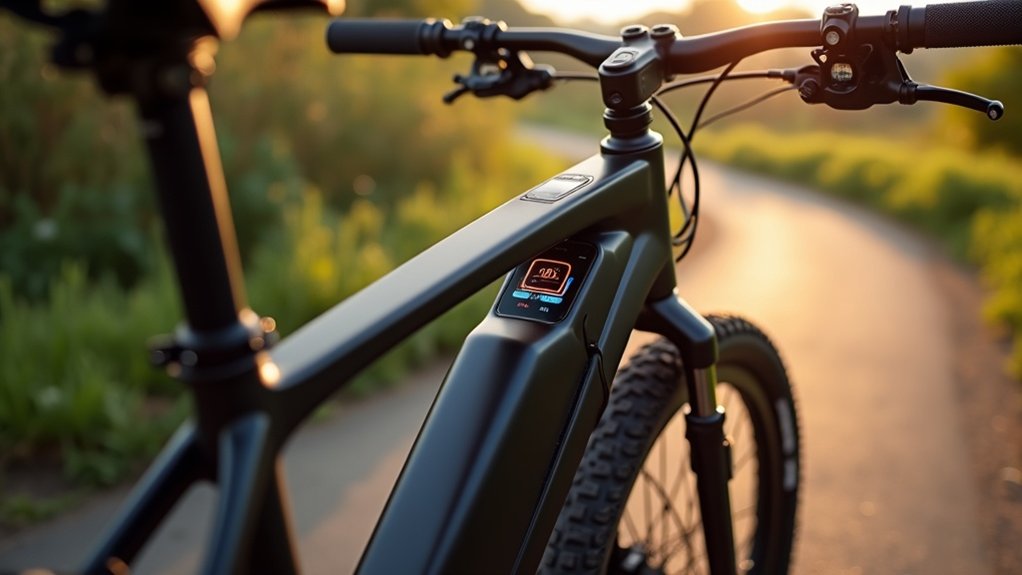
The handlebar-mounted display lets you monitor essential riding data, including battery level, speed, and distance traveled. You can control power delivery by selecting different assistance levels, ranging from Eco to Power.
Choose between pedal assist, which amplifies your pedaling effort, or throttle mode, delivering instant power without pedaling.
Advanced systems also feature connectivity to apps for navigation and fitness tracking, enhancing your overall riding experience while ensuring you stay informed throughout your journey.
Operating Modes of Electric Bicycles
Electric bicycles offer three distinct operating modes—Pedal Only, Pedal-Assist, and Electric-Only—allowing you to tailor your riding experience based on your preferences and conditions.
- Pedal Only: You pedal an electric bicycle like a traditional bike, relying solely on your effort.
- Pedal-Assist: This mode uses a brushless motor to provide varying levels of assistance, making it easier to tackle inclines and travel farther.
- Electric-Only: You can use the throttle for propulsion without pedaling, although it’s limited to 20 mph.
Each mode adjusts the amount of assistance, enhancing your overall riding experience.
Benefits of Riding Electric Bicycles
Riding electric bicycles offers numerous advantages that can transform your commuting experience and overall fitness.
E-bikes enable you to travel longer distances effortlessly, reducing commuting time and minimizing fatigue. With electric pedal assistance, you can tackle challenging terrains and climb hills with ease, making cycling accessible for all fitness levels.
E-bikes make long-distance travel effortless, allowing everyone to conquer hills and terrains while reducing fatigue and commuting time.
The adjustable assistance levels let you control your ride, tailoring the energy output to your preferences.
Furthermore, e-bikes promote sustainable transportation by producing zero emissions, encouraging you to cycle more frequently and for longer durations, enhancing your physical activity and overall health.
Embrace the benefits of e-bikes for a better ride!