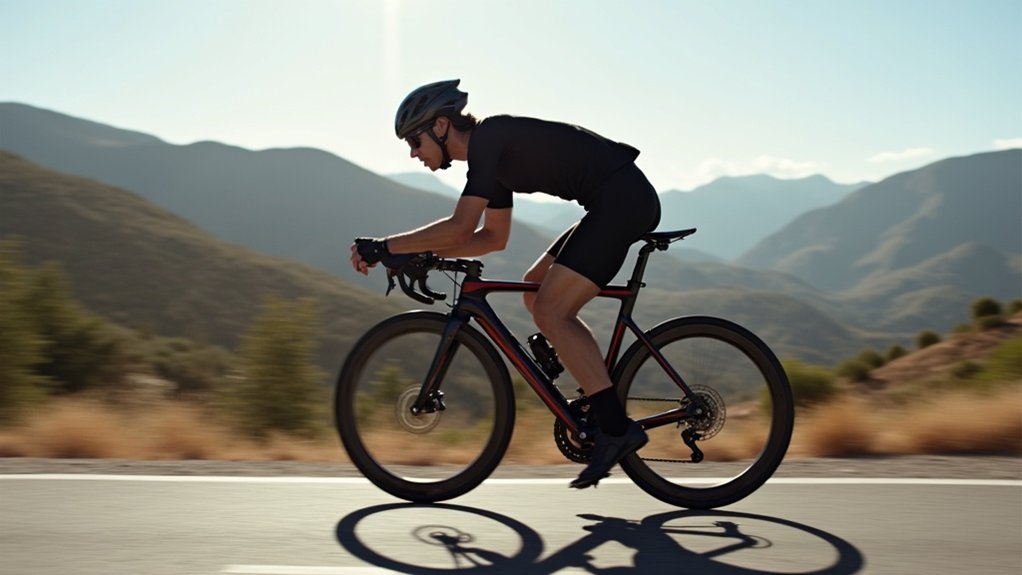
Your rider position dramatically affects efficiency by influencing aerodynamic drag. An ideal stance can reduce drag by over 20%, leading to substantial performance gains. At speeds above 32.2 km/h, nearly 90% of resistance stems from aerodynamics. Adjusting your body position can enhance speed and responsiveness, critical for both you and your horse’s performance. Understanding these dynamics can reveal new levels of efficiency and control; there’s much more to explore on this topic.
Key Takeaways
- Rider position significantly reduces aerodynamic drag, improving efficiency and performance, especially at speeds above 32.2 km/h.
- Optimal body positioning can enhance performance by up to 20.71% at 400 W due to decreased drag.
- A hands-in-the-drops stance lowers the drag coefficient area (CdA), promoting greater efficiency.
- Balanced riding ensures even pressure distribution, improving horse movement and enhancing overall performance.
- Continuous evaluation and adaptation of rider position are essential for maximizing efficiency and maintaining control during rides.
The Role of Rider Position in Aerodynamics
When you position your body ideally on the bike, you greatly enhance your aerodynamic efficiency, which is essential for performance.
Your rider position directly impacts aerodynamic drag, with well-suited positioning yielding a significant performance increase of up to 20.71% at 400 W.
Your rider position significantly influences aerodynamic drag, potentially enhancing performance by up to 20.71% at 400 W.
At speeds of 32.2 km/h, nearly 90% of resistance arises from aerodynamic drag, making body position critical.
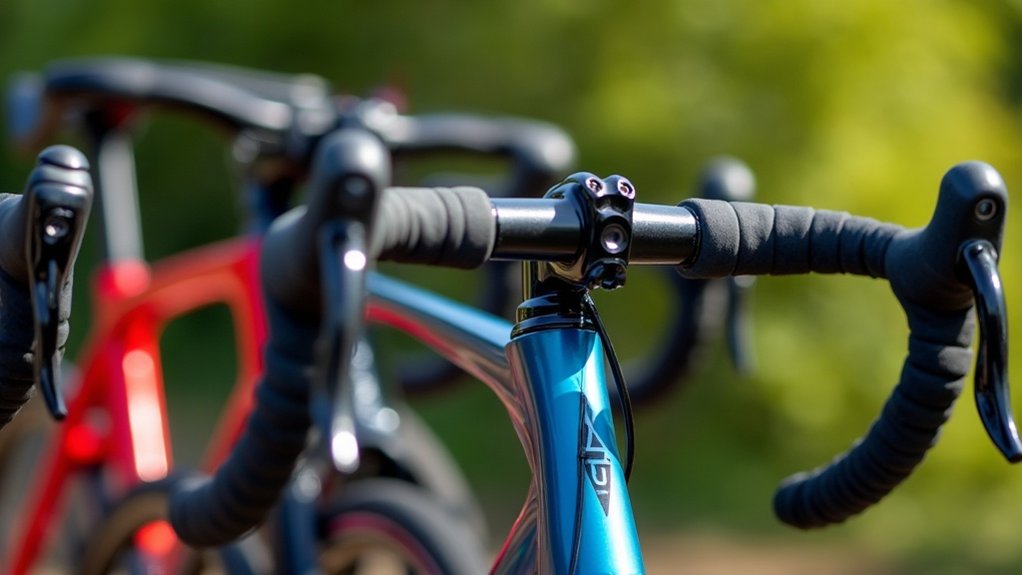
Adopting a hands-in-the-drops stance reduces the projected frontal area, improving the coefficient of drag (CdA) from 0.316 m² to 0.296 m².
In time trials, this adjustment can save 124 seconds over 40 km, underscoring the importance of training for ideal positioning.
Impact on Horse Movement and Communication
Your balance and symmetry as a rider directly influence your horse’s movement and comfort.
When your pelvis, spine, and head align properly, you distribute pressure evenly, enhancing communication through your aids.
This stable position not only improves your horse’s posture but also fosters a more harmonious partnership during rides.
Rider Balance and Symmetry
Achieving balance and symmetry in riding not only enhances a rider’s effectiveness but also greatly influences the horse’s movement and overall well-being.
Proper rider alignment of the pelvis, spine, and head guarantees you maintain control and fosters effective communication with your horse. When you’re balanced, your posture allows for free movement, promoting ideal performance and comfort.
Conversely, an unbalanced position imposes uneven pressure, leading to stress that can compromise your horse’s health. By guaranteeing symmetry, you create a relaxed, consistent rein contact, preventing the need to rely excessively on reins and supporting your horse’s posture during rides.
Pressure Distribution Effects
Balanced and symmetrical rider positions directly influence pressure distribution, which greatly impacts horse movement and communication.
When you maintain a stable lower leg position, it promotes balanced riding, ensuring even pressure across the horse’s back. This enhances the horse’s comfort and allows for ideal movement dynamics.
Conversely, misaligned rider body positions can create discomfort, leading to muscle strain and joint issues.
Balanced riding fosters aerodynamic efficiency, allowing for consistent rein contact without excessive reliance on aids.
Consequently, improving your balance not only elevates your performance but markedly enhances your horse’s overall well-being and responsiveness.
Communication Through Aids
Effective communication through aids relies heavily on the rider’s position, as it directly affects the horse’s movement and responsiveness.
A balanced riding position enables consistent, elastic rein contact, essential for clear communication. When you’re out of balance, you might depend too much on the reins, causing uneven pressure that can harm the horse’s posture and comfort.
Maintaining a stable lower leg position guarantees your aids are applied accurately, enhancing efficiency. Additionally, well-timed cues foster harmony between you and your horse, promoting better responsiveness.
Understanding how your position influences communication leads to a more empathetic and effective riding approach.
Importance of Balance and Symmetry
Your balance and symmetry as a rider greatly influence the horse’s movement and overall performance.
When you’re aligned—pelvis, spine, and head—your stability enhances communication through consistent rein contact.
This alignment not only optimizes your effectiveness but also prioritizes your horse’s comfort and long-term health.
Rider’s Impact on Movement
When a rider maintains balance and symmetry, it greatly enhances the horse’s movement and overall efficiency.
A proper rider position guarantees ideal body alignment of the pelvis, spine, and head, reducing aerodynamic drag and promoting smooth motion.
Conversely, an unbalanced rider can disrupt pressure distribution, leading to discomfort and potential injuries in the horse.
This misalignment not only affects the horse’s performance but also complicates communication with the horse, making it harder to achieve desired responses.
Balance Enhances Communication
Balance plays a pivotal role in enhancing communication between rider and horse. A balanced rider position promotes symmetry, enabling free movement and reducing stress on the horse.
Misalignment, such as tipping forward or backward, can create uneven pressure, risking discomfort or injury. Proper alignment of the pelvis, spine, and head not only improves balance but also facilitates more effective communication.
With consistent and elastic rein contact, a balanced rider prevents over-reliance on reins, which can negatively affect the horse’s posture. Understanding how rider position influences the horse’s movement is essential for developing stable techniques that enhance overall riding efficiency.
Effective Aids and Rider Control
Effective communication between rider and horse hinges on the rider’s position and control. Balanced riding positions facilitate consistent and elastic rein contact, crucial for clear communication.
When you’re stable, you can apply aids harmoniously with the horse’s movement, improving performance. Conversely, if you’re out of balance, you may over-rely on reins, causing uneven pressure that disrupts the horse’s posture.
The timing of your aids is essential; balanced riders deliver cues at ideal moments to sync with the horse’s natural rhythm. Ultimately, understanding your position fosters a sympathetic riding style, enhancing both your control and the horse’s comfort and health.
Understanding Rider-Horse Dynamics
A rider’s position greatly influences the dynamics of interaction with their horse, impacting both performance and comfort.
To enhance efficiency, focus on:
- Alignment: Guarantee your pelvis, spine, and head are properly aligned to maintain stability and distribute pressure evenly.
- Balance: A balanced, symmetrical posture promotes ideal horse movement, reducing the risk of muscle strain.
- Rein Contact: Achieve consistent and elastic rein contact; avoid over-relying on reins, which can disrupt the horse’s posture.
Understanding these dynamics is vital for improving riding effectiveness and safeguarding your horse’s health and performance in the long run.
Enhancing Rider Performance Through Positioning
While many factors contribute to a rider’s overall performance, positioning plays a vital role in maximizing efficiency and speed.
An ideal rider position dramatically reduces aerodynamic drag, with hands in the drops decreasing CdA from 0.316 m² to 0.296 m², resulting in a performance increase of 24 Watts.
Adopting a time trial style can further enhance your output by an additional 16 Watts, saving you 124 seconds over 40 km.
Since 90% of resistive forces at speeds above 32.2 km/h stem from drag, effective body positioning is essential for improving aerodynamic efficiency and achieving competitive success as a cyclist.
Additional Resources for Improving Rider Efficiency
Improving rider efficiency goes beyond just optimizing body position; it involves leveraging a variety of resources and techniques.
To enhance your performance and achieve better aerodynamic efficiency, consider the following:
- Optimize torso angle: Adjusting your torso can meaningfully impact drag reduction.
- Experiment with hand positions: Shifting to hands-in-the-drops can cut your drag coefficient and yield time savings.
- Utilize analytical tools: Employ data-driven approaches to refine low drag postures, balancing efficiency with control.