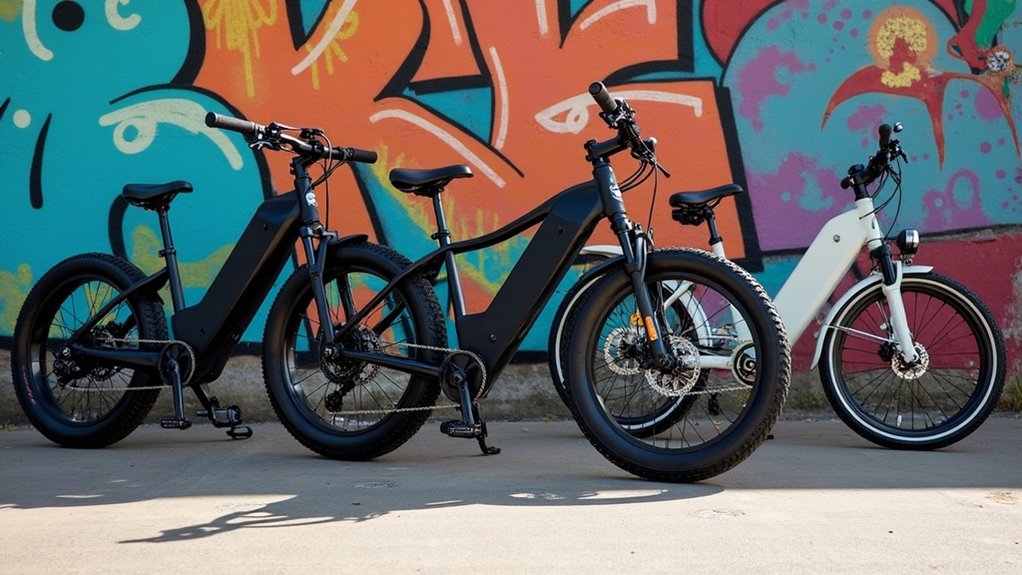
Electric bicycles are divided into three main classes. Class 1 bikes provide pedal-assist only, maxing out at 20 mph. Class 2 bikes offer both pedal-assist and throttle, also capped at 20 mph. Class 3 bikes allow pedal-assist up to 28 mph but don’t have a throttle. Each class has specific regulations regarding speed, required age, and riding areas. Understanding these distinctions helps you choose the right bike for your needs. There’s much more to explore about each class.
Key Takeaways
- Class 1 e-bikes provide pedal-assist only, with a maximum speed of 20 mph, and are allowed in bike lanes and paths.
- Class 2 e-bikes feature both pedal-assist and throttle, also capped at 20 mph, making them suitable for urban commuting.
- Class 3 e-bikes offer pedal-assist up to 28 mph, typically requiring riders to be at least 17 years old and wear helmets.
- E-bikes differ from electric motorcycles, with e-bikes limited to 750 watts and not requiring licensing or registration.
- State regulations vary; most classify e-bikes like traditional bicycles, with some states imposing specific age and helmet requirements.
Class 1 Electric Bikes
When you’re looking for an electric bike that enhances your cycling experience without compromising the essence of traditional riding, Class 1 electric bikes stand out.
These bikes feature a pedal-assist system that only engages the motor when you’re pedaling, ensuring a natural ride. With a maximum speed limit of 20 miles per hour, they allow efficient commuting and leisurely outings while adhering to familiar cycling speeds.
Class 1 e-bikes are welcome in bike lanes, greenways, and park paths, making them versatile. Popular brands like Giant, Specialized, Raleigh, and Trek cater to those seeking a blend of exercise and electric support.
Class 2 Electric Bikes
Class 2 electric bikes offer a unique blend of convenience and versatility, making them an appealing choice for many riders.
These Class 2 ebikes are equipped with both pedal-assist and a throttle, allowing you to control the motor without pedaling. With a maximum speed capped at 20 miles per hour, they comply with many local regulations.
- Ideal for urban commuting or recreational riding
- No driver’s license required, but riders must be at least 16 years old
- Popular models from manufacturers like Rad Power Bikes and Himiway
Embrace the flexibility these bikes provide for easy starts and assistance on inclines.
Class 3 Electric Bikes
For those seeking higher speeds and a more intense riding experience, Class 3 electric bikes stand out as the fastest legally classified e-bikes, reaching speeds of up to 28 miles per hour.
Class 3 ebikes provide pedal-assist only; they lack a throttle, meaning the motor engages solely when you pedal. Typically, riders must be at least 17 years old and wear helmets, depending on local regulations.
While mainly allowed on roads and traffic lanes, restrictions may apply on multi-use paths and in parks. These bikes usually offer a maximum power output of 750 watts, adhering to standard e-bike regulations.
Ebikes vs. Electric Motorcycles
While both electric bikes (ebikes) and electric motorcycles serve as modern alternatives to traditional vehicles, they cater to different riding experiences and regulatory frameworks.
Here’s what you need to know:
- Ebikes provide pedal assist and mustn’t exceed 28 mph.
- Electric motorcycles often exceed 750 watts in power output.
- Licensing and registration are typically required for electric motorcycles, unlike ebikes.
Understanding the e-bike class system is essential to navigate these distinctions and avoid misleading marketing.
Research local laws to guarantee you’re compliant, as regulations vary considerably across states and municipalities.
Riding Regulations and State-Specific Laws
When riding an electric bicycle, it’s essential to understand the varying regulations across states.
While most classify e-bikes as traditional bicycles, some states impose specific requirements like licensing, registration, and helmet laws.
Familiarizing yourself with these state-specific laws can help guarantee a safe and legal riding experience.
State-Specific Regulations Overview
As you navigate the diverse landscape of electric bicycle regulations across the United States, it’s crucial to understand that state-specific laws can markedly impact your riding experience.
Here are key points to take into account:
- Most states classify e-bikes like traditional bicycles, allowing use without a license, insurance, or registration.
- Some states, like Alaska and Massachusetts, require a license for riders aged 14 and older.
- Helmet laws vary; eight states mandate helmets for Class 3 e-bike riders.
Being aware of these state-specific regulations will promote a safer and more enjoyable ride on your electric bicycle.
Helmet Laws by State
Understanding helmet laws by state is essential for e-bike riders, especially since these regulations can vary widely and directly impact your safety and compliance.
Most states, 25 to be exact, don’t require helmets for any riders. However, eight states mandate helmet use for Class 3 e-bike riders regardless of age.
Additionally, some states enforce helmet laws specifically for riders under certain ages; for instance, eight states require helmets for those under 21 or 18.
Five states further protect younger riders by mandating helmets for all e-bike users under a designated age, with Connecticut having the strictest regulations for all users.
Future of E-Bike Regulations
As e-bike use continues to rise, the push for standardized regulations is gaining momentum.
You should be aware that evolving state laws are creating a patchwork of rules, making it essential for riders to stay informed.
Consumer awareness initiatives will play an important role in ensuring that you understand the implications of these changes on safety and usage.
Standardization of Regulations
While the surge in e-bike popularity presents exciting opportunities for transportation, it also highlights the urgent need for standardized regulations across the United States. Inconsistent state laws complicate e-bike classification and usage. Advocacy for a unified system is growing, akin to the European Union’s limits on e-bikes.
Consider the following key points:
- A three-class system (Class 1, Class 2, Class 3) is gaining traction.
- The National Park Service supports regulation standardization for safety.
- Staying informed on evolving regulations enhances your riding experience.
Standardized regulations will streamline e-bike classification, ensuring safer and more enjoyable rides for everyone.
Evolving State Laws
Given the rapid rise in electric bicycle usage, state laws are increasingly adapting to address the nuances of e-bike classification and regulation.
Current e-bike regulations vary widely across the U.S., leading to confusion among riders. Many states are moving toward a standardized three-class system, with Class 1 e-bikes permitted to operate without licenses or registrations, similar to traditional bicycles.
As the National Park Service adopts this classification, it’s essential for you to stay informed about evolving state laws. Compliance with these regulations guarantees safe riding practices as advocacy for uniformity in e-bike legislation continues to grow.
Consumer Awareness Initiatives
Understanding the nuances of electric bicycle classifications is important for your safety and compliance with regulations.
As the e-bike class system evolves, consumer awareness initiatives are essential to keep you informed. Since regulations vary by state, it’s imperative to stay updated on your local laws.
Here are key points to take into account:
- Know the three classes of e-bikes and their speed limits.
- Understand how different classes affect trail access, especially in national parks.
- Stay informed about potential regulatory changes to guarantee a safe riding experience.