Yes, you can upgrade the brakes on entry-level e-bikes, which is essential for improving safety and performance. By switching to hydraulic disc brakes, you’ll gain enhanced stopping power, reducing stopping distances considerably. It’s important to take into account rotor size, typically upgrading to 203mm for better heat dissipation. Make certain new components are compatible with your current system and made from high-quality materials for durability. Understanding these factors will help you make informed choices for your e-bike’s brake system.
Key Takeaways
- Yes, you can upgrade brakes on entry-level e-bikes, improving safety and performance with better stopping power.
- Hydraulic disc brakes are recommended for enhanced modulation and reduced maintenance compared to mechanical systems.
- Consider upgrading to larger rotors (203mm) for increased stopping power and better heat dissipation.
- Ensure compatibility with existing calipers and frame design when selecting new brake components.
- Keep records of modifications and maintenance for warranty coverage and future upgrades.
Why Upgrade Your Brakes?
When you ride an entry-level e-bike, especially at higher speeds, having reliable brakes is essential for your safety.
A brake upgrade to hydraulic disc brakes greatly improves stopping power, reducing stopping distances by 15-30%. This enhancement is vital for safety and performance.
Unlike standard mechanical brakes, hydraulic systems offer superior modulation and control, ensuring a smoother and more reliable braking experience.
Additionally, upgraded systems often feature motor cutoff capabilities, disengaging the motor during braking for added safety.
Understanding Your Current Brake System
To effectively upgrade your e-bike’s brakes, you need to understand the basics of your current brake system.
Most entry-level models feature mechanical disc brakes with 160mm or 180mm rotors, which may limit stopping power.
Evaluating whether your calipers are hydraulic or mechanical is essential, as this will influence your upgrade options and overall braking performance.
Brake System Basics
Understanding your current brake system is fundamental for optimizing your entry-level e-bike’s performance and safety.
Most entry-level e-bikes use mechanical disc brakes, which necessitate regular adjustments and maintenance due to wear and misalignment. These systems typically feature 160mm or 180mm rotors, which can be upgraded for better braking performance.
In contrast, hydraulic disc brakes offer enhanced stopping power and require less frequent maintenance. It’s essential to understand the brake caliper’s role in converting hydraulic pressure into clamping force for effective stopping.
Additionally, many entry-level models may lack motor cutoff sensors, important for preventing unintended acceleration during braking.
Hydraulic vs. Mechanical
While many entry-level e-bikes come equipped with mechanical disc brakes, upgrading to hydraulic systems can dramatically improve your braking performance.
Here’s why you should consider the switch:
- Enhanced Stopping Power: Hydraulic brakes can shorten your stopping distance by 15-30%, essential for heavier e-bikes.
- Reduced Maintenance: Hydraulic systems require less frequent adjustments compared to mechanical brakes.
- Superior Modulation: Experience consistent, reliable braking without the spongy feel of mechanical systems.
Rotor Sizes Explained
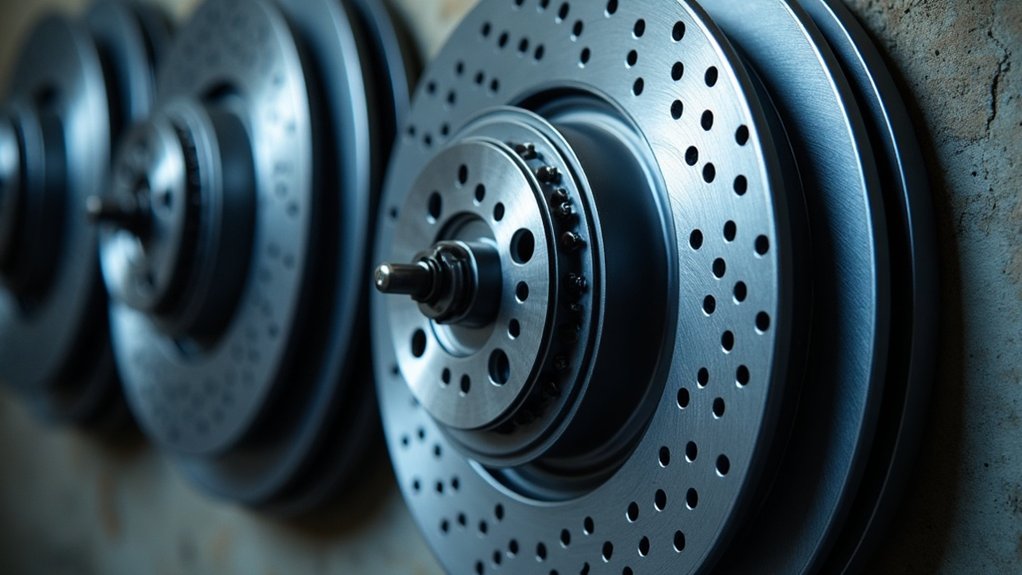
Choosing the right rotor size for your entry-level e-bike’s brake system is essential for optimizing braking performance. Most entry-level bikes come equipped with 160mm or 180mm rotors, limiting your stopping power and modulation.
By upgrading to a 203mm front rotor, you can achieve a 20-30% increase in superior stopping power. Larger rotors dissipate heat more effectively, reducing brake fade during prolonged use.
However, verify compatibility with your brake calipers, as not all can accommodate larger sizes without modification. Additionally, consider rotor material—stainless steel offers durability, while aluminum is lighter, affecting your overall brake upgrades.
Performance Benefits of Upgraded Brakes
Upgrading the brakes on your entry-level e-bike can greatly enhance your riding experience, especially as you tackle varied terrains and speeds.
Here are some performance benefits you’ll enjoy:
- Improved stopping power by 15-30%, leading to shorter stopping distances.
- Enhanced modulation for precise control, essential when carrying cargo or maneuvering tricky conditions.
- Increased reliability with less frequent maintenance needs, ensuring your safety.
These upgrades not only boost your confidence but also promote safety and reliability, especially at higher speeds.
With better brakes, you can ride with peace of mind, knowing you can stop effectively when it matters most.
Upgrade Pathways for Enhanced Braking
To enhance your e-bike’s braking performance, consider upgrading to larger rotors, converting to hydraulic brakes, and selecting high-quality brake pad materials.
Increasing rotor size can boost stopping power considerably, while hydraulic systems offer improved reliability and reduced maintenance.
Additionally, choosing sintered or metallic pads can enhance performance, especially under heavy loads, ensuring safer rides.
Brake Rotor Size Increase
While many entry-level e-bikes come equipped with standard brake rotors of 160 or 180mm, increasing the rotor size to 203mm can deliver a significant boost in braking performance.
Here’s what you can expect with this upgrade:
- 20-30% increase in stopping power for safer rides.
- Improved heat dissipation, reducing brake fade during extended use.
- Shorter stopping distances and enhanced modulation, boosting your riding confidence.
Before upgrading, verify your existing braking system is compatible with larger brake rotors.
This simple enhancement can dramatically improve your e-bike’s safety and control, making your rides more enjoyable.
Hydraulic Brake Conversion Options
If you’re looking to greatly enhance your e-bike’s braking performance, converting from mechanical disc brakes to hydraulic disc brakes is a compelling option.
Hydraulic brake systems offer significant improvements in stopping power, reducing stopping distances by 15-30%. This upgrade is particularly beneficial for heavier e-bikes, enhancing control and modulation.
Additionally, hydraulic brakes typically include a power cutoff feature, vital for safety by disengaging the motor during braking.
The conversion requires professional installation, often necessitating components like longer brake hoses. Ensuring the motor cutoff functionality works seamlessly with the new hydraulic system is essential to mitigate any safety risks during operation.
Brake Pad Material Selection
Upgrading your e-bike’s brake pad material is a fundamental step in enhancing braking performance.
The right brake pad material selection can greatly boost your stopping power and guarantee consistent performance. Consider these options:
- Sintered pads: Offer greater durability and stopping power, ideal for heavy e-bikes and wet conditions.
- Organic pads: Quieter operation with better modulation, but may wear out faster in demanding conditions.
- High-performance pads: Can reduce stopping distances by 15-30%, enhancing your safety and confidence.
Regularly inspecting and replacing brake pads based on riding conditions will keep your braking efficient and reliable.
Compatibility and Quality Considerations
When considering a brake upgrade for your entry-level e-bike, ensuring compatibility between new components and your bike’s specific frame, dropout width, and brake mounting points is essential. Upgrading to quality components, like hydraulic disc systems, can vastly improve performance over stock mechanical brakes. Additionally, check that the new system’s voltage and current ratings align with your e-bike’s motor and controller to avoid overheating. Using reputable brands mitigates risks associated with poor-quality parts. Documenting modifications is vital for maintaining warranty coverage and facilitating future repairs.
| Aspect | Considerations |
|---|---|
| Frame Compatibility | Check dropout width and mounts |
| Brake Type | Hydraulic vs. Mechanical |
| Voltage Ratings | Match with motor/controller |
| Brand Reputation | Opt for well-reviewed options |
Future-Proofing Your Brake Investment
Investing in brake upgrades for your entry-level e-bike not only enhances performance but also assures your setup remains compatible with future enhancements.
Upgrading your e-bike’s brakes boosts performance and ensures compatibility with future enhancements.
To future-proof your brake investment, consider the following:
- Quality Brake Components: Opt for high-grade materials that withstand higher speeds and resist fading.
- System Compatibility: Confirm upgrades align with your overall system, including battery management and motor specs.
- Documentation: Keep records of modifications to maintain warranty coverage.