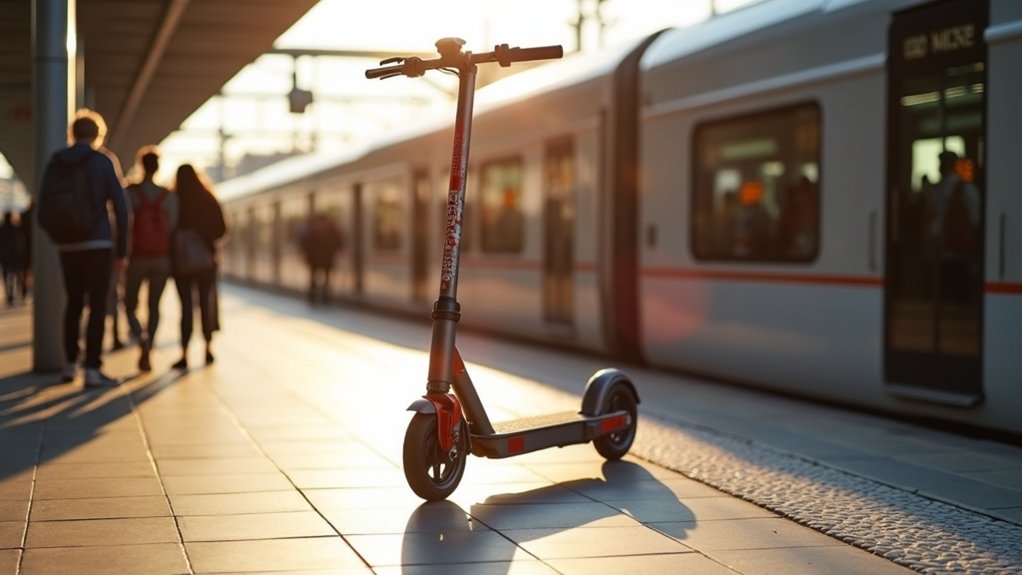
Yes, you can typically take electric scooters on trains, provided they meet specific size and weight restrictions, usually around 28″ x 22″ x 14″ and 50 to 70 pounds. Most train services, like Amtrak and Metro-North, allow folding scooters without extra fees during off-peak hours. Just make sure your scooter’s battery is under 300 watt-hours. Want to know more about the costs or safety precautions? Keep exploring for additional details!
Key Takeaways
- Most train companies allow electric scooters if they meet size limits of 28″ x 22″ x 14″ when folded.
- Weight restrictions typically range from 50 to 70 pounds for electric scooters.
- Lithium batteries must not exceed 300 watt-hours for train travel.
- Scooters must be stored in designated areas without blocking aisles while on the train.
- Some train systems may charge fees for oversized scooters or require reservations during busy times.
General Rules for Bringing Electric Scooters on Trains
When planning to bring your electric scooter on a train, it’s essential to understand the general rules that apply.
Most train companies allow electric scooters, but you must adhere to specific scooter specifications. Confirm your scooter meets size restrictions, usually folding to fit within 28″ x 22″ x 14″.
Most train companies permit electric scooters, provided they comply with size restrictions, typically folding to 28″ x 22″ x 14″.
Check weight limits, typically between 50 to 70 pounds, and verify your lithium batteries don’t exceed 300 watt-hours.
During train travel, store your scooter in designated areas without obstructing aisles.
For seamless travel, consult customer service for any additional guidelines specific to your train company, especially regarding folding scooters.
Train Systems That Allow Electric Scooters
Many train systems across the country welcome electric scooters, making it easier for you to travel with your preferred mode of transportation.
Amtrak allows folding electric scooters as carry-on baggage without extra fees, as long as they meet size restrictions.
Metro-North and LIRR permit electric scooters during off-peak hours, prioritizing folding models for storage.
The NYC Subway allows folded scooters but bans riding them in stations and on platforms.
Washington Metro provides designated storage areas, although riding isn’t allowed.
LA Metro follows suit, permitting folded scooters during non-peak hours to address safety concerns and passenger comfort while adhering to train policies.
Preparing Your Electric Scooter for Train Travel
Preparing your electric scooter for train travel involves several important steps to guarantee a smooth journey.
First, check that your scooter meets size restrictions, typically not exceeding 28″ x 22″ x 14″ and 50-70 pounds. Verify your battery complies with safety regulations; lithium-ion batteries under 300Wh are generally acceptable.
Practice folding your scooter to fit in designated storage space. Before departure, inspect for mechanical issues and make certain it’s fully charged and securely attached.
Finally, use a protective covering during travel to safeguard against damage and keep it clean while stored on the train.
Size and Weight Restrictions for Electric Scooters
Understanding size and weight restrictions for electric scooters is vital for a hassle-free train journey.
Most train policies require your electric scooter to fit within standard luggage dimensions, usually not exceeding 28″ x 22″ x 14″. Weight limits typically range from 50 to 70 pounds, so it’s important to check these before boarding the train.
Foldable scooters are preferred for their compact size, allowing easier storage in designated areas. Larger scooters exceeding these limits may face special handling or denied boarding.
Always review specific guidelines from your train service to guarantee compliance and a smooth travel experience.
Storage Options for Electric Scooters on Trains
While maneuvering through the complexities of train travel, knowing where to store your electric scooter can make all the difference in your journey. Train operators typically require you to fold your scooter and store it in designated areas like luggage compartments or near car entrances. Busy routes may need reservations for space, especially during peak travel times. Some trains allow you to secure your scooter with bungee cords to enhance safety. Arriving early helps you familiarize yourself with the train layout and available storage options.
| Train Operator | Designated Areas | Reservations Required? |
|---|---|---|
| Amtrak | Monitored areas by owner | Sometimes |
| Other Services | Specific storage areas | Often during peak |
| Regional Trains | Aisles and compartments | Always during rush |
Safety Precautions for Traveling With Electric Scooters
Traveling with an electric scooter on trains requires more than just finding the right storage spot; it also means prioritizing safety.
Make certain your scooter’s battery is undamaged and properly installed, as cracked batteries aren’t allowed. Always fold and secure your scooter in designated areas to maintain clear passage. Keep it turned off during travel to prevent accidental activation, and report any battery issues or unusual odors to train staff immediately.
Using a protective cover will help prevent damage. Familiarize yourself with emergency procedures to access your scooter quickly, making sure you’re prepared and compliant with safety precautions throughout your journey.
Costs Associated With Bringing Electric Scooters on Trains
When you decide to bring your electric scooter on a train, it’s essential to be aware of the potential costs involved.
Here’s what you might encounter:
- Additional Baggage Charges: Oversized scooters can incur fees between $25 and $75.
- Special Handling Fees: If your scooter exceeds standard dimensions, expect charges from $50 to $150.
- Reservations: Larger scooters may require prior booking on busy routes to guarantee compliance with weight restrictions.
For group discounts or specific inquiries, it’s wise to contact customer service directly, as some train operators may also charge for scooter storage in designated areas.