Yes, you can ride safely while carrying a camera! Choose lightweight options like compact or mirrorless cameras. Use well-padded, weather-resistant bags that distribute weight evenly and feature quick-access pockets. Securely fasten your camera gear to prevent drops while maintaining balance. Adjust your riding style and remain aware of your surroundings. With the right techniques and gear, capturing those spontaneous shots is totally achievable. Explore more tips to stay safe and keep your equipment protected on the go!
Key Takeaways
- Use a secure, well-padded bag to protect your camera from vibrations and ensure it remains stable while riding.
- Opt for quick-access systems like side-mounted bags or chest harnesses to easily retrieve your camera without stopping.
- Regularly check closures and ensure all attachments are secure to prevent drops during your ride.
- Adjust your riding style to prioritize safety and maintain focus on balance while carrying equipment.
- Utilize lightweight, weather-resistant bags to protect your camera from dust and moisture during your ride.
Camera Options
When you’re gearing up for a bikepacking adventure, choosing the right camera can make all the difference in capturing those breathtaking moments.
Compact options like the Sony RX100 and Ricoh GR are perfect for their lightweight design and excellent image quality.
Compact cameras like the Sony RX100 and Ricoh GR offer exceptional image quality in a lightweight design, perfect for bikepacking adventures.
If you prefer mirrorless cameras, models from Olympus and Panasonic Lumix provide durability and stabilization against cycling vibrations.
The Fuji X System balances size and quality, while older DSLRs with small prime lenses offer robust performance.
For quick access, consider a camera bag, chest harness, or hip pack that keeps your gear secure yet readily available while you ride.
Some Considerations
When you’re out riding with your camera, keeping it safe and accessible is key to capturing those perfect moments.
Opt for lightweight, weather-resistant bags that secure your gear against bumps and vibrations, ensuring it stays protected.
Plus, by planning your route with photo stops in mind, you can focus on safe riding instead of scrambling for quick shots.
Camera Protection Techniques
To keep your camera gear safe while riding, consider implementing several effective protection techniques.
Use padded dividers and foam inserts in your camera bag to absorb vibrations and cushion against bumps. Opt for a weather-resistant bag to shield your equipment from rain and moisture.
Regularly check that all closures and zippers are secure, preventing accidental drops. Don’t forget to use lens caps to guard against scratches, especially when changing lenses outdoors.
For added security, carry a backup ultralight dry bag, ensuring your gear stays protected against unexpected weather while still allowing for easy access when you need it.
Safety During Rides
While you’re out riding, prioritizing safety is essential, especially when you’ve got camera gear in tow.
Make sure your camera has a secure attachment, like a chest harness or hip pack, to prevent drops. Opt for lightweight, weather-resistant bags to protect your equipment from dust and moisture, especially in unpredictable weather.
Utilize quick-release mechanisms or easy-to-reach pockets for fast access, ensuring you can capture moments without compromising your riding safety. Regularly check that all closures are secure, and adjust your riding technique to maintain balance, avoiding risky maneuvers that could jeopardize both you and your gear.
Accessibility While Riding
Accessibility is essential for capturing those fleeting moments on your ride, especially when you want to keep your focus on the trail ahead.
Use easy-to-reach pockets or side-mounted bags for quick access to your camera, allowing spontaneous photography without stopping. Magnetic closures can make accessing your gear faster, reducing fumbling time.
A chest harness or shoulder strap keeps your camera secure yet easy to access, freeing your hands. Consider strap systems for hands-free operation, enhancing safety and convenience.
Verify your camera fits comfortably in your chosen method; size and weight directly impact accessibility and ease of use during rides.
Carrying a Camera on Your Body
Carrying a camera on your body not only offers enhanced protection from vibrations but also guarantees quick access during your rides.
This method provides peace of mind, allowing you to focus on the journey while keeping your camera secure.
- Feel the thrill of capturing spontaneous moments.
- Enjoy the comfort of hands-free operation.
- Experience the confidence that comes from stability and protection.
Using a shoulder strap or chest harness can keep your camera steady, while neoprene straps improve accessibility.
A shoulder strap or chest harness ensures stability, while neoprene straps enhance accessibility for effortless capturing on the go.
With these options, you’ll ride freely knowing your camera is secure and ready for those unforgettable shots.
Carrying a Camera in a Hip Pack
For those who prefer a more streamlined approach, using a hip pack can be an ideal way to carry your camera while riding.
Hip packs allow easy access to the camera for quick shots without stopping. When choosing a hip pack, opt for models with padded compartments to safeguard your photography gear against vibrations and impacts.
Look for features like quick-release mechanisms and adjustable straps for a secure fit. Models such as the Oveja Negra Royale or Dakine Hot Lap balance comfort and accessibility, letting you maintain hands-free operation while keeping your camera ready for those perfect moments.
Carrying a Camera in a Backpack
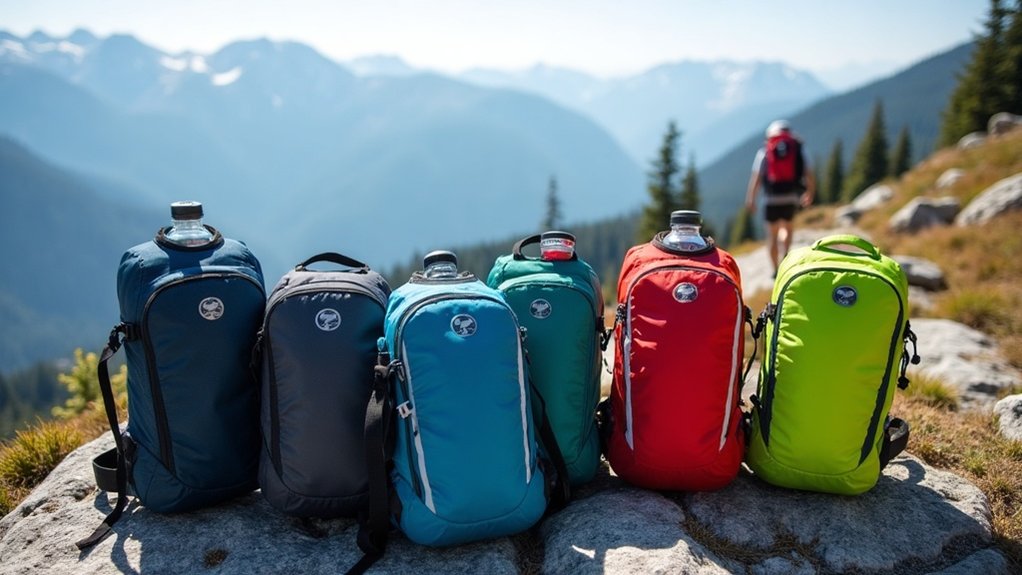
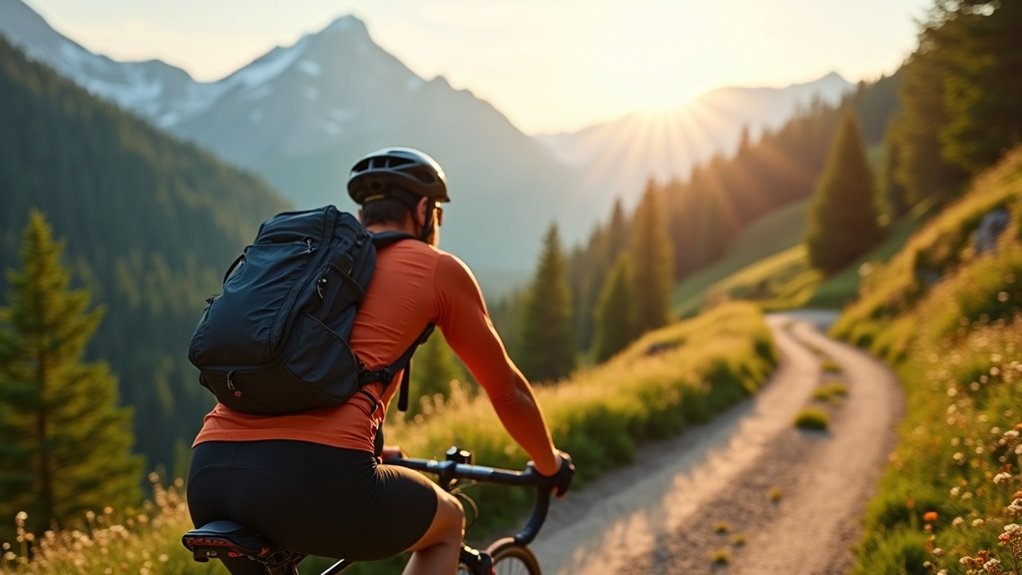
A well-designed backpack can transform your riding experience by providing a secure and efficient way to carry your camera.
With a backpack on your back, you’ll appreciate:
- Padded compartments that protect your gear from bumps and vibrations.
- Waterproof or weather-resistant materials to shield your camera lens from unexpected elements.
- Quick-release mechanisms for easy access, allowing you to capture spontaneous moments.
Ensure you check that all compartments are securely closed and consider using a chest strap for stability.
With the right backpack, you can ride confidently, knowing your camera is safe and ready when inspiration strikes!
Carrying a Camera on Your Bike
When you’re ready to hit the road with your camera, finding the right carrying method can make all the difference. Opt for a sling bag or a weather-resistant camera bag to keep your gear secure and easily accessible. Compact camera options like the Sony RX100 are lightweight, perfect for bikepacking. Use padded dividers to minimize movement and protect your camera and lens from vibrations. Quick-access designs mean you can snap photos without dismounting, promoting safety and convenience.
| Method | Benefits | Considerations |
|---|---|---|
| Sling Bag | Quick access | Limited capacity |
| Weather-Resistant | Protection from elements | May be bulkier |
| Panniers | Storage for multiple gear | Harder to access |
Dust and Waterproofing Your Gear
Although you might think your camera is safe tucked away in its bag, dust and moisture can sneak in and wreak havoc on your gear.
Even when secured in a bag, your camera remains vulnerable to dust and moisture that can damage it.
Protect your investments with these essential tips:
- Use a lightweight, waterproof roll bag to shield against unexpected rain.
- Change lenses in sheltered areas to minimize dust exposure.
- Regularly clean your camera and empty your camera bag to prevent buildup.
Team Contributor Choices
When you’re out riding, the way you carry your camera can make all the difference in safety and accessibility.
Choosing ideal methods like a hip pack or a chest harness helps keep your gear secure while allowing quick access for those perfect shots.
Optimal Carrying Methods
Choosing the right carrying method for your camera while riding can make all the difference in ensuring both accessibility and protection. Consider these ideal options:
- On-body carrying methods like hip packs or chest harnesses protect against vibrations and offer quick access.
- Weather-resistant bags safeguard your gear from bumps and environmental conditions, keeping your ride balanced.
- Quick-access systems like magnetic closures let you grab your camera without stopping.
For larger setups, use padded backpacks or pannier bags to distribute weight evenly.
Regularly check closures and use padded dividers to minimize the risk of damage during your adventures.
Safety Precautions While Riding
Proper carrying methods not only enhance accessibility but also play a key role in your safety while riding. Ascertain your camera body is secured in a well-padded, weather-resistant bag to shield it from vibrations and potential falls.
Lightweight options like a chest harness or hip pack help maintain balance, essential for safe cycling. Use quick-release mechanisms and easy-to-reach pockets for efficient access without compromising safety.
Regularly check all closures and attachments to minimize the risk of dropping your camera. Remember, adjusting your riding style to prioritize safety over speed can prevent accidents while you capture great moments on your ride.
Quick Access Techniques
To capture those fleeting moments while riding, it’s essential to have your camera easily accessible.
Here are some quick access techniques to enhance your experience:
- Use side-mounted bags or hip packs for spontaneous shots without stopping.
- Implement strap systems for hands-free operation, keeping your camera secure yet reachable.
- Opt for a quick access backpack with waist and chest straps for stability and easy retrieval.