Yes, you can ride electric scooters in the rain, but it’s important to be cautious. Wet conditions reduce traction and increase the risk of skidding and longer braking distances. Check your scooter’s IP rating—aim for at least IP54 for light rain. Avoid deep puddles and heavy rain, as water can damage sensitive parts. If you choose to ride, maintain a slower speed and stay visible. Let’s explore more about keeping your scooter and yourself safe in rainy weather.
Key Takeaways
- Riding electric scooters in light rain is possible, but heavy rain should be avoided due to reduced traction and braking distance.
- Check the scooter’s IP rating; models below IP54 should not be used in rainy conditions.
- Wet roads increase the risk of skidding and accidents, making riding unsafe.
- Wearing waterproof gear and maintaining a slower speed can enhance safety during rainy rides.
- Regular maintenance and inspection are crucial to prevent water damage to sensitive components.
Understanding Water Resistance and IP Ratings
When it comes to riding electric scooters in the rain, understanding water resistance and IP ratings is vital for your safety and the scooter’s longevity.
Water-resistant electric scooters aren’t waterproof; they can handle some moisture but not full submersion. IP ratings, ranging from IP54 to IP66, indicate protection against dust and water. An IP54 rating withstands light rain, while IP65 or higher can manage moderate rainfall—just avoid puddles.
The first digit measures solid object protection, while the second focuses on liquid resistance. Regular maintenance, like checking seals and drying after use, guarantees effective water resistance for your scooter.
Risks of Riding Electric Scooters in the Rain
Although riding electric scooters can be a fun and efficient way to get around, doing so in the rain poses several serious risks that you should be aware of.
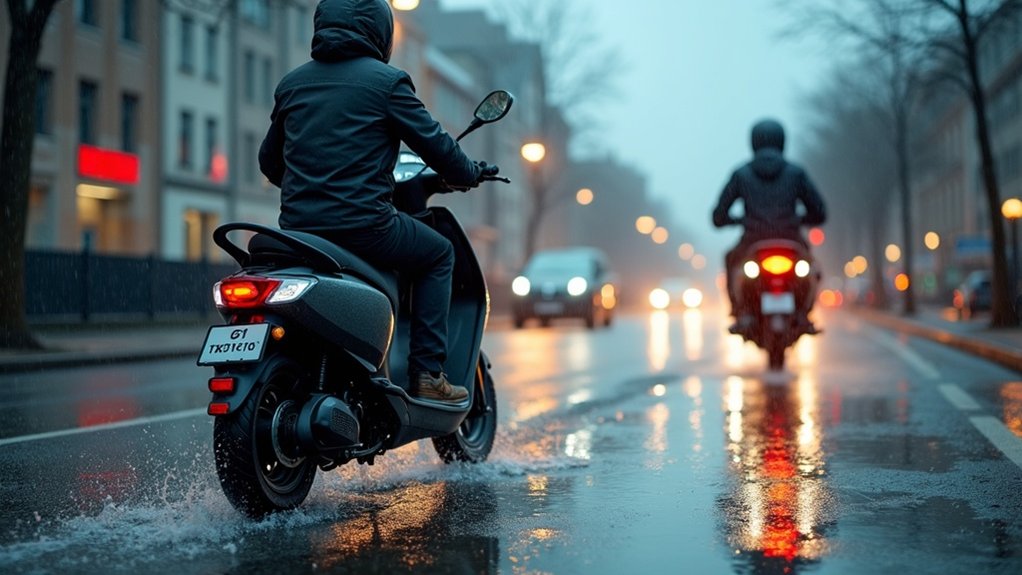
Wet roads greatly reduce traction, leading to longer braking distances and a higher chance of skidding. Visibility decreases, making it harder for you and motorists to see each other, which increases accident risks.
Wet roads diminish traction, extend braking distances, and impair visibility, significantly heightening the risk of accidents.
Water can also infiltrate sensitive components, causing electrical failures. Plus, the danger of hydroplaning rises when tires lack grip.
These factors combined can compromise your safety, making rainy rides far less enjoyable and far more hazardous.
When to Avoid Riding Your Scooter in Wet Conditions
Riding your electric scooter in wet conditions can be tempting, but it’s important to know when to hold off for your safety.
Avoid riding in heavy rain, as it reduces traction and extends braking distances, increasing accident risks.
Steer clear of deep puddles or flooded areas, which can cause water damage to sensitive electronics.
If visibility drops due to rain, it’s best to refrain from riding to prevent collisions.
Thunderstorms also pose serious threats, so stay off your scooter during such weather.
Finally, check your scooter’s IP rating; models below 54 should be avoided in any rain conditions.
Tips for Riding an Electric Scooter in the Rain
When you’re riding an electric scooter in the rain, controlling your speed is key to staying safe on slick surfaces.
Along with that, wearing essential waterproof gear can keep you comfortable and visible to others.
Let’s explore these strategies to enhance your rainy ride experience.
Speed Control Strategies
As you navigate rainy conditions on your electric scooter, controlling your speed becomes essential for maintaining stability and safety.
Reduce your speed considerably to enhance traction on wet surfaces; this helps prevent skidding on slippery roads. Practice gradual braking to avoid sudden stops that can lead to loss of control.
Steer clear of rapid accelerations or sharp turns, which destabilize your ride. Make sure your braking system is reliable, preferably with anti-lock features.
Additionally, wearing waterproof gear and using non-slip grips will improve your overall stability while riding in the rain, making your experience safer and more enjoyable.
Essential Safety Gear
Staying safe while maneuvering through rainy conditions on your electric scooter requires the right safety gear. Always wear a helmet and protective gear, like wrist and knee guards, to minimize injury risk.
Opt for waterproof clothing, including a rain jacket, to stay dry and enhance your visibility to others. Cycling goggles are essential for protecting your eyes from rain and debris, ensuring clear vision.
Non-slip shoes are vital to prevent slipping on wet surfaces, maintaining traction. Finally, bring a waterproof cover for your scooter to shield it from moisture when not in use, protecting sensitive electronic components.
Protecting Your Electric Scooter From Water Damage
To keep your electric scooter safe from water damage, start by waterproofing essential components and choosing a model with a high IP rating.
Make certain to seal any gaps effectively, as even small openings can lead to significant issues.
After riding in the rain, don’t forget your post-ride maintenance routine to guarantee everything runs smoothly and stays rust-free.
Waterproofing Essential Components
While riding your electric scooter in the rain can be exhilarating, protecting its crucial components from water damage is essential for ensuring its longevity and performance.
Start by using waterproof covers for vulnerable areas, like the dashboard and lithium battery. Enhance water resistance by sealing gaps with silicone and applying urethane spray to motors for moisture protection.
Consider wrapping the battery in a fire blanket and securing it with Teflon tape. Installing mudguards can also minimize splashes, safeguarding internal components from direct water exposure.
Seal Gaps Effectively
Properly sealing gaps and openings on your electric scooter is essential for thwarting water damage, especially in areas like the battery compartment, control board, and any exposed wiring.
To effectively seal gaps, use silicone sealant to create a waterproof barrier against moisture intrusion. Additionally, install waterproof connectors and plugs at charging ports to keep electrical connections dry.
Regularly inspect seals and gaskets for wear and tear; compromised seals can drastically reduce your scooter’s water resistance.
Finally, consider applying a waterproof coating or spray to non-electrical parts for extra protection against water ingress and to safeguard sensitive components.
Post-Ride Maintenance Tips
After riding your electric scooter in the rain, it’s essential to take immediate steps to protect it from potential water damage.
Begin by ensuring you thoroughly dry your scooter, focusing on crevices where water can collect. Never charge a wet scooter; doing so can lead to short circuits.
Here are some key maintenance tips:
- Inspect seals and gaskets regularly to maintain water resistance.
- Lubricate bearings and folding joints to prevent rust but avoid over-lubrication.
- Use waterproof covers for vulnerable areas like the dashboard and battery.
These steps will help keep your scooter in top condition and prevent water-related issues.
What to Do If Your Electric Scooter Gets Wet
If your electric scooter gets wet, it’s crucial to act quickly to minimize potential damage.
First, turn it off immediately and disconnect any accessories. To prevent water damage, dry the scooter in a low humidity, air-conditioned environment.
Don’t turn it on or charge it until it’s completely dry, as this can cause short circuits or even fires.
Once dried, inspect for any signs of water damage like unresponsive controls or unusual noises.
If you notice functionality issues, contact a repair technician, but remember that warranty coverage may not include water damage.
Taking these steps can save your scooter from serious harm.
Best Practices for Riding Safely in Rainy Weather
Riding an electric scooter in rainy weather presents unique challenges that require attention to safety and preparation.
To guarantee a secure ride in wet conditions, follow these best practices:
- Choose an electric scooter with an IP rating of at least IP54 for light rain, and IP65 or higher for heavier downpours.
- Always reduce your speed, as wet surfaces increase braking distances and skidding risks.
- Wear waterproof rain gear to stay dry and visible while riding.
After your ride, remember to dry the scooter thoroughly and check for any signs of water damage, confirming all components are dry before charging to avoid electrical issues.