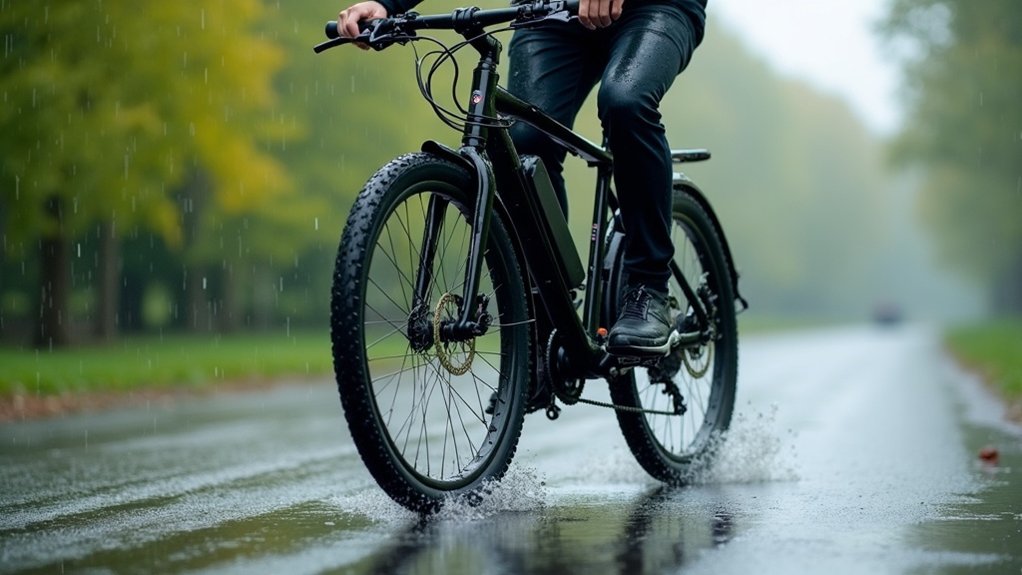
Yes, you can ride electric bicycles in the rain! They’re designed to handle splashes and light rain, but it’s essential to take some precautions. Make sure to wear weatherproof clothing and adjust your tire pressure for better grip on wet surfaces. Always keep an eye out for road hazards, and remember that water can affect the bike’s electrical components over time. If you want to know more about safety tips and maintenance, keep exploring!
Key Takeaways
- E-bikes can handle splashes and light rain due to their water resistance, typically rated between IP54 and IP65.
- Regular maintenance, including cleaning contact points, helps prevent moisture damage to the motor and battery.
- Wear weatherproof clothing for comfort and use lights for visibility when riding in rainy conditions.
- Adjust your riding technique by reducing speed and avoiding sharp turns to maintain control on wet surfaces.
- Thoroughly clean and dry your e-bike after riding in the rain to prevent rust and prolong its lifespan.
Understanding E-Bike Water Resistance
When you’re considering a ride on your e-bike in the rain, it’s essential to understand its water resistance capabilities. E-bikes are water-resistant, designed to handle splashes and light rain, but not full submersion.
Check the IP rating; for instance, an IP54 rating protects against water splashes but not heavy rain.
While riding in wet conditions, remember that moisture can still seep into the motor and battery over time. Regularly clean the contact points of electrical components to prevent corrosion.
Using waterproof covers can also extend your e-bike’s lifespan, ensuring you enjoy your rides, rain or shine.
The Importance of IP Ratings
Understanding IP ratings is essential for any e-bike rider, especially if you plan to tackle rainy conditions.
These ratings inform you about your bike’s water resistance and protection against solid particles. Most e-bikes are rated between IP54 and IP65, meaning they can handle splashes but aren’t meant to be submerged in water.
Understanding your e-bike’s IP rating is crucial for ensuring water resistance and protection against dirt and debris.
- The first digit indicates protection against solid objects.
- The second digit reveals water resistance levels.
- E-bikes can get wet but avoid direct soaking.
- Riding in the rain requires checking your bike’s IP rating.
- Proper knowledge helps prevent electrical damage and performance issues.
Safety Precautions for Riding in Rain
Riding in the rain can be exhilarating, but it also demands heightened awareness and preparation. To guarantee a safe experience on your E-bike, follow these safety precautions:
| Precaution | Description | Benefits |
|---|---|---|
| Wear Weatherproof Clothing | Don a rain-resistant jacket to stay dry and comfortable. | Keeps you focused on riding. |
| Use Lights | Activate front and rear lights for visibility. | Enhances safety in low light. |
| Adjust Tire Pressure | Lower pressure for better traction on wet surfaces. | Reduces skidding risk. |
| Stay Vigilant | Watch for road hazards like wet paint and oil slicks. | Avoids dangerous slips. |
Stay alert, ride cautiously, and enjoy the thrill!
Essential Gear for Wet Weather Riding
As you prepare for a wet weather ride, having the right gear can make all the difference in your comfort and safety.
Here’s what you need to stay dry and visible:
- Waterproof clothing: Invest in a rain-resistant jacket and pants.
- High-visibility gear: Choose reflective vests or bright colors to stand out.
- Full-coverage fenders: Equip your e-bike to minimize splashes.
- Waterproof panniers: Protect your belongings and electronics from moisture.
- Clear glasses: Shield your eyes from rain while maintaining visibility.
With this essential gear, you’ll ride confidently, no matter the weather!
Maintenance Tips After Riding in Wet Conditions
After riding in the rain, you’ll want to give your e-bike a thorough clean and dry to safeguard against rust and corrosion.
Pay special attention to the battery and contact points, ensuring they’re free of moisture to keep everything running smoothly.
Don’t forget to inspect your tires for any damage and adjust the pressure, so you’re ready for your next ride on slippery surfaces.
Clean and Dry Components
Maintaining your electric bicycle after a wet ride is essential to keeping it in top condition. A thorough clean prevents corrosion and damage, ensuring your e-bike stays functional.
Here are some tips for riding in the rain:
- Clean the frame, wheels, and drivetrain to remove mud and debris.
- Wipe down the battery and contact points with a dry cloth.
- Allow the battery to dry outside the bike for several hours.
- Regularly re-lubricate the chain and drivetrain to prevent rust.
- Inspect tires for wear and maintain proper tire pressure for safety on slippery surfaces.
Inspect for Damage
Inspecting your electric bicycle for damage after a wet ride is crucial to guaranteeing its longevity and performance. Even though electric bikes are water-resistant, moisture can still affect key components. Focus on the battery and display, motor, and electrical parts. Here’s a quick checklist:
| Component | Action Required | Things to Take into Account |
|---|---|---|
| Battery | Wipe contacts, dry outside | Prevent short-circuiting |
| Chain & Drivetrain | Clean, re-lubricate | Avoid rust and guarantee smooth operation |
| Tires | Check pressure | Adjust for ideal traction |
| Fenders | Inspect for damage | Confirm proper alignment |
Regular maintenance keeps your ride smooth and safe!
Riding Techniques for Wet Roads
When you’re maneuvering wet roads, adjusting your speed is key to maintaining control and avoiding slips.
Use both brakes gently and evenly to prevent any sudden stops that might catch you off guard.
Staying upright and balanced while steering clear of sharp turns will help you glide smoothly through those slick patches.
Adjusting Speed and Control
Riding an electric bicycle on wet roads requires a careful approach to speed and control, as the slick surfaces can turn a routine trip into a challenging experience.
To navigate safely in wet weather conditions, consider these tips:
- Gradually reduce your speed to maintain better control.
- Use both brakes gently to prevent skidding.
- Keep a steady, upright position for balance.
- Adjust your riding style, avoiding sharp turns or sudden movements.
- Maintain a safe distance from other vehicles to account for longer stopping times.
Maintaining Balance and Stability
Maintaining balance and stability on an electric bicycle in the rain demands a mindful approach. As you ride your e-bike on wet roads, keep a steady and upright position to evenly distribute your weight, reducing the chance of slipping.
Gradually adjust your speed; a lower pace enhances control and reaction time. When slowing down, use both brakes evenly to maintain traction and avoid skidding.
Exercise caution when riding, especially during cornering—lean into corners less than you’d on dry pavement to keep both tires connected to the surface. Stay aware of road conditions to prevent sudden movements that could lead to falls.
Community Insights and Shared Experiences
How do e-bike enthusiasts adapt to the challenges of riding in the rain? Many share their experiences and tips, emphasizing the importance of control and safety.
You might find comfort in connecting with your local cycling community, where insights abound.
Consider these key points:
- Adjust your speed to maintain control.
- Invest in high-quality waterproof gear.
- Clean and lubricate your bike post-ride.
- Join local groups that embrace all weather.
- Learn from experienced riders about resilience.