
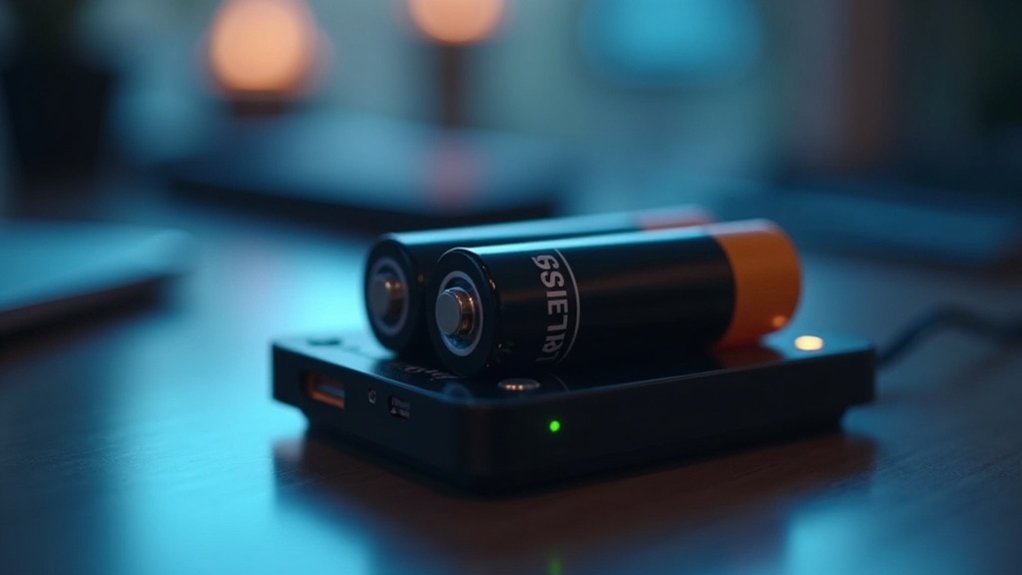
Yes, you can charge batteries at partial levels without harm, especially with LiFePO4 technology. This type of battery thrives on partial charging, which enhances its lifespan and stability. Aiming for a State of Charge between 20% and 80% limits stress and minimizes capacity degradation. Regular shallow cycles support chemical stability and durability, making your battery healthy. Discover more about ideal practices and how to effectively integrate these strategies with your system.
Key Takeaways
- Charging LiFePO4 batteries partially is safe and beneficial, as they do not suffer from memory effects.
- Maintaining a State of Charge (SoC) between 20% and 80% reduces stress and enhances battery longevity.
- Frequent shallow cycles through partial charging promote chemical stability and improve overall battery durability.
- A Quality Battery Management System (BMS) optimizes partial charging, preventing overcharging and ensuring battery health.
- Regular full charges every 1-3 months are recommended to recalibrate the BMS and sustain optimal performance.
Understanding LiFePO4 Chemistry and Charging Myths
When you consider charging LiFePO4 batteries, it’s vital to debunk common myths surrounding their chemistry and charging practices.
Unlike older lithium batteries, LiFePO4 doesn’t suffer from memory effects, allowing you to perform partial charges without harming performance.
In fact, adopting proper charging habits, like maintaining a State of Charge (SoC) between 50-70%, can prevent capacity degradation.
A quality Battery Management System (BMS) is essential for managing this process, ensuring you avoid overcharging and protecting cells during partial charging.
Research shows that these practices can enhance Cycle Life, leading to longer-lasting and more reliable battery performance.
The Positive Impact of Partial Charging on Battery Lifespan
When you charge lithium batteries partially, aiming for a State of Charge between 20-80%, you enhance their durability by reducing stress on internal components.
This ideal charging practice minimizes chemical degradation and maintains stability, ultimately prolonging battery life.
Incorporating these strategies into your charging routine can lead to significant improvements in battery health.
Enhanced Battery Durability
By charging your lithium-ion batteries to partial levels, you can greatly enhance their durability and lifespan.
Maintaining a State of Charge (SoC) between 20-80% greatly improves cycle life and minimizes capacity degradation. Frequent shallow cycles, rather than full charges, help keep chemical stability, promoting long-term performance.
Limiting the Depth of Discharge (DoD) to 30-70% increases the number of charge cycles while preserving energy capacity.
Additionally, employing a Battery Management System (BMS) during partial charging optimizes battery health by preventing overcharging and ensuring balanced energy distribution across cells.
This approach ultimately fosters a more resilient and efficient battery.
Optimal Charging Practices
Although many users tend to fully charge their lithium-ion batteries, adopting ideal charging practices can greatly enhance their lifespan.
By utilizing partial charging, you can keep charge levels between 20% and 80%, which reduces stress on battery components. This approach minimizes capacity loss and improves stability by preventing chemical imbalances.
Additionally, limiting the depth of discharge (DoD) through partial charging considerably increases the cycle life of your batteries.
Implementing a Battery Management System (BMS) automates these ideal charging practices, ensuring your lithium-ion batteries stay within safe ranges, ultimately promoting longevity and better overall performance.
Best Practices for Charging Your LiFePO4 Battery
To maximize the lifespan and performance of your LiFePO4 battery, it’s crucial to adopt effective charging practices.
Charge your Lithium battery to a partial State of Charge (SoC) between 20% and 80% daily, minimizing stress on the cells.
Charge your Lithium battery daily to a partial State of Charge between 20% and 80% to reduce cell stress.
Utilize a high-quality Battery Management System (BMS) to regulate charge levels and prevent overcharging, which can degrade capacity.
Full charges every 1-3 months help recalibrate the BMS, but avoid frequent full cycles to reduce stress.
When idle, store your battery at around 50-70% SoC to prevent capacity loss and prolong its overall life.
Integrating Partial Charging With Your System
Integrating automated charging solutions into your energy system streamlines battery management and enhances longevity.
By configuring charge settings to maintain your battery’s state of charge within ideal ranges, you can prevent overcharging and extend its lifespan.
Additionally, regularly monitoring system performance guarantees that your partial charging strategies remain effective, safeguarding against capacity degradation.
Automated Charging Solutions
When you implement automated charging solutions in your energy system, you can greatly enhance battery health by managing the State of Charge (SoC) levels.
These solutions, including modern solar inverters and charge controllers, can be programmed to halt charging at specific SoC thresholds, particularly essential for lithium batteries.
By integrating partial charging strategies, you maintain ideal SoC ranges of 20%-80%, preventing overcharging.
A high-quality Battery Management System (BMS) provides real-time monitoring, ensuring no overcharging or deep discharging occurs.
This data-driven approach allows you to refine charging patterns, ultimately extending the lifespan and efficiency of your energy storage applications.
Configurable Charge Settings
Configurable charge settings in modern solar inverters and charge controllers empower you to enhance battery performance by setting specific State of Charge (SoC) limits. By programming your system to halt charging at predetermined SoC levels, like 80%, you can reduce stress on the battery, boosting longevity. Regular adjustments guarantee the battery stays within the ideal SoC window of 20% to 80%. This integration of partial charging strategies not only maximizes battery lifespan but also aligns with energy generation and consumption patterns.
| SoC Level (%) | Action |
|---|---|
| 20 | Minimum Charge Limit |
| 50 | Recommended SoC |
| 80 | Maximum Charge Limit |
| 90 | Overcharge Prevention |
| 100 | Full Charge Warning |
Monitoring System Performance
To effectively monitor system performance and guarantee peak battery health, you need to leverage data-driven insights from your energy management system.
Integrating partial charging with your Battery Management System (BMS) allows for real-time feedback on battery status and best charging strategies. Configurable settings in modern solar charge controllers enable you to limit charge and discharge based on specific State of Charge (SoC) levels, ensuring your batteries operate within their ideal range.
Regular assessments of monitoring systems help correlate operational parameters with battery health, confirming the effectiveness of partial charging strategies and maintaining battery longevity over time.
The Role of the Battery Management System (BMS)
A sophisticated Battery Management System (BMS) plays an essential role in improving the charging process, particularly during partial charging cycles. It actively monitors individual cell voltages and temperatures, preventing overcharging and thereby enhancing battery health.
For lithium batteries, the BMS manages State of Charge (SoC) levels, automating the charging process to limit charges within specific parameters. This approach reduces the risk of capacity degradation linked to frequent partial charges.
Additionally, the BMS protects against over-discharging, vital for maintaining battery integrity. Regular recalibration through periodic full charges guarantees accurate state-of-health readings, promoting peak performance and longevity of the battery pack.
Finding the Sweet Spot: Optimal SoC Windows
Finding the ideal State of Charge (SoC) window is essential for maximizing the lifespan of lithium batteries.
- Aim for a SoC range of 20% to 80% for peak lifespan.
- Regular partial charging enhances chemical stability and reduces stress.
- Operating between 30% and 70% minimizes capacity degradation.
- Perform occasional full charges (up to 100%) every 1-3 months to recalibrate.
A New Perspective on Battery Health
While many users still charge their lithium batteries to full capacity, adopting a new perspective on battery health reveals that partial charging is actually more beneficial.
Frequent partial charging within an ideal State of Charge (SoC) range of 20% to 80% reduces stress on battery components and enhances battery life, especially for lithium-ion types like LiFePO4. This approach minimizes capacity degradation, improving overall health.
Unlike older technologies, modern lithium batteries lack memory effects, allowing flexible charging patterns. Implementing these practices, alongside the Battery Management System (BMS) guidelines, can greatly boost performance and longevity, particularly during long-term storage.