
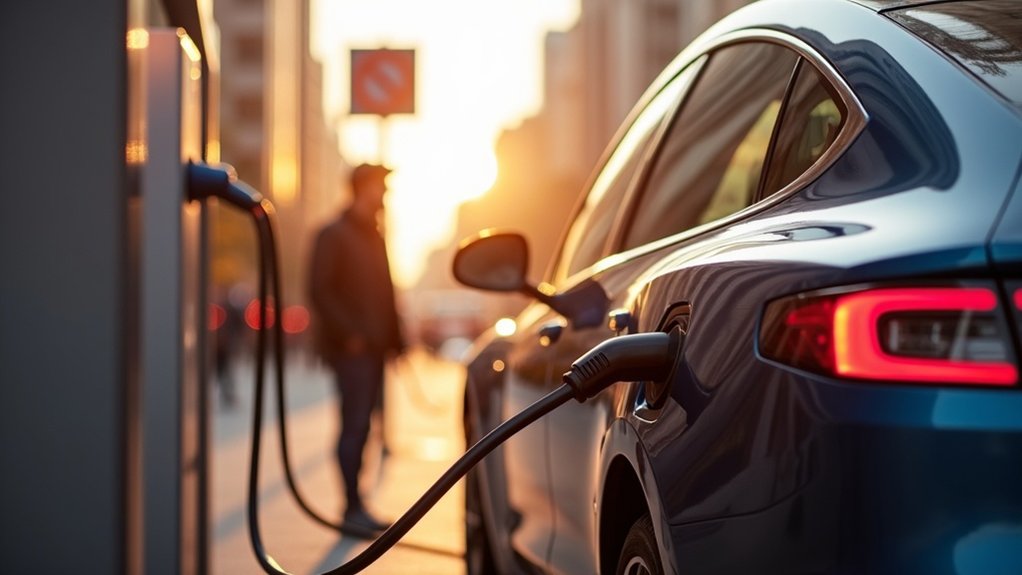
Charging at public outlets can be legally complex. Regulations differ by municipality, and unauthorized use might be seen as theft of electricity. It’s essential to get permission from property owners before charging. Additionally, designated charging stations provide better access and minimize potential legal issues. Be mindful of ethical considerations, like not burdening taxpayers. Understanding local laws and safety practices is important. If you’re interested in responsible charging options, there are more details to explore.
Key Takeaways
- Local regulations vary; unauthorized charging at public outlets may be considered theft of electricity.
- Always obtain permission from property owners or authorities before using public outlets for charging.
- Designated charging stations are legally safer and equipped with proper infrastructure for EVs.
- Using public outlets without consent may lead to fines or legal consequences.
- Engage with local businesses and community to promote responsible charging practices and norms.
Understanding the Legality of Charging at Public Outlets
How often do you consider the legality of charging your device at a public outlet? Understanding municipal laws is vital, as regulations vary considerably.
In some areas, using these outlets for charging electric vehicles is permitted, while others strictly prohibit unauthorized usage, viewing it as theft of electricity. This unauthorized charging can lead to legal consequences, including fines or arrests for individuals who plug into outlets without permission.
It’s essential to clarify local rules and obtain consent from property owners or authorities before using public outlets. Ethical concerns about burdening taxpayers also arise when personal charging utilizes communal resources.
The Importance of Designated Charging Stations
While you may not think about it often, using designated charging stations is vital for electric vehicle (EV) owners. These facilities guarantee reliable access to power sources specifically designed for EVs, minimizing potential legal issues tied to non-designated outlets.
Public charging stations are equipped with the necessary charging infrastructure and safety measures, providing clear signage and instructions that simplify the charging process.
Ethical Considerations of Using Public Outlets
What responsibilities do you have when using public outlets for charging your electric vehicle (EV)?
Ethical use of these resources is essential for community respect and sustainability.
Consider these key points:
- Confirm you have permission to use the outlet.
- Recognize that charging an EV draws considerably more power than smaller devices.
- Engage in discussions about charging practices to build community norms.
- Foster relationships with local businesses to promote accepted practices.
Safety Concerns and Best Practices for Charging
When charging at public outlets, be aware of the risks associated with using extension cords, as they can create trip hazards and damage equipment.
You should also assess the outlet’s breaker size to prevent circuit overload, which could lead to fire hazards.
Following these best practices not only guarantees your safety but also complies with local regulations.
Extension Cord Safety
Although using an extension cord might seem like a convenient solution for charging your electric vehicle (EV), it poses significant safety risks that you should carefully consider.
Here are some essential points regarding extension cord safety:
- Limited Capacity: Standard 120 VAC circuits can only handle 15 A or 20 A, insufficient for EV charging.
- Fire Hazard: Improper use can lead to overheating and potential fires.
- Voltage Drops: Using an extension cord may damage your Level 1 charger and vehicle.
- Trip Hazards: Guarantee proper cable management to avoid accidents while charging at home or at an EV charging station.
Circuit Overload Risks
Charging your electric vehicle (EV) at home or public outlets can lead to circuit overload risks if you don’t manage the electrical load properly.
Plugging into a standard 120 VAC outlet typically draws 12 A, which can trip the circuit breaker, especially if other devices share the same circuit.
Using an extension cord further heightens these risks, as they may not handle high wattage and could overheat.
EV drivers should assess total circuit load and avoid extension cords for charging due to safety concerns.
Instead, opt for dedicated charging options to minimize potential hazards and guarantee safe operation.
Local Regulations and Compliance for EV Charging
Understanding local regulations is essential for EV owners who want to charge their vehicles at public outlets. These regulations can vary widely, so here are key points to take into account:
- Check Municipal Guidelines: Investigate your local laws regarding public EV charging.
- Designated Outlets: Identify specific outlets designated for public use.
- Unauthorized Use Risks: Be aware that charging without permission may lead to fines or theft charges.
- Ethical Considerations: Reflect on the fairness of using taxpayer-funded resources for personal gain.
Adhering to these local regulations and charging policies guarantees compliance and responsible use of public outlets.
Charging Etiquette When Using Shared Outlets
When using shared outlets for charging your electric vehicle, it’s essential to take into account the etiquette that fosters community goodwill and guarantees access for everyone. Always seek permission before plugging into a shared outlet, especially in areas with Homeowners Associations. Offering to contribute to the electricity bill can enhance relationships within your community. Remember to respect local laws and business policies regarding outlet usage. While charging small devices is often acceptable, using a high-capacity EV charger requires more consideration.
| Action | Recommendation |
|---|---|
| Seek Permission | Always ask before charging. |
| Offer Contribution | Suggest sharing costs. |
| Respect Local Norms | Follow community guidelines. |
Alternatives for Free EV Charging Options
How can you take advantage of free EV charging options while on the go? Here are some strategies to take into account:
- Visit Businesses: Check out museums, colleges, or restaurants that offer free Level 2 charging to attract customers.
- Stay at Hotels: Many hotels provide complimentary charging for guests, enhancing your stay.
- Use Apps: Utilize charging locator apps to find free stations compatible with your electric vehicle.
- Holiday Promotions: Look for businesses offering free or discounted charging during holidays to save on costs.