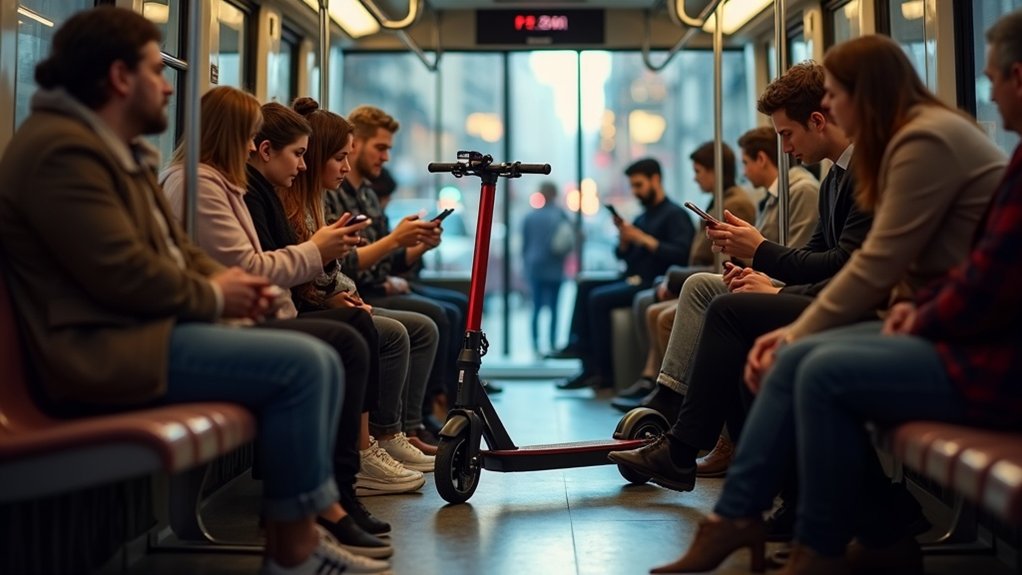
Yes, you can carry folding electric scooters on buses, but you’ll need to follow certain rules. Most transit systems require scooters to be fully folded, and there’s typically a weight limit ranging from 20 to 25 pounds. Make certain to check your local bus system’s specific policies, as they can vary. Know your scooter’s dimensions and guarantee the battery is powered off during transport. If you want to know more about the details, keep exploring further.
Key Takeaways
- Folding electric scooters can be carried on buses if they meet weight and size requirements, typically between 20 to 25 pounds and 30 x 20 x 10 inches.
- Scooters must be completely folded before boarding and stored in designated areas without obstructing aisles or walkways.
- Different bus systems have varying regulations; check specific rules for your transit authority to ensure compliance.
- Lithium-ion batteries must be powered off during transport, and scooters should be clean and secure.
- Allow extra time during peak hours to find space for your scooter and avoid delays.
General Rules and Requirements for Electric Scooters on Buses
When considering taking your electric scooter on a bus, it’s crucial to know the general rules and requirements that apply.
Most bus systems categorize folding electric scooters as large luggage, requiring you to fully fold them before boarding. Be aware of weight limits, typically ranging from 20 to 25 pounds; exceeding this can prevent your scooter from being allowed on board.
Make sure your scooter fits within designated storage areas and doesn’t block aisles or seats. Additionally, lithium-ion batteries must be powered off during transport for safety.
Always verify compliance with regulations and local scooter policies to avoid any issues.
Differences in E-Scooter Transport Policies Across Bus Systems
While maneuvering through the various bus systems across the country, you’ll find that e-scooter transport policies can differ greatly.
The MTA in New York permits folding scooters under 25 pounds only during off-peak hours, while LA Metro allows scooters up to 22 pounds but imposes a surcharge for those exceeding 20 pounds.
In contrast, the Chicago CTA has a strict weight limit of 20 pounds, necessitating scooter checks before boarding.
Smaller bus systems often have more lenient regulations, making e-scooter transport easier.
Understanding these weight limits and transport policies is essential for a seamless public transportation experience.
Preparation Steps Before Boarding the Bus
Before you board the bus with your e-scooter, it’s important to prepare thoroughly to guarantee a smooth experience.
Start by checking the specific weight limits and size requirements of your bus system online. Practice folding your electric scooter ahead of time to avoid delays.
Verify your scooter is clean to maintain a neat environment for fellow passengers, and remove any loose accessories. Double-check that the folding mechanism is secure to prevent accidental unfolding during transit.
Finally, allow extra time during peak hours, as bus crowd levels may affect the space available for your scooter.
Storage Locations for E-Scooters on Buses
When you’re boarding a bus with your e-scooter, it’s essential to know where to store it properly.
Many buses have limited storage areas, and you must guarantee your scooter doesn’t obstruct aisles or walkways.
Dedicated Storage Areas
As cities adapt to increasing e-scooter usage, many newer buses now feature dedicated storage areas tailored for mobility devices and larger items.
These areas allow passengers to board buses with electric scooters without obstructing aisles, addressing safety concerns.
However, size limitations mean that not all e-scooters may fit comfortably, especially during peak travel times when space is at a premium.
Passengers should position their scooters parallel to the bus wall to optimize storage.
Planning to travel during off-peak hours can enhance your chances of securing a spot in these dedicated areas, ensuring a smoother public transportation experience.
Aisle Obstruction Concerns
While maneuvering public transportation with an e-scooter, it’s important to contemplate aisle obstruction concerns. Most bus systems require you to fold your electric scooter to fit within designated storage limits of 30 x 20 x 10 inches.
Position your scooter parallel to the bus walls or under seats to keep aisles and emergency exits clear. Before boarding, assess the crowded bus environment; drivers may deny entry if they believe your scooter could obstruct pathways.
During peak hours, storage space is limited, making it vital to travel during non-peak times. Always prioritize mobility devices in designated areas to guarantee compliance with boarding rules.
Proper Securing Techniques
Maneuvering the bus with your e-scooter requires not only awareness of aisle obstruction but also knowledge of proper securing techniques.
When using public transportation services, verify your folded scooter is securely positioned to avoid inconveniencing other passengers.
Here are key tips for storage:
- Use designated areas for larger items.
- Position your folded scooter parallel to the bus wall.
- If no designated space is available, stow it under your seat or on your lap.
- Keep emergency exits unobstructed.
- Consider protective coverings to safeguard passenger belongings during your bus journey.
These steps help transport electric scooters effectively and safely.
Safety Regulations for Transporting Electric Scooters
When transporting electric scooters on public buses, it’s essential to adhere to specific safety regulations designed to mitigate risks.
First, confirm your scooter’s lithium-ion battery is enclosed within the frame, with no exposed wires, to comply with safety standards. Most bus systems require scooters to be completely powered off during transit to prevent battery malfunctions.
Additionally, be mindful of weight limits, typically between 20 to 25 pounds, and verify folded scooters don’t exceed 30 x 20 x 10 inches for secure storage.
Some transit authorities may also mandate protective covers to safeguard other passengers’ belongings during your journey.
Costs and Alternative Public Transit Options for E-Scooters
Understanding the costs associated with transporting e-scooters on public transit can greatly enhance your commuting experience. Here are key considerations:
- Lightweight folding scooters under 25 pounds usually fit within standard bus rules for electric scooters.
- Heavier scooters may incur additional costs, ranging from $1 to $3, based on weight requirements.
- Monthly bus passes often include unlimited transport of e-scooters, but check for specific regulations.
- Rural bus systems frequently allow free transport.
- Light rail and ferries offer alternative public transit options for scooters, accommodating weights between 30-50 pounds.
Make informed choices to navigate your e-scooter transportation efficiently.