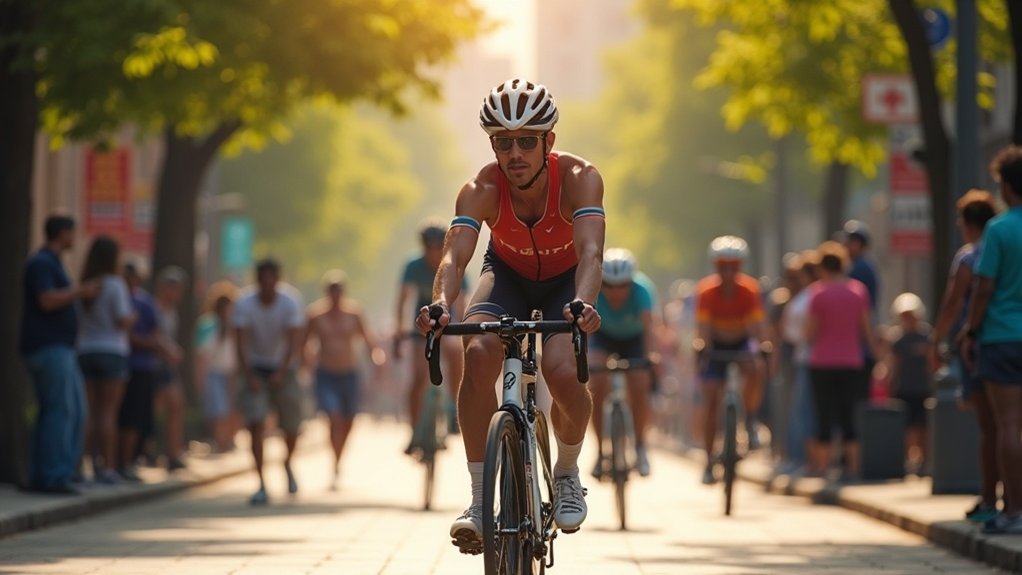
To avoid conflicts while riding on sidewalks where it’s allowed, prioritize pedestrian awareness and yield the right of way to them. Communicate using verbal cues or a bell, and maintain a safe speed of 10-12 mph for better control. Approach intersections and driveways with caution, watching for pedestrians. Always practice good riding etiquette by being courteous and signaling your intentions. By adopting these practices, you can enjoy a safer ride while preventing conflicts with pedestrians. There’s more to uncover about managing these situations effectively.
Key Takeaways
- Always yield the right of way to pedestrians, ensuring their safety and comfort while riding on sidewalks.
- Maintain a slower speed (10-12 mph) to allow for quick reactions to unexpected pedestrian movements.
- Use verbal cues or a bell to alert pedestrians of your presence, especially when passing them.
- Plan your route to avoid crowded areas and prioritize quieter residential streets for a smoother ride.
- Stay informed about local laws and regulations regarding sidewalk riding to enhance safety and minimize conflicts.
Understanding Sidewalk Riding Regulations
When riding on sidewalks, it’s essential to grasp the diverse regulations that can impact your experience. Local laws vary considerably, so always check your area’s specific rules before cycling.
In many jurisdictions, sidewalks mainly serve pedestrians, meaning you must yield the right of way at all times. Some cities restrict sidewalk riding in busy areas to reduce conflicts.
For example, while California doesn’t outright ban sidewalk riding, local ordinances may impose specific requirements. Understanding these legal responsibilities not only helps you navigate conflicts safely but also guarantees you ride responsibly, avoiding potential fines and liabilities associated with sidewalk riding.
Importance of Pedestrian Awareness
Although you might be focused on your ride, staying aware of pedestrians is essential for a safe and enjoyable experience on the sidewalk.
Since pedestrians walking have the right of way, it’s important to yield to them. Riding at a slower speed allows you to react quickly to unexpected movements. Use verbal cues like “on your left” or a bell to alert pedestrians of your approach, reducing the chance of startling them.
Be mindful of crowded areas where pedestrian traffic is high, and always observe local laws to avoid conflicts and facilitate a smooth coexistence on sidewalks.
Communicating With Pedestrians
Maintaining clear communication with pedestrians is essential for guaranteeing a safe riding experience on sidewalks. When you ride on the sidewalk, use verbal cues like “on your left” to alert people walking nearby. A bicycle bell can also serve as a gentle warning. Always yield the right of way to pedestrians, making their comfort a priority. Keep a slow speed, ideally no faster than walking pace, allowing you to react quickly. Stay aware of your surroundings, as pedestrians can be unpredictable.
| Action | Purpose |
|---|---|
| Verbal cues | Alert pedestrians of your approach |
| Bicycle bell | Provide a gentle warning |
| Yield right of way | Guarantee pedestrian comfort and safety |
| Slow speed | Allow for quick stops and maneuvers |
Maintaining a Safe Speed
To maintain a safe speed while riding on sidewalks, aim for a pace no faster than a relaxed jog, ideally around 10-12 mph.
This speed allows you to better control your bike and react swiftly to pedestrians and obstacles. Always yield to pedestrians, ensuring their right of way, and be ready to slow down or stop as needed to prevent accidents.
Optimal Riding Pace
When riding on sidewalks, keeping your speed between 10-12 mph is essential for safety, as this pace allows you to respond effectively to the unpredictable movements of pedestrians.
To guarantee an ideal riding pace, consider the following:
- Enhance Reaction Time: A relaxed jog speed gives you more time to react to sudden obstacles.
- Maintain Control: Slower speeds help you navigate crowded or uneven surfaces more effectively.
- Reduce Collision Risks: Keeping your pace leisurely minimizes the chances of unexpected collisions.
- Foster Safer Interactions: Slowing down promotes smoother interactions with pedestrians.
Choosing the right speed is key to a safe ride.
Yielding to Pedestrians
How can you guarantee a safe ride while sharing sidewalks with pedestrians?
First, always maintain a speed of 10-12 mph to react swiftly to any unexpected situations. Yielding to pedestrians is vital; they’ve the right of way, so be prepared to stop if necessary.
Use verbal cues like “on your left” or a bell to alert them of your approach. In busy areas, slow down and treat your ride like a pedestrian activity, enhancing safety for everyone.
Finally, familiarize yourself with local laws regarding sidewalk riding to promote respect and compliance, ensuring a harmonious environment for all.
Navigating Intersections and Driveways
Maneuvering intersections and driveways requires vigilance, as these areas pose significant risks for pedestrians and cyclists alike.
To traverse them safely, follow these guidelines:
- Approach slowly, always scanning for oncoming vehicles that may not see you.
- Use the “look-back” technique while crossing to stay aware of traffic and pedestrians.
- Signal your intentions clearly with verbal cues or a bell.
- Stop before entering roadways at crosswalks to check for traffic.
When riding on sidewalks, consider shifting to grass to enhance safety while traversing intersections and driveways.
Prioritize your safety and that of others.
Practicing Good Riding Etiquette
Practicing good riding etiquette is essential for ensuring everyone’s safety on the sidewalk.
Always yield to pedestrians, communicate your intentions clearly, and maintain a safe riding speed to avoid conflicts.
Yield to Pedestrians Always
While riding on sidewalks, it’s essential to prioritize the safety and comfort of pedestrians, as they hold the right of way.
To practice good riding etiquette and guarantee smooth interactions, remember to:
- Always yield to pedestrians, allowing them to pass without interruption.
- Use a bell or verbal cues like “on your left” to communicate your presence.
- Maintain a slow, controlled speed—ideally no faster than a relaxed jog.
- Approach with courtesy, waiting for safe opportunities to pass.
Communicate Intentions Clearly
How can you effectively signal your presence to pedestrians while riding on sidewalks? Start by using verbal cues like “on your left” to communicate intentions clearly, ensuring they’re aware of your approach.
A bicycle bell can also serve as a non-intrusive signal, maintaining a safe distance. Remember, you must yield the right of way to pedestrians, as sidewalks primarily serve them.
Maintain a slow, steady pace—ideally no faster than walking speed—to allow for quick reactions. Stay observant; be ready to stop or alter your path in crowded areas to prevent startling pedestrians and foster safe interactions.
Maintain Safe Riding Speed
Maintaining a safe riding speed is essential for fostering a respectful and secure environment for both cyclists and pedestrians. To achieve this while riding bikes on sidewalks, follow these guidelines:
- Keep your speed at 10-12 mph to guarantee quick stopping if needed.
- Always yield the right of way to pedestrians, as sidewalks primarily serve them.
- Use verbal cues like “on your left” or a gentle bell to notify pedestrians of your approach.
- Approach intersections and driveways cautiously, slowing down to scan for vehicles and guarantee pedestrian visibility.
Safety Gear and Its Benefits
When you ride a bicycle, the right safety gear can greatly enhance your protection and confidence on the road.
Wearing a helmet reduces head injury risk by up to 85%, vital for any cyclist. High-visibility clothing and reflective accessories boost your visibility, particularly in low-light conditions.
Adding front and rear lights can extend your visibility to 500 feet, critical for dusk or nighttime rides. Protective knee and elbow pads absorb impact during falls, while properly fitted shoes improve grip and stability.
Investing in quality safety gear guarantees a safer, more enjoyable experience when riding your bike.
Exploring Alternative Paths for Cyclists
While traversing city streets can be intimidating, exploring alternative paths for cyclists offers a practical solution to enhance your riding experience.
Consider these options:
- Utilize bike paths or multi-use trails designed specifically for cyclists, minimizing sidewalk conflicts.
- Investigate local bike maps or cycling apps to find safer routes that avoid busy intersections.
- Engage with local cycling advocacy groups for insights on community-approved routes prioritizing your safety.
- Explore residential streets or quieter neighborhoods where lower vehicle speeds make navigation safer and more enjoyable.
These strategies can greatly improve your cycling experience while reducing interactions with pedestrians.