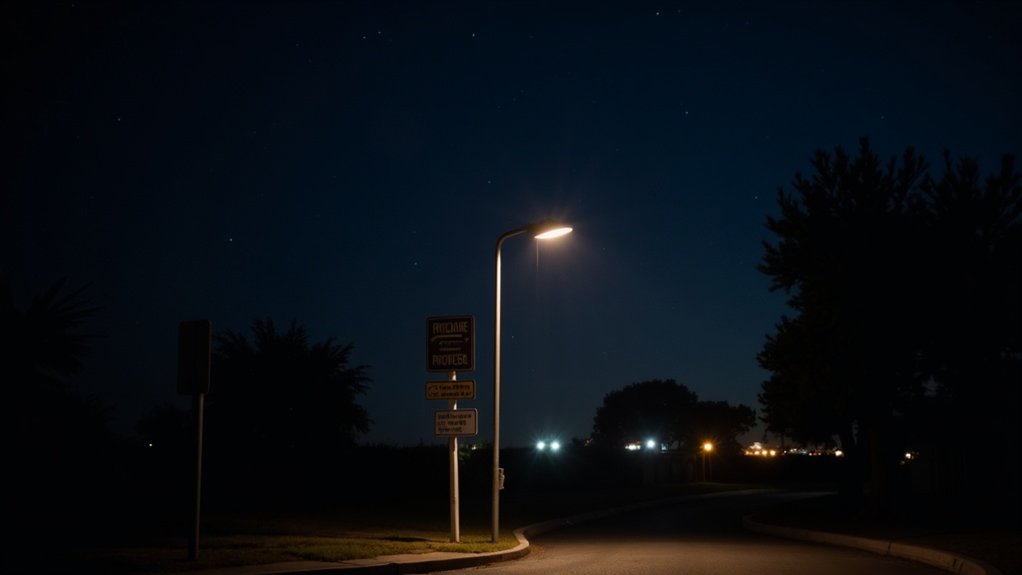
Local laws regarding nighttime lighting, including headlight use, vary widely across Texas. Generally, headlights must be used from 30 minutes after sunset until 30 minutes before sunrise and in low visibility conditions. Ignoring these regulations can lead to fines and increased accident risks. It’s essential to stay informed about local ordinances to guarantee safety and compliance. There’s much more to uncover about specific regulations and best practices in your area.
Key Takeaways
- Local lighting regulations in Texas vary by municipality, often requiring specific outdoor lighting during nighttime hours.
- Headlight use is mandatory from 30 minutes after sunset to 30 minutes before sunrise for safety compliance.
- Visibility conditions under 1,000 feet due to weather also necessitate the use of headlights at night.
- Compliance with local outdoor lighting ordinances enhances safety and reduces risks of accidents at night.
- Failure to comply with nighttime lighting laws can lead to penalties and increased risk of accidents.
Understanding Local Lighting Regulations
Understanding local lighting regulations is essential, especially since they can differ considerably from one municipality to another.
In Texas, municipalities often set their own rules for outdoor lights, although recent legislation limits this power mainly to certified Dark Sky Communities and specific sites like observatories.
The Texas Model Outdoor Lighting Ordinance provides a framework for consistent regulations aimed at reducing light pollution.
Compliance with the Texas Health and Safety Code mandates specific lighting fixtures for state-funded projects.
In unincorporated areas, local regulations may vary widely, impacting your legal rights concerning lighting and environmental standards in your community.
Importance of Compliance With Nighttime Lighting Laws
Complying with nighttime lighting laws isn’t just a legal obligation; it greatly enhances your safety and visibility on the road.
By using headlights as required, you reduce the risk of accidents during low-light conditions and guarantee a safer driving environment for everyone.
Additionally, understanding these regulations can help you avoid fines and contribute to minimizing environmental impacts associated with excessive or improper lighting.
Legal Obligations for Lighting
While driving at night, adhering to local lighting laws isn’t just a matter of safety; it’s a legal obligation that can have serious consequences.
Headlight laws often require you to turn on your headlights from 30 minutes after sunset until 30 minutes before sunrise. In specific conditions, like heavy rain or dense fog, you must activate your headlights when visibility drops below 1,000 feet.
Additionally, many areas mandate headlights in construction zones at all times. Failing to comply with these legal obligations for lighting can lead to fines over $200 and increased liability in accidents, making awareness essential.
Safety and Visibility Benefits
Nighttime lighting laws play an essential role in enhancing safety and visibility on the roads. Compliance with these regulations guarantees that headlights must be used, improving visibility for drivers, pedestrians, and cyclists.
Here are key benefits of adhering to these laws:
- Reduces the risk of accidents after dark.
- Enhances safety in construction zones and hazardous areas.
- Lowers crime rates in public spaces.
Environmental Impact Considerations
Adhering to nighttime lighting laws not only boosts safety but also plays a significant role in environmental conservation.
By complying with these regulations, you help reduce light pollution, preserving the natural night sky and protecting nocturnal wildlife habitats.
Many municipalities emphasize using cutoff fixtures that direct headlights downward, minimizing light trespass and its environmental impact.
In Texas, specific laws govern outdoor lighting at state-funded sites, focusing on safety while reducing ecological footprints.
Failing to follow these laws can lead to penalties, underscoring the importance of compliance for both environmental protection and legal accountability in your community.
Variability of Nighttime Lighting Laws Across Texas
Nighttime lighting laws in Texas aren’t uniform; they vary considerably from one municipality to another.
You’ll find some areas with strict regulations aimed at minimizing light pollution, while others may lack any requirements at all.
This patchwork of local ordinances creates compliance challenges, making it essential to understand the specific laws that apply to your area.
Local Ordinance Differences
While many Texans assume uniformity in nighttime lighting regulations, the reality is that local ordinances can differ dramatically across the state.
This variability stems from several factors:
- Community Needs: Different areas prioritize lighting based on local culture and environmental considerations.
- Legislative Restrictions: Recent laws limit outdoor lighting regulation authority to certified Dark Sky Communities.
- Guideline Adoption: The Texas Model Outdoor Lighting Ordinance is a helpful framework, but not all municipalities adopt it uniformly.
As a result, inconsistency in nighttime lighting laws persists, particularly in unincorporated areas lacking specific regulations.
State Regulation Impact
As you navigate the complexities of nighttime lighting regulations in Texas, it’s vital to understand how state laws influence local ordinances. Texas law mandates headlights from 30 minutes after sunset until 30 minutes before sunrise, promoting safe driving.
However, local regulations can differ widely, as municipalities historically hold the authority to regulate outdoor lighting. The 2021 Texas Legislative session limited these powers, allowing only certified Dark Sky Communities to set specific laws.
In unincorporated areas, the lack of authority leads to inconsistent compliance, impacting public safety and environmental factors. Understanding this state regulation impact is important for ensuring adherence to local requirements.
Compliance Challenges Faced
Maneuvering the compliance challenges posed by Texas’s varying nighttime lighting laws requires awareness of local regulations that often conflict with state mandates.
To navigate these complexities, you should consider:
- The inconsistency of local codes compared to the Texas Model Outdoor Lighting Ordinance.
- The limited authority of municipalities, with only certified Dark Sky Communities enforcing specific lighting standards.
- The frustrations faced by the construction industry due to differing regulations across counties and unincorporated areas.
Understanding these factors is essential for ensuring adherence to lighting standards while avoiding potential compliance pitfalls.
Specific Situations Requiring Headlight Use
Understanding when to use headlights is vital for safe driving, especially during specific situations that demand enhanced visibility. You should activate your headlights whenever conditions require it. Here are some specific rules to follow:
| Situation | Headlight Requirement | Notes |
|---|---|---|
| Nighttime | Required from 30 min after sunset to 30 min before sunrise | Guarantees visibility |
| Adverse Weather | Required when visibility < 1,000 feet | Heavy rain, fog, or snow |
| Wipers Activated | Advisable to use headlights | Enhances safety, though not legally required |
Adhering to these legal headlight regulations is essential for your safety and compliance.
Penalties for Failing to Use Required Lighting
Failing to use required headlights at night can lead to significant penalties that vary by jurisdiction. Understanding these consequences is essential for every driver:
- Fines: Penalties can range from $25 to $200, depending on local laws.
- Law Enforcement: Some areas treat headlight violations as primary offenses, allowing law enforcement to stop you solely for this reason.
- Insurance Rates: Non-compliance can increase your insurance rates and result in points on your license, affecting your driving record.
Moreover, accidents without proper headlight usage may complicate insurance claims, often resulting in automatic fault determination.
Stay informed to avoid these repercussions.
Daytime Running Lights and Their Legal Standing
While Daytime Running Lights (DRLs) enhance visibility during daylight hours, they don’t replace the legal requirement for headlights at night.
Most jurisdictions mandate that traditional headlights be used from 30 minutes after sunset until 30 minutes before sunrise, especially in low visibility conditions.
DRLs operate at lower brightness levels and often don’t meet the lumen output needed for safe nighttime driving.
In many cases, manual activation of standard headlights is essential, as automatic systems may fail to engage when necessary.
Understanding these legal headlight requirements is important for ensuring compliance and maintaining safety on the road.
Best Practices for Ensuring Compliance With Lighting Laws
To guarantee compliance with lighting laws, it’s essential to actively engage with your local regulations and ordinances.
Ensuring compliance with lighting laws requires proactive engagement with local regulations and ordinances.
Here are best practices for making sure your outdoor lighting meets requirements:
- Familiarize yourself with local outdoor lighting ordinances, as compliance can vary across Texas municipalities.
- Verify your fixtures comply with the Texas Health and Safety Code, particularly for state-funded facilities, to minimize light pollution.
- Use energy-efficient lighting technologies, like LEDs, to adhere to local regulations and potentially qualify for efficiency incentives.
Regularly inspect and maintain your systems, reducing the risk of fines and confirming compliance with safety standards.
Resources for Understanding Local Lighting Requirements
Understanding local lighting requirements is essential for ensuring compliance and avoiding potential penalties, especially as these regulations can differ greatly across Texas municipalities. To navigate these variations, consider the following resources:
| Resource Type | Description | Example |
|---|---|---|
| Local Ordinances | Check municipal websites for specific regulations | City of Austin lighting guidelines |
| Texas Model Ordinance | Utilize as a template for community standards | Texas Model Outdoor Lighting Ordinance |
| Dark Sky Communities | Learn from certified communities on best practices | Luminance requirements in Dripping Springs |
| County Regulations | Investigate unincorporated areas for any applicable rules | Local county clerk’s office |
Familiarizing yourself with these resources is vital for compliance with local lighting regulations.